Key takeaways
- For pure gaming: The Ryzen 7 9800X3D wins with higher frame rates and better efficiency in the vast majority of titles.
- For content creation and rendering: The Core Ultra 9 285K’s 24 cores make it the stronger choice for video editing, 3D work, and heavy multitasking.
- For streaming while gaming: The 285K’s extra threads give it breathing room to game and encode simultaneously.
- For efficiency and quiet builds: The 9800X3D runs cooler and cooler is easier to cool, ideal for small or silent PCs.
- For upgrade longevity: AMD’s AM5 socket offers a clearer future upgrade path, while Intel’s platform is more of a fixed proposition.
What's inside
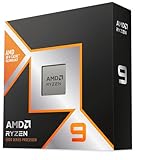
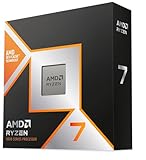
Choosing between the Intel Core Ultra 9 285K and the AMD Ryzen 7 9800X3D is one of the most common dilemmas facing high-end PC builders in 2026. These two chips represent very different philosophies: Intel’s flagship packs a massive 24-core layout aimed at raw multitasking and productivity muscle, while AMD’s 8-core 9800X3D leans on stacked 3D V-Cache to dominate gaming benchmarks. Both are excellent, but they excel in different arenas.
In this comparison we break down how the 285K and 9800X3D stack up across gaming, content creation, efficiency, and platform value, so you can decide which one deserves a spot in your next build. If your priority is frame rates, the answer leans one way; if it is heavy multithreaded work, it leans the other.
As an Amazon Associate we earn from qualifying purchases at no extra cost to you. Product prices and availability are accurate as of the date shown and are subject to change.


🎮 Get More From Your Setup — Free
Prime Gaming gives you free PC games every month, in-game loot, and a free Twitch channel sub — plus fast free shipping on all the gear above. New members get a 30-day free trial.
Watch: Intel Core Ultra 9 285k Vs Amd Ryzen 7 9800x3d: Full Comparison — Video Review
Quick Verdict
For pure gaming, the AMD Ryzen 7 9800X3D is the clear winner thanks to its 3D V-Cache, which delivers higher frame rates in most titles while sipping less power. For heavy multitasking, streaming, and content creation, the 24-core Intel Core Ultra 9 285K pulls ahead with far more threads. Gamers should lean AMD; creators and power users should look hard at Intel.
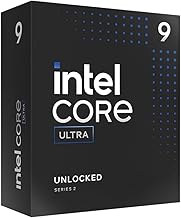
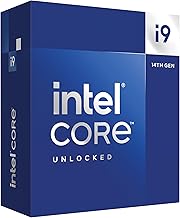
Intel Core Ultra 9 285K
The Core Ultra 9 285K is Intel’s productivity flagship, featuring 24 cores split into 8 performance cores and 16 efficiency cores, with boost clocks up to 5.7 GHz. That core count makes it a monster for video editing, rendering, compiling, and running many demanding applications at once.
In gaming it is still a strong performer, comfortably driving high-refresh setups, but it trails the 9800X3D in cache-sensitive titles. Its strength is versatility: if your workload mixes serious content creation with gaming, the 285K handles both without breaking a sweat.
The trade-off is power draw and heat. The 285K runs hotter under full multithreaded loads and benefits from a robust cooling solution and a capable motherboard to reach its full potential.
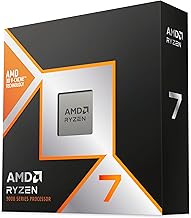
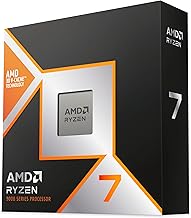
AMD Ryzen 7 9800X3D
The Ryzen 7 9800X3D is purpose-built for gaming. Its 8 cores and 16 threads are wrapped in AMD’s second-generation 3D V-Cache, giving games a huge pool of fast cache that translates directly into higher and more consistent frame rates, especially at 1080p and 1440p where the CPU matters most.
Beyond raw speed, the 9800X3D is remarkably efficient, drawing less power and producing less heat than Intel’s flagship. That makes it easier to cool and a great fit for compact, quiet builds. It is available standalone or in convenient combos with matched X870 and B850 motherboards.
Its only real limitation is core count. With 8 cores, it is excellent but not class-leading for the heaviest multithreaded production tasks, where Intel’s higher thread count has the edge.
Head-to-Head: Which Should You Buy?
- For pure gaming: The Ryzen 7 9800X3D wins with higher frame rates and better efficiency in the vast majority of titles.
- For content creation and rendering: The Core Ultra 9 285K’s 24 cores make it the stronger choice for video editing, 3D work, and heavy multitasking.
- For streaming while gaming: The 285K’s extra threads give it breathing room to game and encode simultaneously.
- For efficiency and quiet builds: The 9800X3D runs cooler and cooler is easier to cool, ideal for small or silent PCs.
- For upgrade longevity: AMD’s AM5 socket offers a clearer future upgrade path, while Intel’s platform is more of a fixed proposition.
Frequently Asked Questions
Which is faster for gaming?
The Ryzen 7 9800X3D is generally faster in games thanks to its 3D V-Cache, particularly in CPU-bound titles at lower resolutions where cache makes the biggest difference.
Is the 285K better for work?
Yes. With 24 cores versus 8, the Core Ultra 9 285K is significantly stronger for rendering, video export, and running many heavy applications at once.
Which runs cooler?
The 9800X3D is the more efficient chip, drawing less power and generating less heat than the 285K under most loads, making it simpler to cool.
Do I need a new motherboard for either?
Yes, both require their respective platforms. The 9800X3D uses AMD’s AM5 socket, while the 285K uses Intel’s latest socket, so plan your motherboard accordingly.
Final Verdict
If your PC exists mainly to play games, the AMD Ryzen 7 9800X3D is the smarter buy, delivering top-tier frame rates with excellent efficiency. If you routinely render video, compile code, or juggle demanding creative apps, the Intel Core Ultra 9 285K’s 24 cores make it the more capable all-rounder. Match the chip to how you actually use your PC, and either one will serve you brilliantly for years.