Key takeaways
- Prioritize 3D V-Cache for gaming: AMD’s stacked L3 cache delivers disproportionate gains in simulation, strategy, and open-world titles. An X3D chip will often beat a higher-clocked, more expensive non-X3D processor in the games that actually stress a CPU.
- Match the CPU to your resolution: At 1440p and 4K with a mid-range GPU, the graphics card is your bottleneck. Spending $300 on a processor to feed an entry-level GPU is money better put toward the GPU itself.
- Factor in the whole platform: AM5 requires DDR5 memory and a newer motherboard; AM4 runs on cheaper DDR4 and boards that have been discounted for years. Add $80–$150 to your mental math before declaring an AM5 chip “affordable.”
- Six cores is the floor, eight is the sweet spot: Modern engines scale well past four cores, and streaming or background tasks eat headroom fast. Twelve or sixteen cores rarely help games, but they do help if you render, compile, or edit.
- Check cooling requirements before you buy: Some chips include a competent stock cooler; others assume you’ll spend $40+ on aftermarket cooling. X3D processors in particular run best with good thermal headroom to sustain boost clocks.
What's inside
Building a gaming PC in 2026 means navigating a processor market that changes faster than most buyers can track. AMD’s X3D lineup has fragmented across three generations, older chips have dropped into bargain territory, and the gap between a $150 CPU and a $300 CPU is far smaller than marketing suggests — at least at the resolutions most people actually play at. The result is a lot of gamers overspending on cores they’ll never use, or underspending on a platform that boxes them in two years from now.
This guide focuses on processors that deliver genuine gaming performance without crossing the $300 line. We’ve prioritized real-world frame rates in CPU-bound titles, upgrade headroom on the AM5 and AM4 platforms, and total build cost — because a cheap chip that demands expensive memory and a premium board isn’t cheap at all. Below you’ll find our current picks, followed by a buying framework and answers to the questions that come up most often.
As an Amazon Associate we earn from qualifying purchases at no extra cost to you. Product prices and availability are accurate as of the date shown and are subject to change.





⚡ Save on Your Next PC — Amazon Prime
Prime members get fast free shipping on the systems above, plus early access to Prime Day & Black Friday PC deals. New members get a 30-day free trial.
Watch: Best CPU for Gaming Under $300 — Video Review
How to Choose CPU for Gaming Under $300
- Prioritize 3D V-Cache for gaming: AMD’s stacked L3 cache delivers disproportionate gains in simulation, strategy, and open-world titles. An X3D chip will often beat a higher-clocked, more expensive non-X3D processor in the games that actually stress a CPU.
- Match the CPU to your resolution: At 1440p and 4K with a mid-range GPU, the graphics card is your bottleneck. Spending $300 on a processor to feed an entry-level GPU is money better put toward the GPU itself.
- Factor in the whole platform: AM5 requires DDR5 memory and a newer motherboard; AM4 runs on cheaper DDR4 and boards that have been discounted for years. Add $80–$150 to your mental math before declaring an AM5 chip “affordable.”
- Six cores is the floor, eight is the sweet spot: Modern engines scale well past four cores, and streaming or background tasks eat headroom fast. Twelve or sixteen cores rarely help games, but they do help if you render, compile, or edit.
- Check cooling requirements before you buy: Some chips include a competent stock cooler; others assume you’ll spend $40+ on aftermarket cooling. X3D processors in particular run best with good thermal headroom to sustain boost clocks.
The Best Picks Reviewed
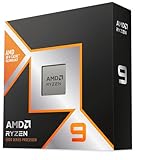
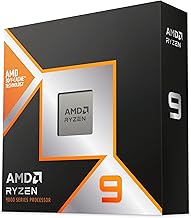
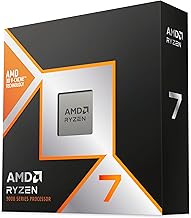
AMD Ryzen 7 9800X3D
The fastest gaming processor you can reasonably buy, and the benchmark every other chip here is measured against. Its second-generation 3D V-Cache design fixed the clock-speed penalty of earlier X3D parts, making it genuinely excellent at productivity too — though at the top of this budget, it’s a stretch that only makes sense if you’re pairing it with a high-end GPU.
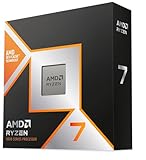
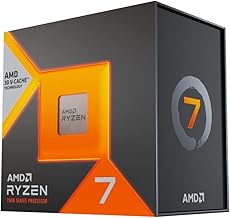
AMD Ryzen 7 7800X3D
Still the value champion of the X3D family and, for most builders, the smartest way to spend around $300. It trails the 9800X3D by a modest margin in most titles while drawing less power, and it slots into the same AM5 platform with a clear upgrade path down the line.
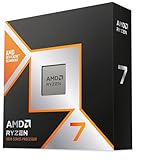
AMD Ryzen 7 5800X3D
The best possible send-off for an aging AM4 build — drop it into an existing B550 or X570 board and you’ll see gains that rival a full platform upgrade. It’s outclassed by the AM5 chips in raw terms, but paired with cheap DDR4 it delivers the lowest cost-per-frame of anything on this list.
AMD Ryzen 5 9600X
A well-rounded six-core option for builders who want AM5’s longevity without paying the X3D premium. It’s efficient, cool-running, and perfectly capable at 1440p, but expect a meaningful deficit in cache-sensitive games like flight sims and large-scale strategy titles.
AMD Ryzen 5 5500
The budget entry point, and an easy recommendation for sub-$600 builds or older systems that need a cheap refresh. Its included Wraith Stealth cooler saves you another purchase, though the reduced PCIe support and modest single-thread performance mean it’s best paired with a mid-range GPU at 1080p.
Frequently Asked Questions
Do I really need an X3D processor for gaming?
Not always. If you play mostly at 1440p or 4K with a mid-tier GPU, a standard six-core chip will keep pace. X3D pays off in CPU-limited scenarios: high-refresh 1080p, simulation games, and titles with large open worlds or heavy AI.
Is AM4 still worth buying in 2026?
For a new build, generally no — AM5 offers a longer upgrade runway and better memory support. For an existing AM4 system, a drop-in upgrade is one of the best-value moves available, since you reuse your board, cooler, and DDR4 memory.
How many cores do I need for gaming and streaming?
Eight cores comfortably handles gaming with software encoding, Discord, and a browser open. Six cores works fine if you offload encoding to your GPU’s dedicated encoder, which most streamers do anyway.
Will a $300 CPU bottleneck a high-end graphics card?
Not meaningfully at 1440p and above. The top picks here are the same chips found in enthusiast builds — the $300 ceiling limits your core count and productivity performance far more than it limits gaming frame rates.
Final Thoughts
For most gamers building on AM5 in 2026, the Ryzen 7 7800X3D remains the pick to beat — it captures the vast majority of flagship gaming performance at a price that leaves room in the budget for a better GPU. Stretch to the Ryzen 7 9800X3D if you’re chasing maximum frame rates and doing serious work on the side, or grab the Ryzen 7 5800X3D if you already own an AM4 board and want the cheapest path to a genuinely modern gaming experience.