Key takeaways
- Gaming performance: In games the two are remarkably close, often within a few percent, because both rely on 3D V-Cache; the 9800X3D’s simpler single-cache-die layout can even edge ahead in some titles.
- Core count: The 9950X3D doubles the cores to sixteen versus the 9800X3D’s eight, a decisive advantage for multi-threaded productivity and heavy content creation.
- Price: The 9800X3D is dramatically cheaper, which is its biggest strength for gaming-focused buyers who do not need the extra cores.
- Productivity: For rendering, video encoding, compiling, and other threaded workloads the 9950X3D is far faster, making it the clear pick for creators and professionals.
- Power and cooling: The 9950X3D draws more power and demands stronger cooling, whereas the 9800X3D is easier to cool and better suited to simpler builds.
- Value for gamers: Since gaming performance is nearly identical, the 9800X3D offers far better value for a gaming-first rig, while the 9950X3D justifies its cost only through productivity.
What's inside
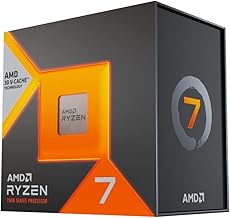
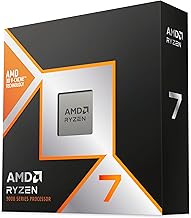
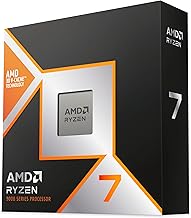
AMD’s Ryzen 9 9950X3D and Ryzen 7 9800X3D sit at the top of the Zen 5 stack, and both wield 3D V-Cache to deliver elite gaming performance. The difference is that the 9950X3D wraps that gaming prowess in a sixteen-core package aimed at users who create as heavily as they play, while the 9800X3D concentrates on being the purest, most affordable gaming powerhouse.
Choosing between them is really about how much your workload extends beyond gaming, and whether the 9950X3D’s doubled core count justifies its considerably higher price. Because both share the AM5 platform and top-tier gaming performance, the decision comes down to productivity needs and budget, making it crucial to be honest about how you actually use your PC before spending on cores you may never fully tax.
As an Amazon Associate we earn from qualifying purchases at no extra cost to you. Product prices and availability are accurate as of the date shown and are subject to change.


⚡ Save on Your Next PC — Amazon Prime
Prime members get fast free shipping on the systems above, plus early access to Prime Day & Black Friday PC deals. New members get a 30-day free trial.
Watch: Ryzen 9 9950X3D vs 9800X3D: 2026 Showdown — Video Review
Quick Verdict
Buy the Ryzen 9 9950X3D if you need heavy multi-threaded productivity, like rendering, encoding, or compiling, alongside top-tier gaming; choose the Ryzen 7 9800X3D if gaming is your focus and you want the best value, since it delivers essentially the same gaming experience for far less money.
Key Differences
- Gaming performance: In games the two are remarkably close, often within a few percent, because both rely on 3D V-Cache; the 9800X3D’s simpler single-cache-die layout can even edge ahead in some titles.
- Core count: The 9950X3D doubles the cores to sixteen versus the 9800X3D’s eight, a decisive advantage for multi-threaded productivity and heavy content creation.
- Price: The 9800X3D is dramatically cheaper, which is its biggest strength for gaming-focused buyers who do not need the extra cores.
- Productivity: For rendering, video encoding, compiling, and other threaded workloads the 9950X3D is far faster, making it the clear pick for creators and professionals.
- Power and cooling: The 9950X3D draws more power and demands stronger cooling, whereas the 9800X3D is easier to cool and better suited to simpler builds.
- Value for gamers: Since gaming performance is nearly identical, the 9800X3D offers far better value for a gaming-first rig, while the 9950X3D justifies its cost only through productivity.
Ryzen 9 9950X3D: The Do-Everything Flagship
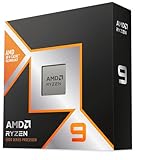
The Ryzen 9 9950X3D is the choice for power users who refuse to compromise, delivering flagship gaming performance and sixteen cores of Zen 5 muscle for demanding productivity. Whether you render 3D scenes, edit and encode high-resolution video, compile large codebases, or run heavy multitasking alongside gaming, its core count slashes the time those workloads take. AMD’s cache-aware scheduling directs games to the V-Cache cores while letting the rest handle threaded work.
This makes it the ideal single-PC solution for creators, streamers, and professionals who also want the best gaming experience without maintaining two machines. Combos pairing it with X870E boards ease a high-end AM5 build, though you should budget for a capable cooler and power supply to feed all sixteen cores. If your work genuinely uses the extra threads, the 9950X3D is a superb all-in-one flagship; if it does not, you are paying for silicon you will rarely stress.
Ryzen 7 9800X3D: The Pure Gaming Value King
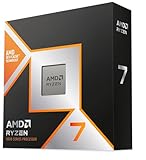
The Ryzen 7 9800X3D is the smarter buy for anyone whose priority is gaming, because it matches the 9950X3D’s gaming experience almost exactly at a fraction of the price. Its single V-Cache die keeps latency low and even lets it lead in a handful of games, so gamers give up essentially nothing at the frame-rate level. The large sum saved can transform the rest of the build, funding a better GPU, more memory, or faster storage.
It is also easier to live with, drawing less power and running cooler, which simplifies cooling and suits quieter or more compact systems. For the vast majority of players who game, browse, and do light creation rather than sustained rendering or encoding, the 9800X3D provides all the CPU they will ever need. On the same AM5 platform, it is the pragmatic, high-value heart of a gaming-first PC.
Which Should You Buy?
- For heavy content creation plus gaming: pick the Ryzen 9 9950X3D because sixteen cores dramatically speed up rendering, encoding, and compiling.
- For pure gaming value: pick the Ryzen 7 9800X3D since it matches gaming performance for far less money.
- For a single do-everything workstation: pick the 9950X3D to handle demanding professional workloads and top-tier gaming on one machine.
- For a simpler, cooler build: pick the 9800X3D because its lower power and cooling needs are easier to manage.
- For putting budget into the GPU: pick the 9800X3D and redirect the savings toward a stronger graphics card for better gaming results.
Frequently Asked Questions
Is the 9950X3D better for gaming than the 9800X3D?
Not meaningfully. The two deliver nearly identical gaming performance because both use 3D V-Cache, and the 9800X3D can even lead in some titles. The 9950X3D’s advantage is productivity, not gaming.
Who should buy the 9950X3D?
Creators, streamers, and professionals who need heavy multi-threaded performance for rendering, encoding, or compiling alongside top-tier gaming. If your workload does not use sixteen cores, you are paying for capability you will rarely tap.
Does the 9800X3D lack anything the 9950X3D has?
Mainly core count and the associated multi-threaded muscle. For gaming and everyday use the 9800X3D wants for nothing, but it is slower in demanding productivity tasks that scale across many cores.
Do both need heavy-duty cooling?
The 9950X3D draws more power and benefits from stronger cooling to sustain all sixteen cores, while the 9800X3D is easier to cool. Both reward a good cooler, but the 9950X3D demands more attention to thermals.
Final Verdict
Gaming performance is essentially a tie, so this decision is about the rest of your workload. The Ryzen 9 9950X3D is the flagship for creators and professionals who need serious multi-threaded power alongside elite gaming, while the Ryzen 7 9800X3D is the value king that gives gamers the same frames for far less. Buy the 9950X3D only if you truly use the cores; otherwise the 9800X3D is the obvious, money-saving choice.