Key takeaways
- Gaming performance: AMD’s Ryzen 9 9950X3D leads clearly in gaming thanks to 3D V-Cache, while the Core Ultra 9 285K is competent but trails the best X3D chips in CPU-bound titles.
- Productivity: Both are excellent multi-threaded performers; the 285K’s twenty-four cores and the Ryzen 9’s sixteen cores trade wins depending on the workload, keeping them close in rendering and encoding.
- Efficiency: Arrow Lake improves Intel’s power efficiency notably over prior generations, though AMD’s Zen 5 remains highly competitive, so both run more sensibly than older flagships.
- Platform and upgrades: AMD’s AM5 platform has a long committed lifespan for future CPUs, whereas Intel’s LGA 1851 socket offers a shorter upgrade path, favoring AMD for longevity.
- Features: The Core Ultra 9 brings a modern platform with updated connectivity and an integrated NPU for AI tasks, while AMD counters with mature AM5 features and broad board support.
- Value: Pricing and bundle deals shift the value equation, but for gaming-led builds the Ryzen 9 X3D chips deliver more where it counts, while the 285K appeals to productivity-first users.
What's inside
- Watch: Intel Core Ultra 9 vs Ryzen 9: 2026 Battle — Video Review
- Quick Verdict
- Key Differences
- Intel Core Ultra 9 285K: Productivity and Platform Modernity
- AMD Ryzen 9: Gaming Leadership and Long-Lived AM5
- Which Should You Buy?
- Related Guides
- Frequently Asked Questions
- Final Verdict
- Related Articles
- Related Guides
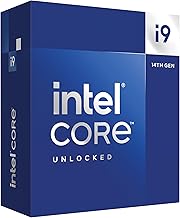
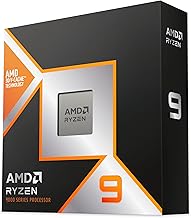
The high-end desktop battle in 2026 pits Intel’s Core Ultra 9 285K, the flagship of the Arrow Lake generation, against AMD’s Ryzen 9 line, including the mighty 9950X and 9950X3D. These are the chips enthusiasts reach for when they want a do-it-all powerhouse capable of both serious productivity and high-end gaming, and the rivalry has rarely been closer.
- Watch: Intel Core Ultra 9 vs Ryzen 9: 2026 Battle — Video Review
- Quick Verdict
- Key Differences
- Intel Core Ultra 9 285K: Productivity and Platform Modernity
- AMD Ryzen 9: Gaming Leadership and Long-Lived AM5
- Which Should You Buy?
- Related Guides
- Frequently Asked Questions
- Final Verdict
- Related Articles
- Related Guides
Choosing between them is not just about who wins a benchmark; it is about matching a platform to your priorities across gaming, content creation, power efficiency, and upgrade path. Because these processors anchor expensive builds with different motherboards and memory expectations, understanding where each excels helps you invest wisely rather than paying for strengths you will never use.
As an Amazon Associate we earn from qualifying purchases at no extra cost to you. Product prices and availability are accurate as of the date shown and are subject to change.


⚡ Save on Your Next PC — Amazon Prime
Prime members get fast free shipping on the systems above, plus early access to Prime Day & Black Friday PC deals. New members get a 30-day free trial.
Watch: Intel Core Ultra 9 vs Ryzen 9: 2026 Battle — Video Review
Quick Verdict
Choose the Intel Core Ultra 9 285K for strong multi-threaded productivity, improved efficiency over its predecessors, and a modern feature set; choose a Ryzen 9, especially the 9950X3D, if gaming performance is a priority alongside productivity, since AMD’s 3D V-Cache gives it a decisive edge in games and the AM5 platform offers a longer upgrade runway.
Key Differences
- Gaming performance: AMD’s Ryzen 9 9950X3D leads clearly in gaming thanks to 3D V-Cache, while the Core Ultra 9 285K is competent but trails the best X3D chips in CPU-bound titles.
- Productivity: Both are excellent multi-threaded performers; the 285K’s twenty-four cores and the Ryzen 9’s sixteen cores trade wins depending on the workload, keeping them close in rendering and encoding.
- Efficiency: Arrow Lake improves Intel’s power efficiency notably over prior generations, though AMD’s Zen 5 remains highly competitive, so both run more sensibly than older flagships.
- Platform and upgrades: AMD’s AM5 platform has a long committed lifespan for future CPUs, whereas Intel’s LGA 1851 socket offers a shorter upgrade path, favoring AMD for longevity.
- Features: The Core Ultra 9 brings a modern platform with updated connectivity and an integrated NPU for AI tasks, while AMD counters with mature AM5 features and broad board support.
- Value: Pricing and bundle deals shift the value equation, but for gaming-led builds the Ryzen 9 X3D chips deliver more where it counts, while the 285K appeals to productivity-first users.
Intel Core Ultra 9 285K: Productivity and Platform Modernity
The Intel Core Ultra 9 285K is the flagship of the Arrow Lake family and a formidable productivity chip, wielding twenty-four cores split between performance and efficiency clusters. It excels at heavily threaded tasks like rendering and video encoding, and its redesigned architecture markedly improves efficiency compared to Intel’s previous power-hungry flagships. Bundles pairing it with Z890 boards, such as the TUF Gaming Z890-Plus or MAG Z890 Tomahawk, make a high-end Intel build straightforward.
It also brings a modern platform with contemporary connectivity and an on-chip NPU for accelerating AI workloads, which appeals to professionals adopting AI-assisted creative tools. In gaming it is capable and delivers smooth high-refresh performance, even if it does not top the charts against AMD’s V-Cache parts. For users whose priority is productivity, platform features, and a balanced all-round experience, the 285K is a compelling flagship that has answered many of the criticisms of past Intel releases.
AMD Ryzen 9: Gaming Leadership and Long-Lived AM5
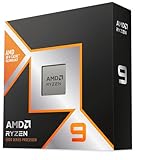
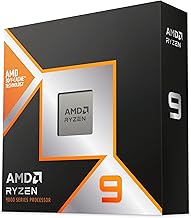
AMD’s Ryzen 9 processors, headlined by the 9950X and the gaming-focused 9950X3D, are the choice for enthusiasts who want elite performance with a gaming tilt. The 9950X3D in particular combines sixteen Zen 5 cores with 3D V-Cache, letting it lead in games while still tearing through rendering, encoding, and other threaded work. That dual strength makes it a superb single-PC solution for creators who also demand the best frame rates.
The AM5 platform adds a major long-term advantage, with AMD committing to support the socket for years, so buyers gain a clear upgrade path without replacing the motherboard. Combined with strong efficiency and a wide range of X870 and B850 boards, a Ryzen 9 build is both future-proof and flexible. If gaming performance matters to you as much as productivity, or you value platform longevity, the Ryzen 9 lineup is the more compelling pick.
Which Should You Buy?
- For gaming-first high-end builds: pick a Ryzen 9, ideally the 9950X3D, because its 3D V-Cache leads in CPU-bound games.
- For productivity and AI workloads: pick the Intel Core Ultra 9 285K for its twenty-four cores and integrated NPU.
- For the longest upgrade path: pick a Ryzen 9 on AM5, since AMD supports the socket far longer than Intel’s LGA 1851.
- For a balanced creator-gamer machine: pick the Ryzen 9 9950X3D to get top gaming and strong multi-threaded performance together.
- For a modern platform with the latest connectivity: pick the Core Ultra 9 285K if you value Arrow Lake’s updated feature set and efficiency gains.
Frequently Asked Questions
Which is better for gaming, Core Ultra 9 or Ryzen 9?
For gaming, AMD’s Ryzen 9 9950X3D leads thanks to its 3D V-Cache, delivering higher frame rates in CPU-bound titles. The Core Ultra 9 285K is capable but does not match the best X3D chips in pure gaming.
Is the Core Ultra 9 285K good for content creation?
Yes, it is excellent for productivity, with twenty-four cores that excel in rendering and encoding, plus an NPU for AI-accelerated tasks. It trades wins with the Ryzen 9 depending on the specific workload.
Does AMD or Intel have the better upgrade path?
AMD’s AM5 platform has a longer committed lifespan, so a Ryzen 9 build is more likely to accept future CPU upgrades without a new motherboard. Intel’s LGA 1851 offers a shorter runway.
Has Intel improved efficiency with Arrow Lake?
Yes, the Core Ultra 9 285K is significantly more efficient than Intel’s previous flagships, addressing past complaints about high power draw and heat, though AMD’s Zen 5 remains very competitive on efficiency.
Final Verdict
Both flagships are outstanding, but their strengths point to different buyers. The Intel Core Ultra 9 285K is the productivity-focused, modern-platform choice with improved efficiency and strong AI capability, while AMD’s Ryzen 9 lineup, especially the 9950X3D, leads in gaming and benefits from the long-lived AM5 socket. If gaming and future upgrades top your list, go Ryzen 9; if threaded productivity and platform features lead, the Core Ultra 9 285K is a worthy flagship.