Key takeaways
- Elite gaming performance from the 3D V-Cache cores.
- Sixteen cores make it a genuine workstation for rendering and compiling.
- Single-socket solution for users who both game and create seriously.
- AM5 compatibility with DDR5 and PCIe 5.0 eases upgrades.
What's inside
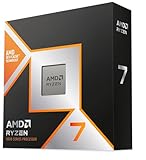
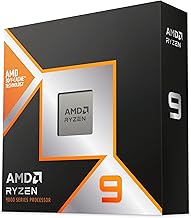
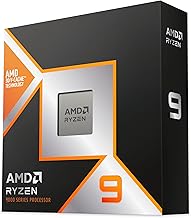
The AMD Ryzen 9 9950X3D is a sixteen-core, thirty-two-thread desktop processor that pairs AMD’s Zen 5 architecture with second-generation 3D V-Cache. It is the flagship attempt to erase the old compromise between gaming and heavy productivity: the enormous stacked cache accelerates games, while the full sixteen cores chew through rendering, compiling, and simulation. For anyone who refuses to choose between a gaming rig and a workstation, this is AMD’s answer.
This chip is aimed at the creator-gamer and the professional who games seriously, the person running high-refresh titles by night and demanding multi-threaded workloads by day. If you genuinely use many cores and want near-flagship gaming performance in the same socket, it is uniquely positioned. Pure gamers who never touch heavy productivity will get very similar gaming results from the cheaper eight-core X3D, so the 9950X3D’s value hinges on whether you actually use its extra muscle.
As an Amazon Associate we earn from qualifying purchases at no extra cost to you. Product prices and availability are accurate as of the date shown and are subject to change.





⚡ Save on Your Next PC — Amazon Prime
Prime members get fast free shipping on the systems above, plus early access to Prime Day & Black Friday PC deals. New members get a 30-day free trial.
Watch: Ryzen 9 9950X3D Review — Video Review
Design & Build
Built for the AM5 platform, the 9950X3D supports DDR5 and PCIe 5.0 and slots into existing 600-series boards with a BIOS update. Internally it uses a dual-die layout, with the 3D V-Cache stacked beneath one compute die and a second die free to hit high clocks, letting AMD’s scheduling steer games toward the cache-rich cores and threaded work across all sixteen. Like the rest of the line it ships without a cooler, and given its power and thermals it deserves a strong 280mm or 360mm liquid cooler to sustain peak clocks.
Performance
In gaming, the 9950X3D sits right alongside the best, with the cache-equipped cores delivering the same class-leading frame rates that define the X3D family. Where it pulls decisively ahead of the eight-core model is productivity: sixteen Zen 5 cores tear through rendering, encoding, code compilation, and simulation, making this a legitimate workstation processor rather than a gaming chip with extra threads bolted on.
The trade-offs are subtle but real. Because only one die carries the 3D V-Cache, performance can depend on AMD’s software correctly parking games on the right cores, and a rare title may behave better with manual tuning. It also draws more power and runs hotter than the eight-core X3D, and it commands a significantly higher price for gaming gains that are often marginal over that cheaper chip. Its case rests entirely on the productivity half of the equation.
Pros & Cons
- Elite gaming performance from the 3D V-Cache cores.
- Sixteen cores make it a genuine workstation for rendering and compiling.
- Single-socket solution for users who both game and create seriously.
- AM5 compatibility with DDR5 and PCIe 5.0 eases upgrades.
- Gaming gains over the cheaper eight-core X3D are often small.
- Dual-die design relies on correct core scheduling for best results.
- High price, high power draw, and no included cooler.
Alternatives to Consider
If gaming is your only real priority, the AMD Ryzen 7 9800X3D delivers nearly identical gaming performance for much less. Those who want maximum multi-threaded throughput without needing cache-boosted gaming can look at the standard Ryzen 9 9950X, while the Ryzen 9 9900X3D offers a twelve-core step down that still blends strong gaming and productivity at a lower price than the flagship.
Frequently Asked Questions
How is it different from the 9800X3D?
The 9950X3D doubles the core count to sixteen for far stronger multi-threaded work, while gaming performance is roughly comparable to the eight-core 9800X3D.
Is it worth it purely for gaming?
Usually not. If you only game, the cheaper 9800X3D offers similar frame rates. The 9950X3D earns its price when you also run heavy productivity workloads.
Does core scheduling matter?
Yes. Because only one die has the 3D V-Cache, AMD’s software steers games to the right cores. It generally works well, though a rare title may benefit from manual tuning.
What cooling does it need?
No cooler is included, and given its sixteen cores and power draw, a strong 280mm or 360mm liquid cooler is recommended to maintain peak clocks.
Verdict
The AMD Ryzen 9 9950X3D is the definitive do-it-all flagship for 2026, combining top-tier gaming with true sixteen-core workstation power in a single AM5 chip. Its gaming lead over the eight-core X3D is slim, and it demands serious cooling, power, and money, but for creators and professionals who also game at a high level, it removes the need to compromise, and that versatility is exactly what makes it special.