Key takeaways
- Powerful NPU: Panther Lake’s AI engine enables fast on-device inference.
- Excellent efficiency: Mobile parts deliver long battery life and cool operation.
- Cutting-edge I/O: Wi-Fi 7, Thunderbolt 4, and DDR5-7200 support throughout.
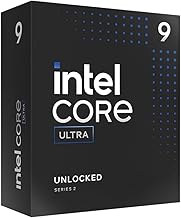
- Desktop muscle: The 285K’s 24 cores handle the heaviest workloads.
What's inside
Intel’s Core Ultra Panther Lake generation marks one of the company’s most significant architectural shifts in years, bringing a beefier NPU AI engine, refreshed efficiency cores, and support for blistering DDR5-7200 memory. For laptop buyers and mini-PC enthusiasts, this means genuinely capable on-device AI, longer battery life, and Wi-Fi 7 connectivity in impressively compact packages. But Panther Lake also arrives alongside Intel’s existing Arrow Lake desktop chips, and the two serve very different audiences.
This review untangles the Core Ultra landscape, comparing the mobile Panther Lake-H parts found in the LG gram Max 17 and ASRock NUC mini PCs against the desktop-focused Core Ultra 9 285K and 285 Arrow Lake processors. If you are trying to decide between a thin-and-light AI laptop, a tiny AI workstation, or a full desktop build, this breakdown will point you toward the right silicon.
As an Amazon Associate we earn from qualifying purchases at no extra cost to you. Product prices and availability are accurate as of the date shown and are subject to change.


🎮 Get More From Your Setup — Free
Prime Gaming gives you free PC games every month, in-game loot, and a free Twitch channel sub — plus fast free shipping on all the gear above. New members get a 30-day free trial.
Watch: Intel Core Ultra Panther Lake: Review & Buyer’s Guide — Video Review
Design & Build
Panther Lake’s efficiency shines in its physical implementations. The LG gram Max 17 packs a Core Ultra 7 355 into a chassis that weighs just 3.39 pounds despite its large 17-inch touchscreen, with Thunderbolt 4 and Wi-Fi 7 built in. The ASRock Industrial NUC BOX-325 and slim NUCS BOX-358H cram the same Panther Lake-H silicon into barebone mini-PC enclosures barely larger than a paperback, complete with dual 2.5GbE networking and USB4. On the desktop side, the Core Ultra 9 285K and 285 are LGA 1851 processors that drop into Z890 motherboards, giving builders full control over cooling and expansion.
Performance
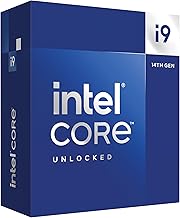
The distinction here is mobility versus raw throughput. The desktop Core Ultra 9 285K is a 24-core (8 performance plus 16 efficiency) monster clocking up to 5.6GHz, ideal for heavy content creation, compiling, and multitasking on a full tower. The 65W Core Ultra 9 285 offers similar core counts at lower power for quieter builds. Panther Lake mobile chips like the Core Ultra 7 355 prioritize efficiency and AI acceleration, delivering all-day battery life, a powerful NPU for local AI workloads, and strong integrated graphics that handle creative apps and light gaming without a discrete GPU.
Pros & Cons
- Powerful NPU: Panther Lake’s AI engine enables fast on-device inference.
- Excellent efficiency: Mobile parts deliver long battery life and cool operation.
- Cutting-edge I/O: Wi-Fi 7, Thunderbolt 4, and DDR5-7200 support throughout.
- Desktop muscle: The 285K’s 24 cores handle the heaviest workloads.
- Platform cost: New Z890 boards and DDR5 add to a desktop build’s price.
- Barebone mini PCs: ASRock NUC units need RAM and storage added separately.
- No discrete GPU: These chips rely on integrated graphics for gaming.
Alternatives to Consider
Gamers who need serious frame rates should pair any of these platforms with a discrete graphics card, or look at AMD’s Ryzen alternatives that often lead in multi-threaded value. Buyers who want maximum battery life in a laptop might also cross-shop Qualcomm Snapdragon Copilot+ machines. Still, for a blend of AI capability, efficiency, and platform maturity, Intel’s Core Ultra lineup is a compelling and versatile choice.
Frequently Asked Questions
What makes Panther Lake different from previous Intel chips?
Panther Lake introduces a significantly stronger NPU AI engine, improved efficiency cores, and support for faster DDR5-7200 memory, all aimed at better battery life and on-device AI performance.
Is the Core Ultra 9 285K good for gaming?
Paired with a strong discrete GPU, yes. On its own the 285K relies on integrated graphics, so gamers should budget for a dedicated graphics card.
Should I buy a Panther Lake mini PC or a laptop?
Choose the LG gram Max 17 laptop for portability, or an ASRock NUC mini PC if you want a fixed, ultra-compact AI workstation you can equip with your own RAM and storage.
Do these chips support Wi-Fi 7?
Yes. Both the Panther Lake mobile platforms and the ASRock NUC mini PCs include Wi-Fi 7, delivering faster wireless throughput and lower latency than Wi-Fi 6E.
Verdict
Intel’s Core Ultra Panther Lake generation is best understood as two stories. For portable AI computing and all-day battery life, the LG gram Max 17 and ASRock NUC mini PCs are excellent showcases of the mobile silicon. For desktop builders chasing raw multi-core power, the Core Ultra 9 285K remains the flagship pick. Match the platform to your priorities, and either path delivers a genuinely modern computing experience.