Key takeaways
- Panel type: QD-OLED delivers perfect blacks, fast response, and vibrant color; VA offers strong contrast at a lower price.
- GPU headroom: Driving 4K at 240Hz demands a powerful graphics card — plan around a high-end GPU with DLSS or FSR.
- Connectivity: Look for DisplayPort 2.1 or HDMI 2.1 to carry full 4K 240Hz, plus USB-C if you want single-cable convenience.
- Response and sync: Sub-0.1ms response and G-SYNC/FreeSync compatibility keep motion crisp and tear-free.
- Size and burn-in care: 27″ is sharper per inch; 32″ is more immersive. OLED models include care features to protect against burn-in.
What's inside
4K at 240Hz is the new pinnacle of PC gaming displays — pin-sharp resolution paired with a blisteringly fast refresh rate. The best 4K 240Hz monitors, many built on QD-OLED panels, deliver near-instant response times, perfect blacks, and vivid color, making them the ultimate choice for enthusiasts who want it all.
Below we round up the top 4K 240Hz gaming monitors available now, spanning premium OLED flagships and value curved options, plus how to choose the right one for your rig.
As an Amazon Associate we earn from qualifying purchases at no extra cost to you. Product prices and availability are accurate as of the date shown and are subject to change.


🎮 Get More From Your Setup — Free
Prime Gaming gives you free PC games every month, in-game loot, and a free Twitch channel sub — plus fast free shipping on all the gear above. New members get a 30-day free trial.
Watch: Best 4k 240hz Monitor — Video Review
How to Choose a 4K 240Hz Monitor
- Panel type: QD-OLED delivers perfect blacks, fast response, and vibrant color; VA offers strong contrast at a lower price.
- GPU headroom: Driving 4K at 240Hz demands a powerful graphics card — plan around a high-end GPU with DLSS or FSR.
- Connectivity: Look for DisplayPort 2.1 or HDMI 2.1 to carry full 4K 240Hz, plus USB-C if you want single-cable convenience.
- Response and sync: Sub-0.1ms response and G-SYNC/FreeSync compatibility keep motion crisp and tear-free.
- Size and burn-in care: 27″ is sharper per inch; 32″ is more immersive. OLED models include care features to protect against burn-in.
The Best 4K 240Hz Monitors Reviewed
ASUS ROG PG27UCDM 27″ QD-OLED
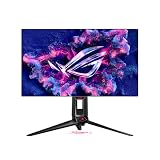
This 27-inch QD-OLED pairs 4K 240Hz with a custom heatsink, OLED Care Pro, and DisplayPort 2.1 for future-ready bandwidth. True 10-bit color and G-SYNC compatibility make it a stunning, high-density choice that’s also console-friendly for PS5 and Xbox.
MSI MPG 321URX QD-OLED (32″)
A 32-inch Quantum Dot OLED, the 321URX delivers 4K 240Hz with a rapid 0.03ms response, True Black HDR 400, and 90W USB-C. Its combination of size, color, and single-cable convenience makes it a favorite for immersive gaming and creative work alike.
ASUS ROG XG27UCDMG Tandem QD-OLED
Built on tandem QD-OLED tech, this 27-inch panel adds a Neo Proximity Sensor, ELMB Sync, and 99% DCI-P3 coverage with G-SYNC. The tandem structure targets higher brightness and longevity, appealing to players who want OLED perks with extra durability.
ASUS ROG PG32UCDP Dual-Mode OLED (32″)
The clever PG32UCDP runs 4K 240Hz or switches to a Dual Mode FHD 480Hz for competitive shooters. With a custom heatsink, USB-C 90W, and G-SYNC, it’s a flexible 32-inch flagship that adapts to both cinematic and esports play.
CRUA 32″ 4K 240Hz Curved (VA)
For a more affordable route, CRUA’s 32-inch 1500R curved VA panel offers 4K 240Hz with 120% sRGB, HDMI 2.1, and built-in speakers. It trades OLED contrast for value, making 4K 240Hz gaming accessible without the premium OLED price.
Frequently Asked Questions
What GPU do I need for 4K 240Hz?
You’ll want a top-tier graphics card, and upscaling like DLSS or FSR helps hit high frame rates. Not every game will reach 240fps at native 4K, but the headroom future-proofs your setup.
Is QD-OLED worth it over VA?
QD-OLED offers perfect blacks, faster response, and richer color, but costs more. VA panels like the CRUA deliver strong contrast and 4K 240Hz at a lower price if OLED is out of budget.
Should I get 27″ or 32″?
27-inch panels have higher pixel density and sharper text, while 32-inch models feel more immersive. Both are excellent at 4K — choose based on desk space and viewing distance.
Do I need DisplayPort 2.1 or HDMI 2.1?
Yes — these newer standards carry the bandwidth for full 4K 240Hz. Models like the PG27UCDM include DisplayPort 2.1, while HDMI 2.1 also enables 4K high-refresh play on PS5 and Xbox.
Final Thoughts
A 4K 240Hz monitor is the ultimate gaming display for those with the GPU to match. The ASUS ROG QD-OLED models and MSI 321URX lead on image quality, the dual-mode PG32UCDP adds competitive flexibility, and CRUA’s curved VA brings the resolution within reach. Pick the panel and size that fit your rig, and enjoy gaming at its sharpest and smoothest.