Our Top Picks
 Marsail Ergonomic Office Chair: Office Desk Chair with46.9" x 24.8" x 24.4"46.9 x 24.8 x 24.4 inches30.42 poundsCheck on Amazon
Good aim starts below the wrist. You can own the fastest mouse and the best sensor, but if your wrist is bent, your elbow is floating, and your shoulder is doing all the work, your aim will be inconsistent and your hand will hurt. Mouse posture is the position of your whole arm, from shoulder to fingertip, while you play, and it decides how accurately you aim and how long you can play without pain.
This is a guide, not a product ranking. No mouse is ranked or linked here, because posture is how you sit and hold the mouse, not which mouse you buy. That is what separates this guide from the different-fingers guide on this site, which ranks five mice by grip style and finger length: that guide answers which mouse fits your hand, while this guide answers how to position your hand, wrist, arm, desk, and chair, whatever mouse you already own. The grip styles appear in both guides, but here they are positions to hold, not products to buy.
As an Amazon Associate, we earn from qualifying purchases.
Why Mouse Posture Matters
Your hand works best in a neutral position. When your wrist is straight, your tendons slide freely, your fingers move quickly, and your aim is consistent. When your wrist is bent for hours, the tendons rub, the nerves compress, and the small muscles in your hand tire faster. That shows up first as soreness after a long session, then as stiffness in the morning, and eventually as pain that does not go away when you stop playing.
Posture also affects aim directly. A bent wrist changes how your clicks feel and how far your hand can move. A floating elbow makes your whole arm unstable, so your aim wobbles. Fix the posture and the aim often fixes itself, because the same hand movement starts producing the same cursor movement every time.
The Neutral Wrist: The One Rule That Matters Most
The single most important rule of mouse posture is to keep your wrist straight. Look at your hand from the side while you hold the mouse: the back of your hand and your forearm should form a straight line, with no bend up or down. Look from above: your hand should point straight ahead, with no bend to the left or right. That straight line is the neutral wrist position, and it is the position where your tendons and nerves are under the least strain.
Most players break this rule in one of two ways: resting the wrist on the desk edge while the hand reaches up to the mouse, which bends the wrist back, or holding the mouse with the wrist cocked sideways, usually because the mouse is too far to the right or the desk is too high. Both feel normal after a while, but both load the wrist in a way it was not designed to handle for hours.
Fix it by adjusting the desk and chair first, not by forcing your hand into a new shape. Your forearm should rest lightly on the desk or armrest, your wrist should float just above the surface or rest on a soft pad, and the mouse should sit where your hand falls naturally. If you have to reach or bend to get to the mouse, move the mouse, not your wrist.
Desk and Chair Height: Set Them Before You Play
Desk and chair height decide whether a neutral wrist is even possible. Sit in your chair with your feet flat on the floor and your upper arms hanging relaxed at your sides. Your elbows should bend at roughly a right angle, about ninety degrees, when your hands rest on the mouse and keyboard. Your forearms should be roughly level with the desk surface, not sloping steeply up or down.
If the desk is too high, your shoulders rise and your forearms slope down to the mouse, which bends the wrist back. Lower the chair, or raise the chair and use a footrest so your feet stay flat. If the desk is too low, your forearms slope up and your elbows drop, which pulls your shoulders forward and rounds your back. Raise the desk if it adjusts.
Chair armrests help only if they are set correctly: too high and they push your elbow up and bend your wrist, too low and they are useless. Set them so your elbows rest lightly with your shoulders relaxed, or remove them if they block your mouse arm. Many competitive players remove the right armrest entirely so the mouse arm can move freely.
Elbow Position: Supported, Not Floating
Your elbow should be supported, either by the desk, the armrest, or by resting lightly on the chair, but it should not be pinned in one place. A supported elbow steadies the arm and takes weight off the shoulder. A pinned elbow forces the wrist to do all the moving, which is exactly what causes wrist pain.
The best position is a compromise: the elbow rests lightly on the desk or armrest, and the forearm pivots around it for small movements, while the whole arm moves for large ones. Your elbow should sit close to your body, not flared out to the side. A flared elbow rotates the wrist sideways and loads the tendons unevenly. Keep the elbow in, the shoulder down, and the arm relaxed.
If your desk is too small for your elbow and your mouse, move the keyboard left and give the mouse arm more room. A cramped mouse area forces the elbow out and the wrist sideways, and no mouse shape can fix that.
Arm Aiming Versus Wrist Aiming
There are two ways to move a mouse: with the wrist, and with the arm. Wrist aiming uses small, fast movements and is good for precise adjustments and close-range tracking. Arm aiming uses the whole forearm and shoulder for large movements, flicks, and wide turns. Most good players use both: the arm for large movements, the wrist for fine adjustments.
The mistake is using only the wrist for everything. Wrist-only aiming forces the small muscles and tendons in the wrist to do all the work, and limits how far you can move without lifting the mouse. If you play at a low sensitivity, which most competitive players do, wrist-only aiming is not even possible: the distances are too large. Learn to aim with the arm for big movements and let the wrist handle the last few millimeters.
To practice arm aiming, lower your sensitivity until a full turn takes a wide sweep of the mousepad, and give yourself a large mousepad with room to move. Rest your forearm on the desk and pivot from the elbow for medium movements and from the shoulder for large ones. Your wrist should stay straight through the whole movement.
Grip Styles as Posture: Palm, Claw, and Fingertip
Grip style is part of posture, because it decides how your hand contacts the mouse and which muscles do the work. There are three grips, and none of them is wrong. The right one is the one that keeps your wrist straight and your hand relaxed.
Palm grip means your whole hand rests on the mouse, palm in contact with the body and fingers extended along the buttons. It is the most relaxed grip and the easiest on the wrist, because the hand is supported. It suits larger mice and large hands, and it is the best grip for long sessions. The tradeoff is speed: the whole hand has to move, so fast flicks take more effort.
Claw grip means your palm rests on the back of the mouse while your fingers arch down onto the buttons. It is the middle ground: faster than palm grip, more stable than fingertip grip. It suits medium mice and players who want a balance of control and speed. The risk is tension, so keep the hand relaxed and let the mouse support the palm.
Fingertip grip means only your fingertips touch the mouse, with the palm held clear of the body. It is the fastest grip, because only the fingers move, and it suits small, light mice. The tradeoff is stability and fatigue: the hand is unsupported, so the wrist and fingers work harder. Fingertip players should take more breaks and keep the wrist straight.
To find your grip, hold the mouse the way that feels natural, then check the wrist. If the wrist is straight and the hand is relaxed, the grip is fine, whatever its name. If the wrist bends or the fingers cramp, try a different grip or a different mouse shape. The different-fingers guide on this site ranks mice by grip and hand size if you decide the mouse itself is the problem, but try the posture fix first.
Mousepad Space and Mouse Position
Your mousepad should be large enough for your sensitivity. Low-sensitivity players need a large pad, because a full turn takes a wide sweep. High-sensitivity players can use a smaller pad, but a large pad still helps, because it gives the forearm room to rest and move. A pad that is too small forces you to lift and reposition the mouse constantly, which breaks your aim and strains the wrist.
Position the mouse where your hand falls naturally. Sit relaxed, let your arm hang, then bring your hand to the desk: the mouse should be there. A mouse that is too far to the right forces the wrist sideways, one that is too close forces the elbow back, and one that is too far away forces the shoulder forward. Move the mouse to your hand, not your hand to the mouse.
Keep the mousepad flat and clean. A curled edge or a sticky surface catches the mouse and makes you grip harder to compensate, which tires the hand.
Breaks and Stretches: The Part Everyone Skips
No posture is good enough to hold for six hours without a break. Your hands need rest, and the best schedule is simple: a short break every hour, and a longer break every two to three hours. During a break, stand up, walk around, and let your hands hang loose at your sides. Shake them gently, open and close your fists a few times, and stretch your fingers wide, then relax.
Two stretches help most players. For the wrist flexors, hold your arm out straight, palm up, and gently pull your fingers back toward you until you feel a mild stretch in the forearm; hold for fifteen seconds, then switch hands. For the extensors, hold your arm out straight, palm down, and gently press the back of your hand down until you feel a stretch on the top of the forearm; hold for fifteen seconds, then switch. Neither stretch should hurt.
Between games, drop your hands into your lap and let them rest completely for a minute. Do not check your phone during the break: scrolling and typing use the same tendons you are trying to rest.
Posture-Friendly Gear to Pair With Good Technique
Posture starts with how you sit and move, but a few well-chosen accessories make a neutral wrist and supported forearm easier to keep up through long sessions.
Logitech Lift Vertical Ergonomic Mouse
A vertical mouse that holds the hand in a handshake position, which reduces forearm twist. Many players use it for work and desktop tasks while keeping a standard mouse for fast aiming.
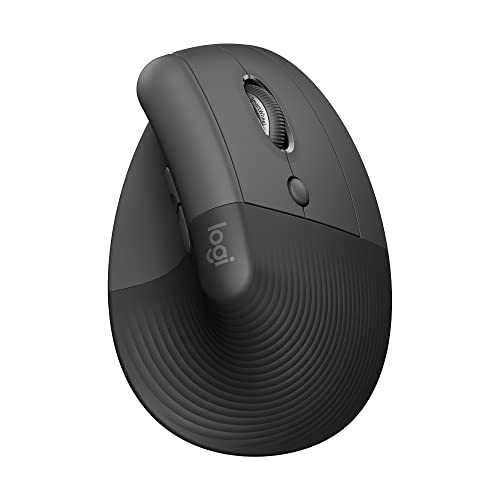
Logitech Lift Vertical Ergonomic Wireless Mouse - Graphite | Connect via Bluetooth or included Logi Bolt USB-A receiver, quiet clicks, 4 of 6 buttons customizable, Windows Mac compatible
One of the home product options compared in this guide.
View on AmazonProtoArc EM11 NL Vertical Mouse
A lower-cost rechargeable vertical mouse with a steep angle. It is a simple way to try the vertical style before spending more.

ProtoArc EM11 NL Wireless Ergonomic Vertical Mouse, Rechargeable, Black | 58° vertical design supports a natural wrist posture, connect 3 devices via Bluetooth/2.4G USB-A, 500mAh USB-C rechargeable.
One of the home product options compared in this guide.
View on AmazonKTRIO Mouse Pad with Wrist Rest
A memory foam wrist support attached to the pad. It keeps the wrist from dropping below the forearm line during low-sensitivity play.

KTRIO Keyboard Wrist Rest & Mouse Pad with Wrist Rest, Black | Memory Foam Wrist Support, Ergonomic Design, Non-Slip Base, Office and Home Use
Chosen because it is memory foam.
View on AmazonMarsail Ergonomic Office Chair
A mesh chair with adjustable lumbar support and armrests, helpful for setting elbow height so the forearm is supported rather than floating.
Marsail Ergonomic Office Chair: Office Desk Chair with High Back Mesh and Adjustable Lumbar Support Rolling Work Swivel Task Chairs with Wheel 3D Armrests and Headrest
One of the home product options compared in this guide.
View on AmazonCommon Posture Mistakes
Resting your wrist on the hard edge of the desk is the most common mistake, and the most damaging. The edge presses into the tendons and nerves on the underside of the wrist, and hours of that pressure add up. Use a soft wrist rest or a padded mousepad edge, or keep the wrist floating just above the desk. Never let a hard edge dig into your wrist.
Gripping the mouse too hard is the second mistake. A death grip tires the hand, makes clicks feel stiff, and adds tension to the whole arm. Hold the mouse firmly enough that it does not slip, and no tighter. If your knuckles go white, you are gripping too hard. Relax the hand between fights and let the fingers rest on the buttons rather than hovering tensely above them.
Hunching over the desk is the third mistake. When you lean forward and round your shoulders, your neck and upper back take over work the chair should be doing, and your arm loses its stable base. Sit back in the chair, keep your back against the backrest, and bring the monitor to eye level so you do not have to lean forward to see it. If you catch yourself hunching during a tense round, sit back deliberately and reset.
Playing through pain is the worst mistake. Pain is a signal, not a challenge. If your wrist hurts, stop and rest it. If the pain comes back every session, change something: the desk height, the sensitivity, the grip, or the length of your sessions. If the pain persists for more than a week or two, or if you feel numbness or tingling in your fingers, see a doctor.
Frequently Asked Questions
What is the best mouse posture for gaming?
Keep your wrist straight, your elbow at roughly a right angle and lightly supported, your shoulder relaxed and down, and your forearm roughly level with the desk. Use your arm for large movements and your wrist for fine adjustments, and take a short break every hour.
Is palm, claw, or fingertip grip best for posture?
Palm grip is the most relaxed and the easiest on the wrist, because the whole hand is supported. Claw grip is a good middle ground. Fingertip grip is the fastest but the most tiring, because the hand is unsupported. The best grip is the one that keeps your wrist straight and your hand relaxed.
Should my wrist rest on the desk while gaming?
Your wrist can rest lightly on a soft surface, such as a padded mousepad or a soft wrist rest, but it should never press against a hard desk edge. Many players keep the wrist floating just above the surface, with the forearm resting on the desk. Either is fine as long as the wrist stays straight and nothing hard presses into it.
Does a wrist rest help or hurt?
A soft wrist rest helps if it keeps your wrist straight and cushions it from the desk edge. A hard or tall wrist rest hurts if it bends the wrist back or presses into the tendons. Choose a low, soft rest, and place it under the forearm and wrist, not under the palm alone.
How high should my desk be for gaming?
Your elbows should bend at roughly a right angle when your hands are on the mouse and keyboard, with your forearms roughly level with the desk. If the desk is too high, your shoulders rise and your wrist bends back. If it is too low, your elbows drop and your shoulders round forward. Adjust the chair first, then the desk.
Should I aim with my arm or my wrist?
Use both. Aim with your arm for large movements such as flicks and wide turns, and with your wrist for fine adjustments such as tracking a moving target. Using only the wrist for everything tires the small tendons in the wrist and limits how far you can move without lifting the mouse.
How often should I take breaks while gaming?
Take a short break every hour: stand up, walk around, shake out your hands, and stretch your wrists for a minute or two. Take a longer break every two to three hours. If your wrist hurts, stop sooner.
When should I see a doctor about wrist pain?
See a doctor if the pain lasts more than a week or two despite rest and posture changes, if you feel numbness or tingling in your fingers, if your grip feels weak, or if the pain wakes you at night. Those can be signs of nerve compression or tendon injury.
Conclusion
The best mouse posture for gaming is simple: a straight wrist, a supported elbow at a right angle, a relaxed shoulder, a loose grip, arm aiming for large movements, and a short break every hour. None of it requires buying anything, just setting up your desk and chair once and paying attention to your wrist until the new position feels natural. Do that, and your aim gets more consistent and your wrist stays healthy enough to keep playing for years.
Verification Note
This is a guide article with zero ASINs by design. Mouse posture is how you sit and hold the mouse, not a hardware product, so no mouse is ranked or linked here, and no ASIN was needed or invented. Direct opens of amazon.com/dp pages returned HTTP 403 in prior sessions, as Amazon blocks the fetcher, but that does not affect this article because it contains no product links. The posture guidance is based on standard ergonomic practice for computer work: neutral wrist, elbow at roughly a right angle, supported forearm, and regular breaks, adapted here for gaming, low-sensitivity arm aiming, and the three grip styles. This article gives general ergonomic information, not medical advice. If you have persistent wrist pain, numbness, or tingling, see a doctor.
FAQ
What is the best mouse posture for gaming?
Is palm, claw, or fingertip grip best for posture?
Should my wrist rest on the desk while gaming?
Does a wrist rest help or hurt?
How high should my desk be for gaming?
Should I aim with my arm or my wrist?
How often should I take breaks while gaming?
When should I see a doctor about wrist pain?
More from Amazon
Programs that pair well with the guide above. Offers and eligibility are set by Amazon and may change.
Free shipping on eligible items, Prime Video and more. Eligible new members can start with a free trial.
Start a Prime free trialAd-free music streaming. Eligible new subscribers can start with a free trial.
Try Music Unlimited freeA Prime membership for ages 18-24 with a trial period. Eligibility is set by Amazon.
See Prime for Young AdultsAudiobooks and podcasts to listen to on the go. Eligible new members can start with a free trial.
Try Audible freeAs an Amazon Associate we earn from qualifying purchases.