The best racing seat cushions for long sessions are not necessarily the thickest or most expensive: a pad must fit between a seat’s side bolsters, stay in place under braking, and preserve the driver’s relationship to the pedals and wheel. For a relatively narrow flat seat, we favor the ComfiLife Gel Enhanced Seat Cushion as a conditional first option because its published 13.8-inch width is easier to accommodate than many 16- to 18-inch-wide alternatives. Its 2.75-inch nominal thickness is still substantial. Measure the seat and plan a fit test before buying any of these general-purpose cushions.
Quick verdict: match the cushion to the seat first
ComfiLife is the first model to check if the usable base width is limited but not extremely narrow; its U-shaped coccyx cutout and gel-topped memory foam favor someone noticing local tailbone pressure. The Purple Double is a smarter choice on a wide recliner when you want to flip between two firmness feels, while Purple Royal targets a hard, mostly flat base. The thick Cushion Lab pad can feel appealing in a normal chair but is often wrong for a fixed-position racing rig because its four-inch nominal depth changes the driver’s center of gravity and wheel height.
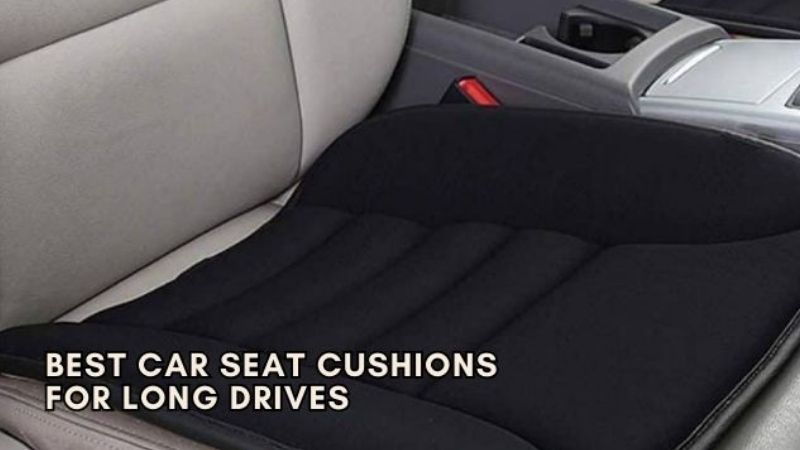
These products are sold primarily for office, car, or general seating, not homologated motorsport safety equipment or custom replacements for a particular sim-racing bucket shell. The right buying decision may be to change the seat angle, reposition existing removable foam, or choose a better-fitting seat instead. None should be used to claim treatment for back pain or a guaranteed reduction in fatigue.
Comparison table: width, height and cockpit fit
| Cushion | Published size or construction | Most plausible rig fit | US price/verification | Critical compromise |
|---|---|---|---|---|
| ComfiLife Gel Enhanced Seat Cushion | 17.6 x 13.8 x 2.75 in; gel-top memory foam | Smaller flat or mildly bolstered seat | $45.95 maker starting listing; variants vary | Thickness alters pedal reach and back support |
| Purple Double Seat Cushion | 18 x 16 x 2 in; two-sided GelFlex Grid | Wide reclining cockpit or gaming seat | US live checkout price not fixed | Too wide for many bucket-seat bolsters |
| Purple Royal Seat Cushion | 17.5 x 15.75 x 2 in; dense GelFlex Grid | Firm flat or shallow-bolster seat | US live checkout price not fixed | Dense grid and weight; may ride over bolsters |
| Cushion Lab Pressure Relief Seat Cushion | Standard 18 x 16 x 4 in; charcoal foam | Tall driver with adjustable wheel and pedals | US live checkout price varies | Four-inch nominal height can distort position |
| Sleepavo Memory Foam Seat and Back Cushion Set | Seat 18 x 14 x 3 in; lumbar 13.5 x 12.5 x 5 in | Adjustable reclining seat with loose lumbar support | $47.99, Sleepavo US listing | Bulky paired pillows in narrow shells |
| Purple Ultimate Seat Cushion | 21.75 x 18 x 2.5 in; GelFlex Grid | Extra-wide seat or office-racing hybrid | $159, Purple listing observed; promos vary | Usually unsuitable for narrow bucket seats |
Dimensions are manufacturer-published nominal measurements. Foam compresses differently by person and temperature, so measured thickness is not identical to the final rise in hip position. Published seller prices may change by color, size and promotion. Compare the usable interior width at hip level, not just the outside width of the racing seat shell.
How we chose cushions for racing cockpits
The short list uses identifiable cushions with manufacturer descriptions of size, material, cover care, and intended seating use. We compared the dimensions against common cockpit constraints conceptually—narrow bolsters, fixed back angle, wheel and pedal alignment, heat buildup, and interference with side supports. We did not put these pads in a particular NRG, Sparco, Next Level Racing or Playseat seat and did not perform pressure-mapping or long-session tests.
Independent sim-racing discussion supports a practical warning: some drivers improve comfort by changing removable bucket-seat foam, while others find that adding a thick generic cushion raises them too far and creates new leg or neck pressure. These are user experiences, not universal fit specifications. Consequently, the comparison below is conditional rather than a claim that six pillows fit all cockpits. We distinguish manufacturer claims from geometry-based buying advice throughout.
Six seat cushions worth considering for different rigs
ComfiLife Gel Enhanced Seat Cushion — best first check for a smaller seat base
ComfiLife lists the Gel Enhanced cushion at roughly 17.6 by 13.8 by 2.75 inches, depending on the way its dimensions are rounded on the page. The comparatively narrow stated width is the key attraction here: a driver with a lightly bolstered reclining cockpit may have more hope of fitting it flat than a rectangular 18-inch-wide grid cushion. The U-shaped rear cutout changes how pressure is distributed around the coccyx instead of simply putting foam over every part of the seat.
This is not a low-profile insert. Add a cushion close to three inches thick, even if it compresses, and the driver may need to move the pedals, lower the seat, or adjust the wheel angle. If your rig has fixed pedal reach and a high steering shaft, it may be better to test a thinner removable foam pad before committing. The cover is removable for washing and the underside is described as non-slip, but an angled racing shell still demands a fit test.
The manufacturer markets benefits for sciatica and tailbone discomfort. Those are promotional claims; this article does not diagnose or promise pain relief. The maker’s FAQ also describes a recommended 250-pound loading figure and notes temperature and body weight affect memory-foam feel. These are reasons to review your dimensions and sitting needs, not a substitute for a medical opinion if pain persists.
- Advantages: narrower listed width than many pads; rear coccyx relief opening; removable washable cover
- Limitations: nearly three-inch nominal rise; not made for racing bucket seats; foam firmness is temperature-dependent
Before buying: Measure flat usable seat width at the narrowest hip position and verify the selected color/size; the displayed US listing begins at $45.95 but variants can differ.
Purple Double Seat Cushion — best for a wide reclining racing seat
Purple’s Double cushion is 18 by 16 by 2 inches on its consumer product information and uses a two-sided GelFlex Grid. The ability to flip it is relevant for long racing practice sessions: one orientation is presented as softer and the other firmer, allowing a driver to compare pressure feel without changing the entire seat. The two-inch nominal profile may be easier to accommodate than four-inch thick foam, but a grid does not automatically fit under side bolsters.
Its 16-inch depth and 18-inch width make it plausible for a broad racing-style recliner, office-racing hybrid, or larger flat seat. An actual narrow fiberglass bucket is a different matter. If the sides of the cushion ride up onto the side wings, you lose consistent thigh support and may shift as you brake. A cushion with a good reputation in office chairs can become a poor choice when its corners are squeezed inward.
The washable cover and trial policy are useful because personal comfort is difficult to predict. Purple’s stated trial and warranty apply under its own terms and cannot override physical fit. Do not assume flipping the cushion changes your seat height exactly the same amount; sit in each orientation, reset your monitor horizon if necessary, and repeat a controlled pedal-reach test.
- Advantages: two firmness orientations; 2-inch nominal depth; maker-published trial and washable cover
- Limitations: 18-inch width can interfere with bolsters; heavier than foam inserts; not sold as bucket-seat kit
Before buying: Choose only after verifying the seat has at least the required usable flat footprint, including a small margin for the edges.
Purple Royal Seat Cushion — best dense grid for a hard, flat base
The Royal model has a 17.5 by 15.75 by 2-inch published footprint and a dense GelFlex Grid. Unlike the reversible Double, its distinctive job is softening a hard surface such as a rigid seat base or shallow-bolster recliner. Purple describes a grippy cover and 30-day trial with a one-year warranty, useful safeguards for a subjective comfort purchase.
At two inches nominal thickness it is still enough to alter driving geometry. If your hips rise and your thigh angle changes, you may start pushing pedals with your ankles instead of a comfortable leg position. Before buying, check whether the original seat cushion is removable or whether a small pad only under the sit bones could solve the pressure area more precisely.
The relatively dense grid can also feel different from memory foam as you move side to side, which is neither automatically better nor worse. It is designed for general hard seating, not the exact contour of a branded race bucket. Its 15.75-inch depth may sit too far forward on a short shell, so measure both front-to-back usable space and width rather than just looking at photographs.
- Advantages: dense grid intended for hard seats; grippy design; published 17.5 x 15.75 x 2 in size
- Limitations: may not fit high-bolster shells; heavy for a portable pad; noticeable hip-height change
Before buying: Compare Royal to Double by real seat footprint; choose Royal for hard-flat seating rather than simply picking the cheapest listing.
Cushion Lab Pressure Relief Seat Cushion — best plush contour for highly adjustable rigs
Cushion Lab describes its standard Pressure Relief cushion as about 18 inches wide, 16 inches long and four inches tall, with a contoured memory-foam support surface and a grippy underside. Those dimensions may create a more enveloping sitting feel in an upright desk or reclined gaming chair, but they are a strong warning against placing it blindly in a low-slung racing cockpit.
Consider this model only if your seat and pedal mounts have enough range to accommodate a potentially large change in hip height. The driver should still be able to press full brake travel with a relaxed knee and keep a natural wheel angle. On a fixed frame with a close roof-line monitor or narrow side bolsters, the cushion could make the cockpit less ergonomic even when it feels plush at first contact.
The washable cover is practical for shared or sweaty sessions, but the foam core should not be put in a washing machine. The manufacturer describes pressure-relief benefits; our recommendation is limited to where its shape plausibly fits. If you are shopping to address ongoing pain, evaluate both seating posture and medical guidance rather than assuming a tall cushion is curative.
- Advantages: substantial contoured foam surface; grippy underside; removable washable cover
- Limitations: very tall nominal profile; too broad for most bucket shells; may require full cockpit readjustment
Before buying: Confirm the exact Pressure Relief model and standard-versus-large sizing; do not treat similarly marketed “Cloud Cradle” cushion dimensions as interchangeable.
Sleepavo Memory Foam Seat and Back Cushion Set — best combined seat and lumbar trial
Sleepavo’s seat-and-back set includes a U-shaped seat cushion stated at 18 by 14 by 3 inches and a separate lumbar pillow of about 13.5 by 12.5 by 5 inches. Its buying advantage is modular diagnosis: you can try the lower pad on its own, then add lumbar support only if the seat-back contour leaves a genuine gap. That is more informative than immediately stuffing a large pillow behind every contact point.
For a wide reclining rig seat, independent pieces let you decide whether pressure is coming from the lower seat or the backrest. The included back strap is described as 58 inches, but attaching it securely to a racing shell with narrow harness holes can be complicated. Do not route straps across belt openings or mechanisms used for real driving safety; this is a home simulator accessory rather than vehicle restraint equipment.
A three-inch lower cushion can still shift pedal reach, while the five-inch lumbar pad may move the torso forward far enough to change steering distance. Start with one component at a time and remeasure the driving position. The manufacturer states a three-year warranty and washable covers; confirm exact policy and color in the current US order.
- Advantages: seat and back pieces can be trialed separately; 14-inch seat depth dimension; US maker price listed for the set
- Limitations: two thick pads can overfill a cockpit; separate lumbar strap may be awkward; not a custom replacement foam kit
Before buying: Measure both hip-contact area and seat-back curve. Use either or both pieces only if the posture remains natural.
Purple Ultimate Seat Cushion — best for truly wide gaming recliners
The Ultimate is a large-format GelFlex cushion listed at 21.75 by 18 by 2.5 inches. Purple explicitly positions it for larger chairs and extended sitting, including gaming and car-style seats. Its real use case in this roundup is a spacious reclining cockpit or hybrid gaming chair, not the narrow bucket seat most people imagine when they hear “race seat.”
The extra width and depth may support broad sitting positions without the edges digging into the thighs if the seat underneath is flat and supportive. In a shell with deep lateral bolsters, however, the same dimensions become a near-certain fit hazard. A cushion that bridges the two bolsters instead of lying between them will not settle properly and can create sliding or uneven hip pressure during braking.
The maker publishes a 2.5-inch Grid thickness, a washable cover and a 30-day trial. Its heavier body and relatively high list price make it difficult to justify without verifying the usable footprint. The maker listing showed $159 before any promotion in one observation; promotions vary, so that number is a reference rather than a universal checkout price.
- Advantages: large surface for broad chair bases; grippy grid construction; published trial/warranty terms
- Limitations: far too wide for many racing buckets; premium price; more weight to reposition or move
Before buying: Measure a full 21.75-by-18-inch resting footprint on a flat recliner before buying; do not rely on seat shell exterior measurements.
Buying guide: fit is more important than cushion marketing
Measure the flat usable surface between bolsters
With the seat empty, use a tape measure to record the width between the inner bolsters at the point your hips actually sit. Measure the usable front-to-back flat depth and note any raised shell lip. Compare those figures with the cushion’s published width and depth; leaving a little clearance prevents the edges from curling. If the side wings squeeze the pad, the fit fails even if the nominal dimensions look close. A narrow bucket may be better served by model-specific foam replacement than by any cushion in this roundup.
Account for compressed thickness and wheel-to-pedal geometry
A seat pad raises the pelvis by some portion of its nominal height. That affects eye position relative to a monitor or VR headset, shoulder relationship to the steering wheel, and knee extension at full brake force. Foam may compress 30 percent on one driver and differently on another; no reliable ratio is possible from product dimensions alone. Recheck your full brake press, heel rest, wheel reach and back contact after inserting a cushion. Never alter a load-cell brake adjustment merely to compensate for an unstable seat.
Decide whether the problem is seat bottom, tailbone or lumbar
A localized tailbone pressure problem may call for a coccyx-cutout insert rather than an oversized full-grid cushion. If the discomfort is in the lumbar region and the seat bottom is otherwise supportive, a separate back insert may be a more targeted experiment. If thigh support is poor because the seat pan angle is wrong, extra padding can worsen the issue. Start with the actual contact area and adjust the rig geometry before adding thicker layers.
Use removable covers and secure placement
Racing creates heat and repeated movement, so a washable cover and a grippy underside are worthwhile. A loose cushion can move when you press a stiff brake, changing lower-body position between laps. On a fixed-back bucket, check whether the manufacturer permits foam removal and replacement without cutting or compromising the shell. Do not attach household cushions to belts, harness anchors, or moving rails.
Avoid interpreting comfort claims as medical outcomes
Manufacturers often market cushions using terms such as orthopedic, pressure relief, sciatica or back pain. These are not evidence that a particular racing driver will gain a clinical benefit. Persistent pain, numbness, tingling, or symptoms that worsen with sitting justify stopping and consulting a qualified healthcare professional. More expensive cushioning is not a substitute for an appropriately sized seat and safe posture.
A quick fit test before a long endurance session
- Measure seat width between bolsters and compare with the exact cushion model.
- Place the pad flat without folding the sides or trapping it under seat hardware.
- With normal shoes, test full brake force, throttle reach and knee clearance.
- Adjust wheel/monitor or VR sightline only after the seat position is stable.
- Do a twenty-minute practice stint, check for migration and heat, then extend duration gradually.
Frequently asked questions
Will an office seat cushion fit a racing bucket seat?
Not automatically. Generic cushions are shaped for broad chairs or car seats, while racing bucket shells can have narrow usable space and prominent bolsters. Published length and width must fit the flat section; if they do not, consider a thinner custom insert or replacing removable seat foam with a compatible option.
How much will a cushion change my seating height?
It depends on nominal thickness, the driver’s weight, temperature, and foam compression. A four-inch memory-foam pad can change the hip position substantially, even after compression. The correct method is to put it in place and check wheel, pedal and sightline geometry rather than estimating a universal percentage.
Is a coccyx cutout better for long races?
It can be worth trying when pressure is concentrated near the tailbone, but it does not solve every back or hip issue and may not fit a shaped bucket. The pad still needs stable contact under the sitting bones and should not move under hard braking.
Are gel cushions cooler than memory foam?
GelFlex grid products have open channels and gel-topped foam can change the feel at the surface, but temperatures depend on cover fabric, room ventilation, your clothing and how much air reaches the seat. None should be advertised as guaranteed cooling for every driver.
Should I add a lumbar pillow and bottom cushion together?
Try one component at a time. Adding both may push you forward and upward, reducing safe wheel or pedal reach. In many cockpits correcting the seat angle or removing poorly positioned stock foam solves more than stacking multiple thick pads.
Can these cushions be used in a real racing car?
This is a home simulator buying guide. A consumer office cushion is not a certified motorsport seat insert, can interfere with harness fit, and is not recommended here as a modification to safety-critical vehicle seating. Follow vehicle and seat manufacturer safety guidance.
Final thoughts
If you need a first cushion to test in a fairly narrow flat or shallow-bolster simulator seat, check the ComfiLife Gel Enhanced model’s 13.8-inch stated width and remember its substantial thickness. Choose Purple Double or Royal for wider seats where a grid pad lies fully flat; Cushion Lab suits adjustable chairs that can tolerate extra seat height, and Sleepavo provides separate bottom and lumbar pieces to experiment with. Purple Ultimate is for genuinely wide seating only. The best result is a stable driving posture, not the thickest advertised pillow.