Key takeaways
- Advantages: halo-style facial-pressure distribution; battery and supported dual charging; position adjustments for field of view
- Limitations: rear hardware still needs clearance; runtime varies by headset demand; not for unrelated VR headsets
The best VR head straps for racing depend on a factor ordinary room-scale VR guides often overlook: what happens when you lean into a racing seat headrest for ninety minutes. For Meta Quest 3 or 3S cockpit players, our comfort-first pick is the KIWI design H4 Boost Halo Battery Strap, which redistributes pressure through a forehead cradle. Choose a slimmer elite-style design if a rear battery pack or adjustment dial presses into the seat. These are Quest 3/3S accessories; they do not fit Valve Index, PS VR2, Bigscreen Beyond, or other PCVR headsets without an explicitly documented adapter.
Quick verdict for seated racing and PCVR
The KIWI H4 Boost is appealing when facial pressure and steady seated comfort are the primary problems. BOBOVR S3 Pro earns a different role: an adjustable fan and hot-swappable 10,000mAh B100 battery can be useful in a warm rig with long sessions, but the rear mechanism may collide with high headrests. For drivers who value less bulk behind the head, KIWI K4 Boost and BOBOVR E3 Pro are better shapes to investigate; check rear clearance before prioritizing battery capacity.
A lower-cost K4 Comfort is sufficient when the Quest receives power through an appropriate supported PCVR connection or when sessions are short. A strap cannot cure an unstable USB Link connection, an underspecified GPU, motion sickness or poor tracking. Think of it as pressure distribution and headset retention, not an FPS upgrade or a universal headset accessory.
Comparison table: Quest compatibility, battery and fit limitations
| Head strap | Verified distinguishing feature | Fit / racing scenario | US maker listing | Main trade-off |
|---|---|---|---|---|
| KIWI design H4 Boost Halo Battery Strap | Halo forehead support; 5,300mAh/20.4Wh battery | Meta Quest 3/3S; seated sim racing | $79.99, KIWI US listing | Rear structure may touch a deep headrest |
| BOBOVR S3 Pro Super Strap | B100 10,000mAh hot-swap battery; adjustable forehead fan | Meta Quest 3/3S; long cockpit sessions | $89.99, BOBOVR US listing | Bulky rear hardware and premium cost |
| KIWI design K4 Boost Battery Head Strap | Elite-style rear support; 5,300mAh/20.4Wh battery | Meta Quest 3/3S; active or seated racing | $69.99, KIWI US listing | More face pressure than a well-fitted halo |
| BOBOVR M3 Pro+ Battery Strap | BM60 6,500mAh removable battery; dock included | Meta Quest 3/3S; easier battery swaps | $59.99, BOBOVR US listing | BM60 is not B100 compatible |
| BOBOVR E3 Pro Battery Strap | B100 10,000mAh battery; elite-style design | Meta Quest 3/3S; no fan desired | $79.99, BOBOVR US listing | Less forehead offload than halo layout |
| KIWI design K4 Comfort Head Strap | Adjustable rear support; no integrated battery | Meta Quest 3/3S; short PCVR sessions | $39.99, KIWI US listing | No additional runtime from the strap |
These listed prices are visible manufacturer-site amounts reviewed for the US market, not fixed resale or post-tax checkout quotes; retailer inventory and promotions can change. The batteries supply power to the headset but do not convert a standard USB cable into a supported PCVR Link interface. Determine whether the headset-side cable must be disconnected for PCVR and whether the specific product allows simultaneous host data and power.
How we evaluated the head straps for sim racing
We used manufacturers’ exact Meta Quest 3/3S fit statements, battery-platform specifications, weight-balance descriptions, forehead/rear adjustment systems, and prices on US product pages. We also treated seat geometry as a core selection criterion. A rear dial that feels fine during room-scale gaming may become a pressure point when your head rests against a fixed-back racing seat. Conversely, a soft-sided strap may move more when you look into mirrors or glance at an apex.
No physical wearer tests, runtime benchmarking, facial-pressure measurements or lap-time studies were conducted for this roundup. Manufacturer estimates such as extra hours of use are variable, not guaranteed. Community comments about rear-knob interference and halo comfort are useful fit warnings, not controlled comparative data. The appropriate pick depends on your exact Quest model, hair and head shape, eyewear, face interface, cockpit headrest and whether you race wired or wirelessly.
The best head straps for different racing setups
KIWI design H4 Boost Halo Battery Strap — best overall for seated Quest racing
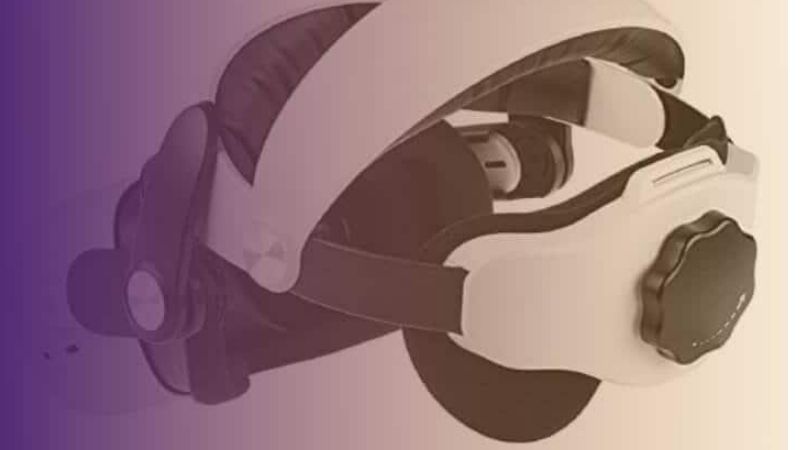
The H4 Boost uses an adaptive forehead support, adjustable side and overhead straps, and a rear cradle rather than relying only on facial-interface pressure. Its published 5,300mAh/20.4Wh battery and 45W-adapter dual-charging capability offer flexibility for longer sessions. The appeal for a sim driver is that you can reposition load away from your cheeks during the repetitive forward-looking posture of a racing stint.
In a roomy office chair or a reclined GT seating position, that distributed support can feel more suitable than a tightly clamped elite-style strap. Before you assume the same for a bucket seat, put your head against the actual backrest: its rear cradle and adjustment hardware still occupy space. Raise or move the headrest as approved by the seat manufacturer if needed, rather than forcing your neck forward to clear a dial.
KIWI lists headset-specific compatibility with Quest 3 and 3S, which makes the model straightforward to shop for. However, the public listing mixes marketing estimates of extra playtime with a comparison table using a more conservative figure; treat the promised hours as use-dependent. Ventilated padding may help manage warmth but cannot guarantee an absence of sweat, fogging or motion discomfort.
- Advantages: halo-style facial-pressure distribution; battery and supported dual charging; position adjustments for field of view
- Limitations: rear hardware still needs clearance; runtime varies by headset demand; not for unrelated VR headsets
Before buying: Verify the H4 Boost model, not the lighter non-battery H4 or the K4. Measure headrest interference while seated in your real driving posture.
BOBOVR S3 Pro Super Strap — best with a built-in forehead fan
BOBOVR’s S3 Pro pairs a 10,000mAh B100 hot-swappable battery with a 100-level adjustable forehead fan and an adjustable overhead bracket. For a long, warm session in a compact room or an enclosed cockpit, the airflow feature is a meaningful difference from ordinary battery straps. The maker claims it directs airflow across the head and face area; it is not an air conditioner for the whole headset and should not be framed as treating motion sickness.
A driver who races wirelessly or does not want to stop when battery charge falls can swap compatible B100 packs. That modularity becomes useful in endurance races if a charged spare and appropriate dock are available. It is less important when the headset is reliably powered by a supported connection or the game session ends before the headset battery does. Make sure any external battery and charging path complies with the headset’s electrical recommendations.
The significant drawback is physical bulk. Battery, rear mechanism and halo components can protrude where a racing bucket headrest expects your skull to sit. The S3 Pro should be tried with the actual seat—or purchased with a clear return route—rather than ranked solely from battery capacity. Also budget for spare B100 hardware if your plan assumes indefinite hot-swapping.
- Advantages: 10,000mAh B100 modular system; adjustable fan; Quest 3/3S explicit fit
- Limitations: protruding rear battery/adjuster; higher price; requires correct B100 accessory ecosystem
Before buying: Confirm you are buying S3 Pro with the B100 platform; older BOBOVR B2 or BM60 batteries are not interchangeable with B100.
KIWI design K4 Boost Battery Head Strap — best snug elite-style alternative
KIWI positions the K4 Boost as a rear-supported, more secure strap for moving gaming sessions. It includes a 5,300mAh/20.4Wh battery, quick-adjust dial, hinged structure, and padded rear support. That shape can be more appropriate than a big halo when the driver frequently looks over the shoulder, moves between triples and VR, or wants a tidy headset that is easier to handle off the rig.
For a racing seat, the main trade-off is where support pressure travels. Elite-style systems generally ask the facial interface to participate in holding the headset, so a driver sensitive to cheek or forehead pressure may still prefer the H4 halo. The K4 Boost is not automatically thinner at every point; its rear dial must still be checked against the center of a high racing headrest.
The manufacturer describes charging both strap and headset through its DualBoost system with a suitable 45W adapter and provides playtime estimates under defined conditions. That claim should not be mistaken for guaranteed additional hours in every racing game. Weight and thermal comfort will also change after adding the battery compared with the stock textile strap.
- Advantages: secure elite-style support; manufacturer-specified Quest 3/3S compatibility; battery with documented charge system
- Limitations: less forehead offload than halo; rear dial can hit headrest; added weight versus stock fabric
Before buying: Identify K4 Boost rather than K4 Comfort; the latter is the similarly named version without the battery included.
BOBOVR M3 Pro+ Battery Strap — best lower-cost removable battery option
The M3 Pro+ builds around a BM60 6,500mAh removable battery and includes its charging dock according to BOBOVR’s current Quest 3/3S guide. It occupies a useful middle ground for buyers who want a halo-style comfort system and the ability to swap power, but do not specifically need the S3 Pro fan or its higher-capacity B100 ecosystem.
For a short or medium-length PCVR race, the BM60 package provides more flexibility than a battery-free comfort upgrade. If your rig is near a convenient charger, an extra BM60 can be charged between sessions while the original is installed. The deciding factor is whether the battery and rear adjustment mechanism fit your headrest—not which advertised milliamp-hour number is larger on paper.
The biggest ownership trap is battery-family confusion. Older M3 Pro uses B2, M3 Pro+ uses BM60, and S3/E3 Pro use B100; the manufacturer says they are not cross-compatible. A discounted third-party battery that uses the wrong name or connector can erase the value of this otherwise sensible product.
- Advantages: BM60 removable 6,500mAh system; dock included in listed kit; less expensive than S3 Pro
- Limitations: rear protrusion still exists; BM60/B100/B2 incompatibility; not a fan-equipped strap
Before buying: Read the exact box label M3 Pro+, plus the included BM60 battery and dock, not just a retailer headline that says “M3 Pro.”
BOBOVR E3 Pro Battery Strap — best B100 battery without fan bulk
The E3 Pro uses the B100 10,000mAh battery platform in a different, more conventional rear-supported layout without the S3 Pro’s forehead fan. It makes sense if you value access to the same battery-family ecosystem but do not want to pay for an airflow mechanism you will not use. That is particularly relevant for sim racers in a cool room with a strong desk fan or adequate room ventilation.
A rear support system can help secure the headset during rapid mirror checks or head turns. It can also place pressure where your racing seat meets the back of your head. If the seat’s headrest is tall and stiff, compare the E3 rear shape with the K4 and the battery-free options before choosing on runtime claims. The battery size does not make it physically invisible.
BOBOVR specifies Quest 3/3S compatibility and identifies B100 as the correct power pack for E3 Pro. That gives a clear replacement path, but buyers should still verify the seller offers the authentic unit, the battery is included, and the charging accessory price is understood. The E3 Pro should not be confused with the cheaper E3 without the battery.
- Advantages: B100 high-capacity battery; no fan to pay for or maintain; Quest 3/3S fit claimed
- Limitations: battery rear weight; not true halo comfort geometry; same battery-family purchasing risks
Before buying: Confirm E3 Pro rather than E3, and check which B100 battery accessories the current bundle includes.
KIWI design K4 Comfort Head Strap — best inexpensive upgrade without battery
The K4 Comfort is a straightforward strap replacement with reinforced rear support, adjustment, and no included battery. It is a better buy than a costly power strap when your headset runtime already suits your races, particularly for short practice stints or a wired PCVR setup with a power arrangement specifically approved for the headset. The smaller purchase solves fit and adjustment rather than inventing extra battery life.
Because this version does not hang a large auxiliary battery at the rear, it deserves special attention from drivers who notice battery hardware pushing their head forward into a bucket seat. It still uses a rear adjustment assembly, so physically check its thickness and the seat surface. Lack of battery also means the headset may feel comparatively front-heavy depending on the user and facial interface.
KIWI lists Quest 3/3S compatibility and a separate US $39.99 price for the K4 Comfort. The product’s commercial advantage is that you spend less up front and can learn what type of pressure distribution you prefer before committing to a heavier battery system. If you discover your main problem is facial pressure, switching to a halo is more logical than continually tightening a rear-mounted strap.
- Advantages: lower purchase price; no heavy rear battery pack; clear Quest model support
- Limitations: does not extend battery runtime; still has rear adjustment hardware; face pressure depends on fit
Before buying: Avoid listings for Quest 2 K2; those have a different mounting interface and are not the same head strap.
Buying guide: prioritize your seat and VR workflow
Check rear clearance with the actual seat
Sit in your normal braking and steering position, center your head on the headrest, and notice where any shell padding touches your skull. A protruding dial or battery can become uncomfortable long before the display optics are the problem. If the seat has a rigid high bolster, a large rear battery may force unwanted neck flexion. Buying based on an indoor VR standing review is not enough. Measurements and a trial period are more valuable than assuming one halo design fits every cockpit.
Choose halo versus elite-style for the pressure you feel
Halo support transfers more of the load toward the forehead and top of the head, often easing cheek pressure, but it may shift during fast head turns if adjusted poorly. Elite-style straps usually keep the headset close to the face and may be more compact, while still exerting force on the facial interface. Neither is objectively superior for all head shapes. Correct optical alignment, IPD setup, lens clarity and a stable strap fit come before battery size.
Match the cable plan to PCVR, not just the battery listing
For wired PCVR, verify the headset’s permitted data and power arrangement as well as the PC USB-C port’s capabilities. A battery strap is not a Link cable, USB host, or data splitter. For wireless PCVR, the strap can extend standalone headset operation, but your Wi-Fi router, codec, GPU and network path determine streaming stability. Do not buy a head strap expecting it to fix frame pacing or tracking quality.
Separate runtime marketing from energy math
Milliamp-hours are recorded at a battery-cell reference voltage, so they do not convert directly into headset hours without considering watt-hours, efficiency and actual load. Compare battery ecosystems by compatible replacement packs, charging method and total weight. Treat manufacturer “up to” claims as conditional. The bigger pack may be worse for a bucket seat if it shifts your posture and makes neck movement uncomfortable.
Plan for heat, hygiene and replaceable padding
Long racing sessions can heat the face interface and headband. Removable, washable padding or wipeable surfaces help maintain the strap when several drivers use the same rig. Built-in airflow can be helpful but may not circulate behind every facial interface. Follow headset maker guidance for ventilation, cleaning, cable routing and stopping use when the headset overheats or becomes uncomfortable.
Fit test: five checks before the first long race
- Verify Quest 3 versus Quest 3S compatibility on the exact strap product page.
- Sit in your racing seat, tighten normally and lean back to check rear dial/battery contact.
- Turn toward mirrors, glance down at the dash and make sure the headset stays aligned.
- Confirm facial pressure, glasses clearance and any audio strap interference.
- Run a normal-length practice stint, then decide whether extra battery capacity is worth the weight.
Frequently asked questions
Can I use a Quest 2 head strap on Quest 3 or 3S?
Do not assume so. The side-attachment interface and accessory fit differ. Buy the headset-specific Quest 3/3S variant or a manufacturer-supported conversion kit. A product title that says only “Quest” is not enough to establish compatibility.
Does the BOBOVR S3 Pro make sim racing cooler?
It includes an adjustable forehead fan and may improve airflow around the upper face, but comfort depends on room temperature, facial interface and personal fit. It will not solve a headset overheating problem or replace room ventilation. Its extra bulk is a real consideration against a high racing headrest.
Which is better for a bucket seat: halo or elite strap?
The answer depends on where the rear hardware meets the shell and where you feel face pressure. Halo designs may offload cheeks but can be bulkier; elite designs may seat securely but press more on the interface. The best evidence is a fitting test with your actual headrest.
Are BOBOVR B2, BM60 and B100 batteries interchangeable?
No. BOBOVR identifies separate battery ecosystems. M3 Pro+ uses BM60; S3 Pro and E3 Pro use B100; older M3 Pro uses B2. Do not assume magnets or similar-looking modules make packs compatible.
Will a battery strap keep my Quest charged during PCVR Link?
It depends on the specific wired or wireless arrangement. A normal battery strap powers the headset through its supported connection but does not provide host data transfer. Confirm that the cable, USB host power path and battery arrangement can coexist within the manufacturer’s instructions.
Does a tighter strap improve VR tracking or lap times?
A correctly fitted strap can keep the lenses aligned and reduce distractions, but does not change headset tracking algorithms or guarantee faster driving. Excessive tightening can cause fatigue and worsen comfort. Prioritize stable optical position and natural neck movement.
Final thoughts
Choose the KIWI H4 Boost when seated pressure distribution is the top priority; the BOBOVR S3 Pro offers battery modularity and a fan for warmer endurance sessions, provided its rear package clears the seat. The KIWI K4 Boost and BOBOVR E3 Pro are sensible alternatives for drivers who prefer a more conventional support shape, while the M3 Pro+ provides lower-cost removable power. For shorter stints, the battery-free K4 Comfort may be sufficient. In every case, test rear-headrest contact before you buy on advertised battery hours alone.