Key takeaways
- Install demanding open-world games on an NVMe SSD, not a hard drive; texture streaming stutter on HDDs is severe in 2026 titles.
- Keep at least 15 to 20 percent of the drive free so the SSD can maintain write performance.
- Enable Resizable BAR in BIOS if your CPU and GPU support it; it can smooth traversal in some engines.
- Make sure Windows Game Mode is on and your power plan is set to High Performance or Balanced, never Power Saver.
What's inside
- Watch: How to Fix Game Stuttering on PC — Video Review
- Understand Frame Time, Not Just FPS
- Kill Background and Shader Compilation Stutter
- Fix Storage and Traversal Stutter
- Tune Sync and Frame Rate Caps
- Update and Clean Your Drivers
- Tips to Keep Stutter Away Long-Term
- Frequently Asked Questions
- Conclusion
- Related Articles
Few things ruin a gaming session faster than stuttering. You are locked at a smooth 120 FPS one second, then the game hitches, the frame time graph spikes, and the whole experience feels like it is skipping. The frustrating part is that stuttering is rarely a single problem. It can come from your storage, your CPU, background software, driver settings, or even your monitor’s sync configuration, and the fix depends on the cause.
- Watch: How to Fix Game Stuttering on PC — Video Review
- Understand Frame Time, Not Just FPS
- Kill Background and Shader Compilation Stutter
- Fix Storage and Traversal Stutter
- Tune Sync and Frame Rate Caps
- Update and Clean Your Drivers
- Tips to Keep Stutter Away Long-Term
- Frequently Asked Questions
- Conclusion
- Related Articles
This 2026 guide walks through the most common sources of PC game stuttering in the order you should check them, from the quick five-minute fixes to the deeper hardware and driver tuning. Follow it top to bottom and you will eliminate the vast majority of hitches without throwing money at new parts you may not need.
As an Amazon Associate we earn from qualifying purchases at no extra cost to you. Product prices and availability are accurate as of the date shown and are subject to change.


⚡ Save on Your Next PC — Amazon Prime
Prime members get fast free shipping on the systems above, plus early access to Prime Day & Black Friday PC deals. New members get a 30-day free trial.
Watch: How to Fix Game Stuttering on PC — Video Review
Understand Frame Time, Not Just FPS
Average FPS hides stutter. A game can average 90 FPS while still feeling terrible if individual frames arrive unevenly. What you actually feel is frame time consistency, measured in milliseconds. At 60 FPS each frame should take about 16.6 ms; at 120 FPS about 8.3 ms. Stutter shows up as sudden spikes to 40 ms or more. Turn on a frame time graph in a tool like the overlay built into most GPU software or MSI Afterburner, then reproduce the stutter. If you see tall spikes, you have a hitching problem to hunt down rather than a raw performance problem.
Kill Background and Shader Compilation Stutter
The single most common cause of stutter in modern titles is shader compilation. The first time a game needs a shader, it compiles it on the fly, causing a hitch. Let games run their shader pre-compilation step fully before playing, and do not skip it. Beyond that, close browsers with dozens of tabs, disable overlays you do not use, and quit background apps that spike the CPU. Software like Discord, RGB utilities, and aggressive antivirus scans are frequent culprits.
Fix Storage and Traversal Stutter
- Install demanding open-world games on an NVMe SSD, not a hard drive; texture streaming stutter on HDDs is severe in 2026 titles.
- Keep at least 15 to 20 percent of the drive free so the SSD can maintain write performance.
- Enable Resizable BAR in BIOS if your CPU and GPU support it; it can smooth traversal in some engines.
- Make sure Windows Game Mode is on and your power plan is set to High Performance or Balanced, never Power Saver.
Tune Sync and Frame Rate Caps
A mismatch between your frame rate and refresh rate is a classic stutter source. If you have a G-Sync or FreeSync monitor, enable it, then cap your frame rate about 3 FPS below your refresh (for example 141 on a 144Hz panel). This keeps you inside the variable refresh window and avoids the latency and tearing that come from hitting the ceiling. Without variable refresh, an in-game or driver-level frame cap that matches a clean divisor of your refresh rate produces the most consistent frame times.
Update and Clean Your Drivers
Corrupt or half-installed GPU drivers cause bizarre stutter. Do a clean install: download the latest driver, then use the manufacturer’s clean-install option or a display driver removal utility in Safe Mode before reinstalling. Also update your motherboard chipset drivers, which many people forget and which directly affect how the CPU schedules game threads.
Tips to Keep Stutter Away Long-Term
- Cap background app CPU usage and set your game to High priority only if you see CPU-bound spikes.
- Keep Windows and GPU drivers current but skip brand-new driver versions until they prove stable.
- Monitor temperatures; thermal throttling on the CPU or GPU produces periodic stutter as clocks drop.
- Disable fullscreen optimizations for problem games and run them in exclusive fullscreen where possible.
Frequently Asked Questions
Why does my game stutter even at high FPS?
High average FPS with stutter almost always points to frame time spikes from shader compilation, background processes, or storage streaming rather than a lack of raw GPU power. Watch a frame time graph to confirm.
Can adding RAM fix stuttering?
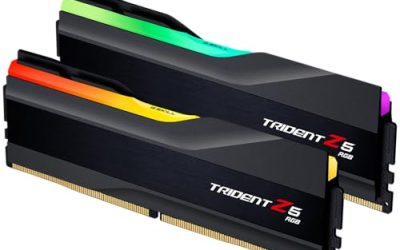
If you have only 16GB and run demanding 2026 titles alongside a browser and Discord, you may be hitting memory limits, which causes hitching as data swaps to disk. Moving to 32GB helps in that scenario, but it will not fix shader or sync-related stutter.
Does disabling full-screen optimizations really help?
For many games, yes. It forces true exclusive fullscreen, reducing compositor overhead and eliminating a class of micro-stutter, especially on multi-monitor setups.
Is stuttering a sign my hardware is failing?
Usually not. It is far more often a software, driver, or configuration issue. Only investigate failing hardware if you also see crashes, artifacts, or stutter that appears alongside rising temperatures and instability.
Conclusion
Stuttering feels like a hardware problem but is usually a settings problem. Work through the checklist in order: watch frame times, let shaders pre-compile, close background hogs, move games to fast storage, dial in your sync and frame caps, and do a clean driver install. Fix the causes rather than chasing symptoms and you will get the buttery-smooth, consistent frame delivery your rig is capable of in 2026.