Key takeaways
- Your base FPS is already 50+: Frame generation feels great when it doubles an already-decent frame rate but feels mushy if your base is only 30 FPS.
- You play story-driven or open-world titles: Cyberpunk, Flight Simulator, and similar visually heavy games benefit enormously.
- You have a high-refresh monitor: There is little point pushing 120 generated FPS to a 60Hz panel; a 144Hz or faster display lets you see the extra frames.
- You are GPU-bound, not CPU-bound: If your CPU is the bottleneck, frame generation still helps since it does not rely on more engine frames.
What's inside
- Watch: What Is Frame Generation? — Video Review
- How Frame Generation Actually Works
- Frame Generation vs Upscaling: Not the Same Thing
- The Latency Trade-Off You Need to Understand
- When to Turn Frame Generation On
- Tips for the Best Frame Generation Experience
- Frequently Asked Questions
- Conclusion
- Related Articles
Frame generation is one of the biggest talking points in PC gaming heading into 2026, yet it is still widely misunderstood. In simple terms, it is a technique where your GPU inserts brand-new, AI-generated frames between the frames your game actually renders. Instead of only drawing what the engine produces, the graphics card predicts what a middle frame should look like and displays it, so a game that natively renders at 60 FPS can output 100 to 120 FPS on screen.
- Watch: What Is Frame Generation? — Video Review
- How Frame Generation Actually Works
- Frame Generation vs Upscaling: Not the Same Thing
- The Latency Trade-Off You Need to Understand
- When to Turn Frame Generation On
- Tips for the Best Frame Generation Experience
- Frequently Asked Questions
- Conclusion
- Related Articles
This guide breaks down exactly how frame generation works, the difference between NVIDIA DLSS Frame Generation, AMD FSR Frame Generation, and Intel’s XeSS approach, and when you should actually turn it on. The goal is to help you get smoother motion without falling into the traps of input lag or visual artifacts that give the technology a bad name.
As an Amazon Associate we earn from qualifying purchases at no extra cost to you. Product prices and availability are accurate as of the date shown and are subject to change.




⚡ Save on Your Next PC — Amazon Prime
Prime members get fast free shipping on the systems above, plus early access to Prime Day & Black Friday PC deals. New members get a 30-day free trial.
Watch: What Is Frame Generation? — Video Review
How Frame Generation Actually Works
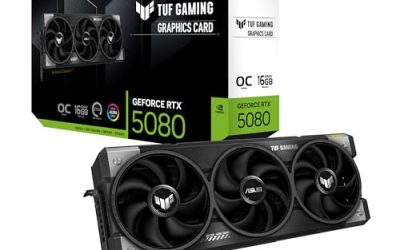
Traditional rendering is a one-to-one process: the game engine calculates a frame, the GPU draws it, and it appears on your monitor. Frame generation adds an interpolation step. The GPU takes two consecutive rendered frames, analyzes motion vectors and optical flow between them, and synthesizes an entirely new frame that sits in the middle. On NVIDIA’s RTX 40 and 50 series this runs on dedicated Optical Flow Accelerator and Tensor hardware; AMD and Intel use more software-driven approaches that run on a wider range of cards.
The result is that for every real frame your GPU produces, you can get one or more generated frames for free in terms of raw rendering cost. Multi-frame generation on newer RTX 50 cards pushes this further, generating up to three interpolated frames per rendered frame.
Frame Generation vs Upscaling: Not the Same Thing
People constantly confuse frame generation with upscaling like DLSS Super Resolution or FSR, but they solve different problems. Upscaling renders your game at a lower resolution (say 1440p) and intelligently scales it up to 4K, reducing the rendering workload. Frame generation does not touch resolution at all; it adds frames on top of whatever your base frame rate is. In practice you often stack them: upscaling raises your base FPS, then frame generation multiplies it further.
The Latency Trade-Off You Need to Understand
Here is the catch. Because a generated frame has to sit between two real frames, the GPU must hold the newest rendered frame back briefly to interpolate. That adds latency. A game showing 120 FPS with frame generation on can feel more like the input responsiveness of 55 to 60 FPS. This is why NVIDIA pairs its solution with Reflex and AMD uses Anti-Lag, which claw back much of that added delay. For single-player, controller-driven, and cinematic games the smoothness is a clear win. For competitive shooters where every millisecond counts, most pros leave it off.
When to Turn Frame Generation On
- Your base FPS is already 50+: Frame generation feels great when it doubles an already-decent frame rate but feels mushy if your base is only 30 FPS.
- You play story-driven or open-world titles: Cyberpunk, Flight Simulator, and similar visually heavy games benefit enormously.
- You have a high-refresh monitor: There is little point pushing 120 generated FPS to a 60Hz panel; a 144Hz or faster display lets you see the extra frames.
- You are GPU-bound, not CPU-bound: If your CPU is the bottleneck, frame generation still helps since it does not rely on more engine frames.
Tips for the Best Frame Generation Experience
- Always enable the accompanying low-latency mode (Reflex, Anti-Lag, or the Intel equivalent) in the same settings menu.
- Cap your frame rate a few FPS below your monitor’s refresh with G-Sync or FreeSync on to avoid tearing and latency spikes.
- Keep base FPS above 50 by tuning other graphics settings first, then layer frame generation on top.
- Disable it in fast competitive games where input feel matters more than raw smoothness.
Frequently Asked Questions
Does frame generation increase input lag?
Yes, slightly, because the GPU delays the latest real frame to interpolate. Modern implementations offset most of this with Reflex or Anti-Lag, so the added lag is usually 8 to 15 milliseconds in practice rather than the doubling some people fear.
Do I need an RTX 40 or 50 series card to use it?
For NVIDIA DLSS Frame Generation, yes. However, AMD FSR Frame Generation and Intel’s implementations run on a much broader set of GPUs, including many older NVIDIA cards, because they are less dependent on dedicated hardware.
Will generated frames create visible artifacts?
Occasionally, especially around fast UI elements, thin fences, or rapid camera whips, you may notice brief shimmering. The technology has improved dramatically, and at 60+ base FPS artifacts are usually too fleeting to spot during normal play.
Should I use frame generation in esports titles?
Generally no. Games like Valorant or CS2 already run at hundreds of FPS on modest hardware, so you gain nothing meaningful while adding latency. Save frame generation for demanding single-player experiences.
Conclusion
Frame generation is a genuinely useful tool when you understand its strengths and limits. Use it to smooth out demanding single-player games where your base frame rate is already respectable and your monitor can display the extra frames, and always pair it with a low-latency mode. Treat it as a smoothness enhancer rather than a fix for genuinely low frame rates, and it will make your 2026 gaming noticeably better without the downsides critics warn about.