Our Top Picks
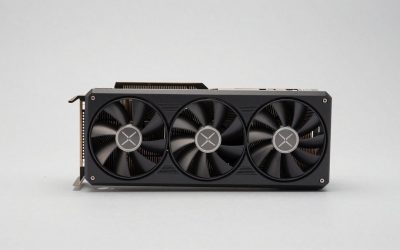
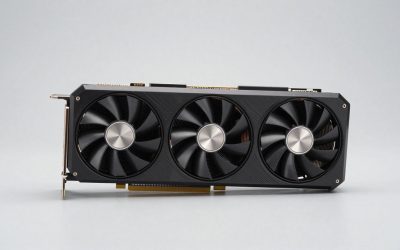
 ASUS ATS Radeon RX 9070 GRE 12GB GDDR6RX9070GRE|OC|12GB12 x 4.95 x 0.1 Inches2.2 PoundsCheck on Amazon
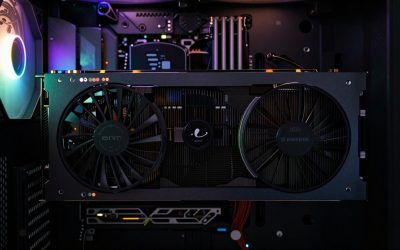
 ASUS Prime Radeon™ RX 9070 GRE EVO OCRX9070GRE|OC|12GB|EVO12 x 5 x 0.1 inches2.4 PoundsCheck on Amazon
For most buyers the RX 9070 GRE is the better pick: it delivers roughly the same rasterized frame rates as the RTX 3080 Ti while using about 130 W less power, and it comes with current-generation FSR 4 and a warranty. The RTX 3080 Ti is only worth choosing if you can get one used for clearly less than a new 9070 GRE and you value DLSS game support, CUDA apps or Nvidia’s stronger path-tracing behavior. Both cards have 12 GB of VRAM, so neither has a memory advantage.
A 2021 Flagship Against a 2025 Mid-Range Card
The RTX 3080 Ti launched in May 2021 at $1,199 as the second-fastest Ampere card, just below the RTX 3090. It is a large 8 nm GPU with 10,240 CUDA cores and a 384-bit GDDR6X bus delivering 912.4 GB/s. The RX 9070 GRE launched in May 2025 at $549 as a cut-down RDNA 4 card, with a 192-bit bus and a 48 MB Infinity Cache in place of brute bandwidth.

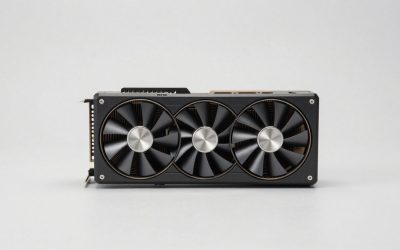
Geforce RTX 3080 Ti 12GB GDDR6X PCI Express 4.0 Graphics Card Titanium and Black (Renewed)
Picked as a relevant option in this category.
View on Amazon
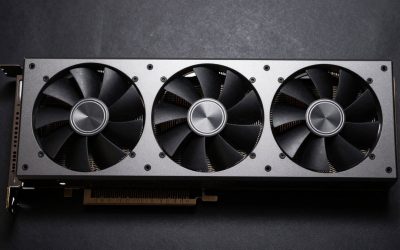
Geforce RTX 3080 Ti 12GB GDDR6X PCI Express 4.0 Graphics Card Titanium and Black
Picked as a relevant option in this category.
View on AmazonASUS ATS Radeon RX 9070 GRE 12GB GDDR6 OC Edition Gaming Graphics Card | PCIe 5.0, HDMI/DP 2.1, 2.5-slot design, Axial-tech Fans, Dual-ball Fan Bearings, Dual BIOS, GPU Guard
Picked as a relevant option in this category.
View on AmazonASUS Prime Radeon™ RX 9070 GRE EVO OC Edition Graphics Card (PCIe 5.0, HDMI/DP 2.1, 2.5-Slot Design, axial-tech Fans, Dual Ball Fan Bearings, Dual BIOS, GPU Guard)
Chosen because it specifies HDMI/DP 2.1 and 2.5-Slot Design.
View on AmazonThe interesting part is how close they finish in games. Four years of architecture, process and cache improvements mean the much smaller, cheaper and cooler card can trade blows with a former $1,199 flagship.
Head-to-Head Specs
| Spec | GeForce RTX 3080 Ti | Radeon RX 9070 GRE |
|---|---|---|
| Architecture | Ampere | RDNA 4.0 |
| Release date | 31 May 2021 | 8 May 2025 |
| Launch MSRP | $1,199 | $549 |
| Shaders | 10,240 CUDA cores | 3072 stream processors |
| Boost clock | 1665 MHz | 2790 MHz |
| Process | 8 nm | 4 nm |
| VRAM | 12 GB GDDR6X | 12 GB GDDR6 |
| Bus / bandwidth | 384-bit / 912.4 GB/s | 192-bit / 432.0 GB/s |
| Cache | 6 MB L2 | 8 MB L2 + 48 MB L3 |
| Interface | PCIe 4.0 x16 | PCIe 5.0 x16 |
| TDP | 350 W | 220 W |
| Power connectors | 1x 12-pin (Founders Edition style) | 2x 8-pin |
| Length / width | 285 mm, 2-slot | 2-slot |
| Outputs | 1x HDMI, 3x DisplayPort | 1x HDMI 2.1b, 3x DP 2.1a |
Many partner RTX 3080 Ti cards use two or three standard 8-pin connectors instead of the 12-pin plug. Check the exact model before buying.
Gaming Performance: Closer Than the Specs Suggest
No major outlet put these exact two cards in a dedicated head-to-head, so the comparison comes from reviews that share reference cards. TechPowerUp’s coverage of early RX 9070 GRE reviews and Hardware Unboxed’s later review on TechSpot both place the 9070 GRE roughly level with the RX 7900 GRE. In TechSpot’s data, the RTX 5070 finished about 7–9% ahead of the 9070 GRE, while the GRE beat the RTX 5060 Ti by about 20–28%.
The RTX 3080 Ti has long sat in the same broad tier as the RX 7900 GRE and slightly below the RTX 5070 in rasterized games. Put together, the realistic picture is that the two cards are roughly on par in raster, usually within about 5–10% of each other, with the winner depending on the game. Some aggregated benchmark databases give the 3080 Ti a lead of up to around 14%, and its huge memory bandwidth helps most at 4K. The RDNA 4 card tends to do better in newer titles built around modern engines.
As a rough guide, in a demanding current game at 1440p high, both cards commonly land in roughly the 75–95 FPS range. That band moves with settings, CPU and game patches, so treat it as a ballpark rather than a measured result.
Ray tracing
Ampere’s second-generation RT cores were strong for their time, and RDNA 4 brought AMD’s biggest RT improvement yet. In moderate RT workloads such as reflections and shadows, the two are generally competitive. In the heaviest path-traced games, Nvidia hardware and features such as ray reconstruction still tend to give the GeForce card an advantage, although neither card is truly built for path tracing at 1440p without heavy upscaling.
Upscaling and Frame Generation
- RTX 3080 Ti: gets DLSS 4’s transformer upscaling and ray reconstruction, which work on all RTX cards. It does not get DLSS Frame Generation, which requires RTX 40 or newer, or Multi Frame Generation, which is RTX 50 only. It can still use FSR 3.1 frame generation in games that offer it.
- RX 9070 GRE: runs FSR 4 machine-learning upscaling natively, along with AMD’s frame generation. FSR 4 closed most of the image-quality gap with DLSS, and the driver can upgrade many FSR 3.1 games to FSR 4.
DLSS still appears in more games overall. The difference that matters most for an older card, though, is frame generation, and the 9070 GRE has full native support where the 3080 Ti relies on AMD’s open alternative.
Power, Heat and Running Cost
This is the clearest difference between them. At 350 W, the RTX 3080 Ti draws about 130 W more than the 220 W RX 9070 GRE for similar performance, which makes the AMD card roughly 55–60% more efficient per frame.
PSU sizing with the GPU TDP + CPU + ~150 W headroom rule and a 120 W-class gaming CPU:
- RTX 3080 Ti: 350 + 120 + 150 = 620 W, so a quality 750 W PSU, partly because Ampere has sharp short power spikes
- RX 9070 GRE: 220 + 120 + 150 = 490 W, so a quality 600–650 W PSU
Running cost example: 130 W extra for four hours a day is about 190 kWh a year. Depending on local electricity prices, that is a real yearly cost that narrows any upfront savings on a used 3080 Ti. The extra heat also means warmer rooms and louder fans in small cases.
Case Fit
The 3080 Ti reference figure is 285 mm long in a 2-slot design, but most partner cards are longer, thicker triple-fan models. 9070 GRE partner cards also vary in length, though their lower power usually allows smaller coolers. Check your case’s GPU clearance against the specific model you are considering.
Value Check
Launch prices do not mean much here, because the 3080 Ti’s $1,199 is from a very different market. The useful comparison is a used 3080 Ti against a new 9070 GRE:
| Option | Typical price | Performance | Warranty / extras |
|---|---|---|---|
| Used RTX 3080 Ti | Usually around $350–$450 | ~100 (baseline) | Often limited or none; higher power bill |
| New RX 9070 GRE | Launched at $549; street prices vary | ~95–105 | Full warranty, FSR 4, lower power |
At $400 used and $549 new, the 3080 Ti is about 27% cheaper upfront for similar frame rates. Its extra power use can take back a meaningful share of that over two to three years, and you give up warranty coverage and native frame generation. If the price gap drops below roughly $100, the 9070 GRE is the clear pick.
Choosing by Use Case
| If you… | Choose |
|---|---|
| Want the best new card for 1440p around this price | RX 9070 GRE |
| Have a 550–650 W PSU you want to keep | RX 9070 GRE |
| Use CUDA apps (Blender, AI tools) as well as gaming | RTX 3080 Ti |
| Find a used 3080 Ti well below 9070 GRE pricing | RTX 3080 Ti |
| Want frame generation in many games | RX 9070 GRE |
| Play mostly path-traced showcase games | Neither ideal, consider a faster RTX 50 card |
Frequently Asked Questions
Is the RX 9070 GRE faster than the RTX 3080 Ti?
They are roughly equal in rasterized games, usually within 5–10% of each other depending on the title. Reviews place the 9070 GRE near the RX 7900 GRE and a little behind the RTX 5070, which is the same broad tier as the 3080 Ti.
Does the RTX 3080 Ti support DLSS 4?
It supports DLSS 4’s transformer upscaling and ray reconstruction. It does not support DLSS Frame Generation or Multi Frame Generation, which need RTX 40 and RTX 50 cards respectively.
Is 12 GB of VRAM enough for 1440p?
For most current games at 1440p it is sufficient, and both cards have the same capacity. A few of the most demanding titles with maximum textures and ray tracing are starting to push past 12 GB, so lowering texture settings may occasionally be needed.
What PSU does the RTX 3080 Ti need?
A quality 750 W unit is the safe choice, because the card is rated at 350 W and Ampere can produce short power spikes. The RX 9070 GRE runs comfortably on a good 600–650 W unit.
Is a used RTX 3080 Ti still a good buy?
It can be if the price is low and the card is in good condition. Check fan health, temperatures and memory stability under load. Weigh the higher power draw and missing frame generation against the savings compared with a new RX 9070 GRE.