Key takeaways
- Table of Contents 7 sections 9 min read 1 Quick Verdict 2 Side by Side 3 Where Usb Wifi Adapter Wins 4 Where Pcie Wifi Card Wins 5 Cost Over 5 Years 6 Which One for Your Home 6.1 Small…
What's inside
Designing a clean, functional home workspace involves more than choosing an ergonomic chair or a solid oak desk. Cable management, spatial footprint, and backend hardware choices dictate how visually serene and efficient your workstation remains. When setting up or upgrading a desktop PC, one major connectivity decision often surfaces once the desk is assembled: how should your computer connect to your home wireless network? The choice between a usb wifi adapter vs pcie wifi card comes down to a fundamental balance between immediate convenience and long-term network stability.
USB adapters offer plug-and-play simplicity without requiring you to open your computer case, making them an approachable choice for swift workspace reconfigurations or temporary home offices. Conversely, PCIe cards slot directly into your motherboard’s expansion bay, delivering improved thermal dissipation, higher signal throughput, and integrated Bluetooth capabilities while keeping exterior cables and dongles out of sight. As modern home office aesthetics evolve in 2026, understanding how these two form factors impact your desk space, power draw, and connectivity will ensure your setup remains both visually refined and highly performant.
As an Amazon Associate we earn from qualifying purchases at no extra cost to you. Product prices and availability are accurate as of the date shown and are subject to change.


Quick Verdict
If you value zero-tool setup, absolute portability across multiple devices, and a clutter-free internal computer chassis, a USB WiFi adapter is your most practical solution. It plugs instantly into any available USB port and requires minimal configuration. However, for dedicated home office setups where network reliability, low latency, and aesthetic cable concealment matter most, a PCIe WiFi card is the superior choice. Operating directly on the PCIe bus with external or magnetized antenna arrays, PCIe cards handle sustained heavy traffic and multiple connected devices with far greater stability than compact USB dongles.
Side by Side
Understanding how a USB WiFi adapter vs PCIe WiFi card compares across practical daily ownership metrics helps clarify which option aligns with your room layout and usage habits.
| Feature Category | USB WiFi Adapter | PCIe WiFi Card |
|---|---|---|
| Comfort & Installation | Plug-and-play; zero tools or technical skill required. | Requires opening PC case and securing bracket with a screwdriver. |
| Durability | Moderate; susceptible to accidental bumps and heat stress. | High; protected inside chassis with metal heatsinks and sturdy mounting. |
| Price Range | $10.00 – $35.00 | $25.00 – $85.00 |
| Maintenance | Low; simple driver updates and occasional replugging. | Low; periodic interior dust clearing during regular PC maintenance. |
| Space Needed | Consumes 1 external USB-A or USB-C port; sticks out 0.5 to 3 inches. | Requires 1 free PCIe slot inside case; back panel clearance for antennas. |
| Look & Aesthetic Impact | Visible dongle on PC exterior; potential visual clutter on top/front I/O. | Completely hidden inside chassis; neat external antenna extensions. |
| Resale & Upgrade Versatility | Universal; fits laptops, desktops, and media centers easily. | Desktop-only; tied to motherboard expansion compatibility. |
| Best For | Renters, casual users, compact spaces, and quick hardware fixes. | Dedicated home offices, online gaming, high-bitrate streaming, and long-term setups. |
Where Usb Wifi Adapter Wins
The primary advantage of a USB WiFi adapter lies in its sheer spatial convenience and non-intrusive setup. Measuring as small as 0.73 x 0.59 x 0.28 inches and weighing less than 0.1 ounces, ultra-compact models fit flush against your computer frame. Tiny options like the TP-Link Nano AC600 USB WiFi Adapter for Desktop PC ($10.99) sit almost invisible in a rear USB port, making them ideal if you want to avoid altering the internal components of your computer entirely.
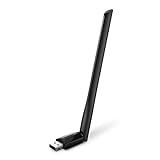
For setups where your PC is situated somewhat further from the primary router, slightly larger models featuring moveable external high-gain antennas—such as the TP-Link AC600 USB WiFi Adapter for Desktop PC ($14.99)—provide adjustable signal angling while retaining a minimal physical presence. USB adapters draw very little power, typically operating between 1.5W and 2.5W directly from the host port. Because they require no internal installation, they are uniquely versatile: you can unplug the adapter in seconds and move it to a laptop, a secondary workstation, or a home entertainment PC without restarting your system.
Where Pcie Wifi Card Wins
Where PCIe cards excel is sustained performance, thermal efficiency, and overall setup neatness. Designed to mount directly into a motherboard’s PCIe x1 or x4 slot, these expansion cards leverage the full speed of the system bus without passing through an external USB controller. Weighing between 3.0 and 5.5 ounces, PCIe cards feature dedicated aluminum heatsinks that dissipate operational heat away from crucial networking chipsets. This design prevents the thermal throttling that can occasionally degrade high-speed transfers on compact USB dongles during multi-gigabyte file downloads.
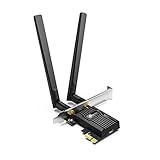
A major aesthetic and functional benefit of PCIe cards is antenna management. Standard models, such as the TP-Link WiFi 6 PCIe WiFi Card for Desktop PC – AX3000 Dual Band Network Card ($28.99), route all wiring directly out the rear expansion plate of your PC, keeping the front and top ports completely free of protruding hardware. For complex home office desk layouts where the PC tower sits under a dense wooden desk or inside a cabinet, cards like the TP-Link WiFi 6 PCIe WiFi Card for PC, AX3000 Dual Band with Magnetized Base ($28.82) allow you to position an antenna array directly on top of your desk or wall shelf via a multi-foot extension cable. Furthermore, PCIe cards usually bundle onboard Bluetooth support via an internal USB header connection, eliminating the need to buy a separate Bluetooth dongle for your wireless desk accessories.
Cost Over 5 Years
Evaluating the total cost of ownership between a USB WiFi adapter vs PCIe WiFi card over a five-year period involves looking beyond the initial retail price tag to consider hardware longevity and port wear.
USB WiFi adapters carry a low entry barrier, ranging from $10 to $35. However, because they stick out from the exterior of your computer case, they are subject to physical stress—such as being bumped by vacuum cleaners, pets, or chair arms—and operate in tight plastic enclosures with limited passive cooling. As a result, heavy remote workers frequently replace USB adapters every 2 to 3 years due to port wear or heat degradation. Over 5 years, maintaining a USB connection can realistically accumulate $30 to $60 in total replacement costs.
PCIe cards cost between $25 and $85 upfront. Once secured inside your computer frame with a metal bracket, they are shielded from physical impacts and thermal stress. The dedicated heatsinks and direct motherboard power delivery (drawing roughly 5W to 10W under peak load) allow these cards to operate reliably for 5 to 7+ years without hardware degradation. Over a 5-year timeline, a PCIe card represents a single one-time purchase with virtually zero maintenance overhead, offering a lower overall cost per year of active service.
Which One for Your Home
Small Apartment or Studio Workspace
In a compact studio where space is at a premium and your computer desk resides within 10 to 15 feet of your wireless router, a USB WiFi adapter is lightweight, effective, and simple. Its small footprint ensures you don’t have to navigate tight corners behind your PC tower just to plug in antenna cables, and its lower power consumption is well-suited for minimalist, low-profile PC cases.
Family Home with Kids and Pets
In busy multi-room households where pets run near desk legs or children occasionally play around office furniture, exterior dongles can easily be snapped off inside a USB port. A PCIe WiFi card keeps the primary networking hardware safely inside the reinforced metal PC case. Choosing a model with a magnetized antenna base lets you mount the antennas high on a steel bookshelf or upper desk frame, keeping delicate components safely away from curious paws and hands.
Rental Property or Temporary Setup
If you live in a rental home where you frequently reorganize furniture, switch rooms, or modify your workspace layout, flexibility is essential. A USB WiFi adapter requires no structural setup and can be transferred between different desktop or laptop systems in seconds. It allows you to adapt instantly to temporary work tables or guest room setups without carrying toolkits to open computer cases.
Long-Term Owned Home Workspace
For homeowners establishing a permanent, dedicated home office with custom desk builds, integrated cable tracks, and high-speed fiber internet, a PCIe card is the clear winner. By placing all connections out of sight behind the desktop case and delivering stable WiFi 6 throughput, it creates a cleaner workspace aesthetic while delivering uninterrupted performance for high-definition video calls, cloud backups, and large data transfers.
FAQ
Does a PCIe WiFi card offer lower latency than a USB WiFi adapter?
Yes. PCIe WiFi cards communicate directly with your computer’s CPU via the PCIe bus, bypassing the protocol conversion layers required by USB controllers. This direct interface reduces micro-latencies, making PCIe cards superior for live online conferencing, competitive gaming, and continuous cloud sync applications.
Will a USB WiFi adapter overheat during heavy daily use?
Compact USB adapters generate noticeable heat because their small plastic housings offer limited surface area for cooling. While light web browsing will not cause issues, multi-hour video calls, heavy torrenting, or downloading massive file sets can cause a USB adapter to warm up, occasionally resulting in temporary speed drops as the device thermal throttles.
Can I get Bluetooth functionality from both types of adapters?
PCIe WiFi cards almost universally include integrated Bluetooth modules, which connect from the card to an internal motherboard USB header. While some USB WiFi adapters offer Bluetooth combination features, many standard USB adapters only handle WiFi, requiring a second USB dongle if you wish to connect wireless keyboards, mice, or headphones.
Is installing a PCIe WiFi card difficult for a beginner?
Installing a PCIe card requires turning off your PC, opening the side panel, removing a single slot cover screw, pressing the card firm into an open PCIe x1 or x4 slot, and re-tightening the screw. The process typically takes under 10 minutes and requires only a basic Phillips-head screwdriver.