Key takeaways
- GPU tier over GPU generation: A newer badge doesn’t guarantee more performance. An RTX 5050 is an entry-level part; an RTX 4070 from the previous generation will often outrun it at 1440p. Compare benchmarks, not model numbers.
- Total graphics power (TGP): The same GPU can be configured anywhere from 60W to 140W. Thin chassis usually mean lower TGP and noticeably lower frame rates. Check the manufacturer’s spec sheet before buying — it’s the single most overlooked number in this category.
- Panel resolution vs. GPU: A QHD screen is wasted on an entry GPU, and an FHD panel bottlenecks a strong one. At this budget, 1080p/1200p with a high refresh rate is the safe pairing; QHD only makes sense alongside an RTX 4070 or better.
- 16GB RAM and 1TB storage as the floor: 16GB is now the practical minimum for modern titles. A 512GB SSD fills up after four or five installs, so factor in the cost of an upgrade if the model you want ships with less.
- Cooling and acoustics: Sustained performance matters more than peak. Look for dual-fan designs with multiple heat pipes, and read reviews for thermal throttling reports — a laptop that drops 15% after 20 minutes isn’t a bargain.
What's inside
Shopping for a gaming laptop under $1500 in 2026 is genuinely confusing. Manufacturers now stack the same price bracket with three different GPU generations, panel resolutions ranging from FHD to QHD, and CPUs whose model numbers say almost nothing about real-world frame rates. Two laptops with nearly identical spec sheets can differ by 25 frames per second in the same game, purely because one has a better cooling design or a higher GPU power limit.
This guide cuts through that. We’ve focused on machines that deliver genuine value at or below the $1500 mark — no bait configurations, no models that only hit the price with 8GB of RAM. Below you’ll find our current picks, a practical buying checklist, hands-on notes on each machine, and answers to the questions buyers ask most often.
As an Amazon Associate we earn from qualifying purchases at no extra cost to you. Product prices and availability are accurate as of the date shown and are subject to change.


⚡ Save on Your Next PC — Amazon Prime
Prime members get fast free shipping on the systems above, plus early access to Prime Day & Black Friday PC deals. New members get a 30-day free trial.
Watch: Best Gaming Laptop Under $1500 — Video Review
How to Choose Gaming Laptop Under $1500
- GPU tier over GPU generation: A newer badge doesn’t guarantee more performance. An RTX 5050 is an entry-level part; an RTX 4070 from the previous generation will often outrun it at 1440p. Compare benchmarks, not model numbers.
- Total graphics power (TGP): The same GPU can be configured anywhere from 60W to 140W. Thin chassis usually mean lower TGP and noticeably lower frame rates. Check the manufacturer’s spec sheet before buying — it’s the single most overlooked number in this category.
- Panel resolution vs. GPU: A QHD screen is wasted on an entry GPU, and an FHD panel bottlenecks a strong one. At this budget, 1080p/1200p with a high refresh rate is the safe pairing; QHD only makes sense alongside an RTX 4070 or better.
- 16GB RAM and 1TB storage as the floor: 16GB is now the practical minimum for modern titles. A 512GB SSD fills up after four or five installs, so factor in the cost of an upgrade if the model you want ships with less.
- Cooling and acoustics: Sustained performance matters more than peak. Look for dual-fan designs with multiple heat pipes, and read reviews for thermal throttling reports — a laptop that drops 15% after 20 minutes isn’t a bargain.
The Best Picks Reviewed
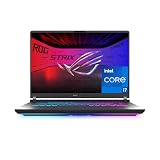
ASUS ROG Strix G16 (2025)
The Strix G16 is the most complete package here, pairing an RTX 5060 with a 14th-gen Core i7-14650HX and a 16:10 165Hz panel that gives you meaningfully more vertical workspace than standard 16:9 screens. ASUS gives the GPU a generous power ceiling and the cooling to sustain it, which is why this machine holds its frame rates in long sessions where thinner rivals fade.
MSI Katana 15
The Katana is the value outlier: an RTX 4070 at this price is unusual, and it comfortably outperforms the entry-level 50-series cards in most titles, especially at the native QHD resolution of its 165Hz display. The i7-13620H is a generation behind and the chassis is plain, but if raw graphics performance per dollar is your priority, this is the one to beat.
GIGABYTE Gaming A16
GIGABYTE’s A16 hits a sensible middle ground — RTX 5060, 16GB DDR5, a full 1TB SSD, and a 1920×1200 165Hz panel — without the price premium the ROG and Alienware badges command. It’s an unglamorous machine with modest build quality, but the component mix is exactly right for 1200p gaming and it leaves budget spare for peripherals.
Lenovo LOQ 15
The LOQ pairs an RTX 5060 with AMD’s Ryzen 7 250 and undercuts most 5060 laptops on price, making it the smartest buy for anyone who wants current-generation graphics on a tighter budget. The 144Hz FHD panel is a step down from the 165Hz screens above and the 512GB SSD will need supplementing, but both are easy compromises to live with.
Acer Nitro V 15
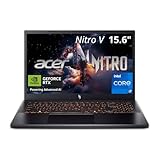
The Nitro V is the entry point to this list, and the RTX 5050 sets clear expectations: excellent for esports titles at high refresh rates, workable for recent AAA games at medium settings with upscaling enabled. With 16GB of RAM and a 165Hz IPS panel it’s a well-balanced starter machine, though buyers who plan to play demanding new releases should stretch to a 5060 model.
Frequently Asked Questions
Is $1500 enough for a good gaming laptop in 2026?
Yes, comfortably. At this budget you can expect an RTX 5060 or RTX 4070, 16GB of DDR5, a 1TB SSD, and a high-refresh display — a combination that handles 1080p and 1200p gaming at high settings, and 1440p with upscaling enabled.
Is an RTX 5050 worth it, or should I stretch to a 5060?
The 5050 is a capable esports and mid-settings card, but the 5060 offers a substantial uplift in demanding titles and more VRAM headroom for future games. If the price gap is under $200, the 5060 is the better long-term purchase.
Should I buy FHD or QHD at this price?
FHD or 1920×1200 is the safer choice for most buyers, since it lets a mid-range GPU hit high frame rates without compromise. QHD is only worth it if you’re pairing it with an RTX 4070 or stronger, as on the MSI Katana.
Can I upgrade the RAM and storage later?
Most laptops in this bracket use socketed SO-DIMM memory and have at least one accessible M.2 slot, so both are usually upgradeable. Always check the specific model’s service manual first, as some thinner designs solder RAM to the board.
Final Thoughts
For most buyers, the ASUS ROG Strix G16 is the best overall choice under $1500 — its combination of an RTX 5060, a strong HX-series CPU, and genuinely capable cooling makes it the most future-proof machine on this list. If you want the maximum graphics performance your money can buy and don’t mind an older CPU, the MSI Katana 15 and its RTX 4070 remain the value champion. And for anyone shopping closer to the $1000 mark, the Lenovo LOQ 15 delivers current-generation RTX 5060 performance for meaningfully less.