Key takeaways
- CPU — a modern mid-to-high tier chip like an AMD Ryzen 7 or Intel Core 7 keeps up with any gaming GPU without bottlenecking it.
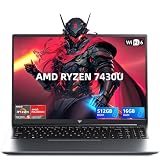
- RAM — 16GB is the practical minimum in 2026; 24GB or 32GB, as in the KAIGERR Gaming Laptop, gives headroom for multitasking and demanding titles.
- Upgradability — check whether the RAM and SSD can be swapped later, since some thin laptops solder them in place.
What's inside
A gaming laptop is a big investment and a tricky one, because the spec sheets are dense and the marketing loud. Buy without understanding what the numbers mean and you can end up with a machine that throttles under load, has a screen that undercuts its own graphics card, or costs hundreds more than a better-balanced rival. The right laptop, though, delivers desktop-class gaming you can carry anywhere.
This guide cuts through the noise and explains the components that actually decide gaming performance: the GPU, CPU, display, cooling, and memory. Learn what to prioritize and what to ignore, and you can shop with confidence and get the most gaming power for your budget in 2026.
As an Amazon Associate we earn from qualifying purchases at no extra cost to you. Product prices and availability are accurate as of the date shown and are subject to change.


⚡ Save on Your Next PC — Amazon Prime
Prime members get fast free shipping on the systems above, plus early access to Prime Day & Black Friday PC deals. New members get a 30-day free trial.
Watch: What to Look for in a Gaming Laptop — Video Review
The GPU Is Everything
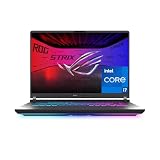
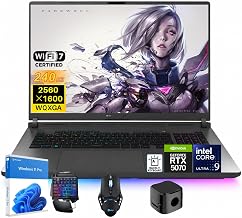
In a gaming laptop, the graphics card matters more than any other single component, because it does the heavy lifting of rendering your games. A current RTX 50-series GPU, like the one in the ASUS ROG Strix G16, determines the frame rates and settings you can run. Pay attention to the exact GPU tier and, importantly, its power limit (measured in watts), since the same GPU name can perform very differently depending on how much power the laptop lets it draw.
CPU and Memory
- CPU — a modern mid-to-high tier chip like an AMD Ryzen 7 or Intel Core 7 keeps up with any gaming GPU without bottlenecking it.
- RAM — 16GB is the practical minimum in 2026; 24GB or 32GB, as in the KAIGERR Gaming Laptop, gives headroom for multitasking and demanding titles.
- Upgradability — check whether the RAM and SSD can be swapped later, since some thin laptops solder them in place.
Display: Don’t Overlook the Screen
A powerful GPU is wasted on a poor screen. Prioritize a high refresh rate — 144Hz or 165Hz is the sweet spot — so fast games look smooth. Resolution matters too: 1080p or the taller 1200p is easiest to drive at high frame rates, while 1440p (like the ROG Nebula display) looks sharper but demands more from the GPU. Also check panel quality and color coverage if you value vivid visuals, and make sure the refresh rate matches the frames your GPU can realistically produce.
Cooling and Thermals
Laptops pack powerful parts into a thin chassis, so cooling decides whether that power is sustained or throttled. A laptop with robust cooling holds high clock speeds during long sessions, while a poorly cooled one slows down as it heats up, tanking your frame rate. Look for models with multiple heat pipes and generous fans, read reviews that measure sustained performance and surface temperatures, and remember that a slightly thicker laptop often games faster because it can dissipate more heat.
Portability, Battery, and Build
Gaming laptops trade portability against power. A 16-inch model like the ASUS TUF Gaming A16 balances a usable screen with reasonable weight, while an 18-inch machine is a desktop replacement you rarely move. Battery life is modest across the board once you are gaming, so judge battery by how it handles everyday tasks unplugged. Build quality matters for a device you carry, so favor a sturdy chassis and a reliable hinge over flashy but flimsy designs.
Tips
- Check the GPU’s wattage (TGP), not just its name — a higher-watt RTX card outperforms a starved one of the same tier.
- Match your screen’s refresh rate to the frame rates your GPU can hit; a 165Hz panel rewards a strong GPU.
- Read reviews for sustained performance and thermals, since throttling can erase a laptop’s on-paper advantage.
- Get at least 16GB of RAM and confirm the storage and memory can be upgraded if you want longevity.
Frequently Asked Questions
How much should I spend on a gaming laptop?
Enough to get a current-generation GPU that matches your target games. Mid-range models with an RTX 5050 or 5060 handle 1080p high settings well, while higher tiers target 1440p. Spend on the GPU first; it ages the fastest.
Is 16GB of RAM enough for gaming?
It is the practical minimum in 2026 and fine for most games. If you multitask heavily, stream, or want future headroom, 24GB or 32GB is worth it — especially since some laptops make RAM hard to upgrade later.
Does screen refresh rate really matter?
Yes. A high refresh rate like 144Hz or 165Hz makes motion noticeably smoother and gives competitive players an edge. There is little point pairing a strong GPU with a 60Hz panel that cannot display the extra frames.
Why do two laptops with the same GPU perform differently?
Because of power limits and cooling. The same GPU can be configured to draw more or fewer watts, and better-cooled laptops sustain higher speeds. Always check the GPU wattage and thermal reviews, not just the model name.
Conclusion
When buying a gaming laptop, lead with the GPU and its power limit, back it with a capable CPU and at least 16GB of RAM, and insist on a high-refresh screen and cooling that can sustain performance. Balance those against the size and weight you are willing to carry, and you will land on a laptop that games hard today and holds up for years rather than one that looks good only on the box.