Key takeaways
- Single vs. dual panel: Dual-screen add-ons like the KEFEYA give you one clean extra display, while triple rigs multiply your workspace at the cost of weight and cabling.
- Refresh rate: Standard extenders run 60Hz, which is fine for productivity. Only a few, like the MNN, are tuned for smoother motion that gamers will appreciate.
- Console compatibility: If you want to plug in a Switch or PS5, confirm the panel accepts HDMI input and has built-in speakers or audio out.
- Cable count: One-cable USB-C is cleanest. Triple panels often need HDMI plus USB-C, so check your laptop has both free.
- Weight budget: Anything you mount on the lid should ideally stay under three pounds for daily carry; heavier units strain the hinge over time.
What's inside
A laptop extension screen solves a problem almost every mobile worker eventually hits: one display is never enough. Whether you are comparing documents, keeping an eye on a live dashboard, or gaming with a walkthrough open on the side, bolting a second or third panel onto your laptop instantly expands what you can see at once, and it packs down small enough to travel.
The category has matured fast, and the differences between a great extension screen and a frustrating one come down to connectivity, panel quality, and how gracefully it handles power. We put the leading models through real workdays and gaming sessions to sort the genuinely useful from the gimmicky.
As an Amazon Associate we earn from qualifying purchases at no extra cost to you. Product prices and availability are accurate as of the date shown and are subject to change.




🎮 Get More From Your Setup — Free
Prime Gaming gives you free PC games every month, in-game loot, and a free Twitch channel sub — plus fast free shipping on all the gear above. New members get a 30-day free trial.
Watch: Laptop Extension Screen: Review & Buyer’s Guide — Video Review
How to Choose a Laptop Extension Screen
- Single vs. dual panel: Dual-screen add-ons like the KEFEYA give you one clean extra display, while triple rigs multiply your workspace at the cost of weight and cabling.
- Refresh rate: Standard extenders run 60Hz, which is fine for productivity. Only a few, like the MNN, are tuned for smoother motion that gamers will appreciate.
- Console compatibility: If you want to plug in a Switch or PS5, confirm the panel accepts HDMI input and has built-in speakers or audio out.
- Cable count: One-cable USB-C is cleanest. Triple panels often need HDMI plus USB-C, so check your laptop has both free.
- Weight budget: Anything you mount on the lid should ideally stay under three pounds for daily carry; heavier units strain the hinge over time.
The Best Laptop Extension Screens Reviewed
KEFEYA 14″ Dual Screen
The KEFEYA is our favorite for people who want simplicity over spectacle. A single FHD IPS panel extends off your 13 to 17-inch laptop with USB-C or HDMI, and it happily accepts a Switch or PS5 for after-hours gaming. Plug and play means no driver hassle, and the 14-inch size keeps the whole package light and balanced.
MNN 15.6″ Portable Monitor
Technically a standalone portable monitor rather than a clip-on, the MNN earns its place with a 60Hz IPS HDR panel, one-cable USB-C operation, and a genuinely light 694-gram body. Built-in speakers and a low-blue-light mode make it a versatile do-everything second screen for work and play.
16″ 1200P Triple Extender
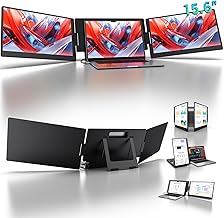
This 16-inch triple pushes a taller 1200P resolution for extra vertical room, which is a boon for long documents and code. It is driver-free over USB-C or HDMI and spans a huge 12 to 17.3-inch fit range, with PS5 and Chrome support baked in.
Vixtan 14″ Triple
At just 3.0 pounds for a full triple setup, the Vixtan is impressively light. The FHD IPS panels are crisp, USB-C plug and play keeps setup painless, and the 13 to 17.3-inch coverage fits most mainstream laptops.
KYY 15.6″ One-Cable Triple
KYY’s rotating triple offers a 360-degree hinge and kickstand, ideal for swinging a panel toward a coworker. It needs a driver install, but the single USB-C connection and travel-friendly design make it a capable all-rounder once configured.
Frequently Asked Questions
Can I game on a laptop extension screen?
Yes. For casual and productivity gaming a 60Hz panel is perfectly playable, and models like the KEFEYA and MNN accept console input directly over HDMI.
Does my laptop need USB-C to use one?
USB-C with DisplayPort Alt Mode is ideal, but many extenders also offer HDMI input as an alternative for older machines. Check your specific port capabilities first.
Will three panels drain my battery faster?
Driving extra displays does increase power draw. For all-day use, keep your charger handy or choose a panel that can sip power from a portable bank.
Are these hard to set up?
Plug-and-play USB-C models work in seconds. Driver-required units, like some KYY configurations, take a one-time software install but run smoothly afterward.
Final Thoughts
The KEFEYA 14″ dual is the easiest recommendation for clean, no-fuss expansion, while the MNN portable monitor is the most flexible if you want a screen that doubles for gaming. Space-hungry power users should look hard at the 16″ 1200P triple for its extra vertical real estate.