Key takeaways
- MSI Afterburner: The go-to free tool for NVIDIA and AMD undervolting via its voltage/frequency curve editor.
- A stress test: A demanding game or a benchmark loop to verify stability at your new settings.
- A monitoring overlay: Track temperature, clocks, and power draw so you can see the improvement.
What's inside
Undervolting your GPU sounds counterintuitive, but it is one of the smartest tweaks a gamer can make: you feed the card less voltage while holding the same clock speed, cutting heat, fan noise, and power draw with little to no performance loss. Many cards even run faster afterward because they stop hitting thermal limits. It is completely reversible and, done right, entirely safe.
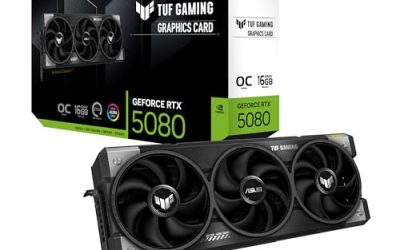
This guide walks through undervolting a modern GPU step by step using free tools, so a card like an ASUS RTX 5060 or any recent NVIDIA or AMD GPU runs cooler and quieter. No hardware changes are required, just software and a little patience.
As an Amazon Associate we earn from qualifying purchases at no extra cost to you. Product prices and availability are accurate as of the date shown and are subject to change.


⚡ Save on Your Next PC — Amazon Prime
Prime members get fast free shipping on the systems above, plus early access to Prime Day & Black Friday PC deals. New members get a 30-day free trial.
Watch: How to Undervolt Your GPU — Video Review
Why Undervolt in the First Place
GPUs ship with extra voltage as a safety margin so every single chip is stable, even the weakest ones. Most cards are stable at noticeably less voltage than the factory default. Dialing it in yourself lowers temperatures (often by 10-15C), quiets the fans, reduces power bills, and can improve sustained clocks in a hot case. For small-form-factor or poorly ventilated builds, it is transformative.
The Tools You Need
- MSI Afterburner: The go-to free tool for NVIDIA and AMD undervolting via its voltage/frequency curve editor.
- A stress test: A demanding game or a benchmark loop to verify stability at your new settings.
- A monitoring overlay: Track temperature, clocks, and power draw so you can see the improvement.
Step-by-Step Undervolting
- Open the curve editor: In MSI Afterburner press Ctrl+F to open the voltage/frequency curve.
- Pick a target point: Choose a voltage lower than stock (for example 900mV) and note the clock you want to hold there.
- Flatten the curve: Drag the chosen point up to your target clock, then flatten everything to the right so the card never exceeds that voltage.
- Apply and test: Apply the curve, then run a game or benchmark for 30-60 minutes watching for crashes or artifacts.
- Refine: If it crashes, raise the voltage slightly or lower the clock; if it is rock-solid, you can try a touch less voltage.
Tips
- Change one variable at a time: Adjust clock or voltage in small steps so you know what caused any instability.
- Save a profile: Store your stable curve in Afterburner and set it to load at startup.
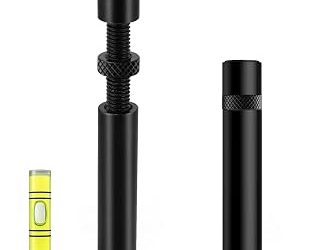
- Pair with good support: A heavy card sags over time; an anti-sag GPU support bracket keeps the connector and PCB aligned.
- Recheck after driver updates: A major driver change can occasionally affect your curve, so retest briefly.
Frequently Asked Questions
Is undervolting a GPU safe?
Yes. Unlike overvolting, feeding the card less voltage cannot damage it; the worst case is a crash, which you fix by adjusting the curve. It is fully reversible and does not void most warranties since no hardware is modified.
Will undervolting hurt my performance?
Usually not, and it can help. If done carefully you hold the same clocks at lower voltage, so frame rates stay the same while temperatures drop. Cards that were thermal-throttling often gain a little performance.
How much cooler will my GPU run?
It varies by card and case, but drops of 10-15C are common, along with quieter fans and lower power draw. The benefit is largest in small or poorly ventilated cases where heat was limiting clocks.
Do I need special hardware to undervolt?
No. Undervolting is done entirely in free software like MSI Afterburner. A GPU support bracket is a nice complement for heavy cards, but it is about preventing sag, not part of the undervolt itself.
Conclusion
Undervolting is a free, safe, reversible way to make your GPU run cooler and quieter with little to no performance cost. Use MSI Afterburner’s curve editor, target a lower voltage at your desired clock, and test thoroughly before saving the profile. Your fans, your ears, and your power bill will all thank you.