Key takeaways
- Pro: Discrete-class integrated Radeon 8060S graphics with 40 CUs.
- Pro: Up to 128GB unified LPDDR5x memory for AI and 8K editing.
- Pro: Exceptional 126 TOPS NPU for on-device AI workloads.
- Pro: Available in everything from a 13-inch convertible to mini workstations.
AMD’s Ryzen AI Max+ 395 has quickly become one of the most talked-about mobile chips in years, and for good reason. It fuses a 16-core CPU with a massive integrated Radeon 8060S GPU and a dedicated NPU pushing well over 100 TOPS of AI performance, all in a package that can drive serious creative and gaming workloads without a discrete graphics card. For anyone eyeing an AI PC that doubles as a content-creation powerhouse, this is the silicon to watch.
This review examines what the Ryzen AI Max+ 395 delivers in real laptops and mini workstations, from the compact ASUS ROG Flow Z13 to memory-loaded NIMO desktop-replacement builds. If you’re deciding whether this platform is worth the premium, here’s what matters.
Our top picks
 NIMO 2026 New AI PC
- Private AI Lab on Your Desk: With 128GB…
- Discrete-Level Graphics Power: Featuring Radeon 8060S with 40…
- Flight-Ready Endurance: The 99Wh battery hits the maximum…
 NIMO 2026 New AI PC
- Private AI Lab on Your Desk: With 128GB…
- Discrete-Level Graphics Power: Featuring Radeon 8060S with 40…
- Flight-Ready Endurance: The 99Wh battery hits the maximum…
 ASUS ROG Flow Z13 2.5K 180Hz 3ms
170-degree kickstand adapts between tablet and laptop use
Rated for up to 10 hours of battery life
180Hz touchscreen display suits both gaming and creative work
13-inch screen is compact for extended desktop-style work
Detachable 2-in-1 design adds hinge wear over time
| Product | Key specs | |
|---|---|---|
| NIMO 2026 New AI PC | Private AI Lab on Your Desk: With 128GB… Discrete-Level Graphics Power: Featuring Radeon 8060S with 40… Flight-Ready Endurance: The 99Wh battery hits the maximum… | Check price |
| NIMO 2026 New AI PC | Private AI Lab on Your Desk: With 128GB… Discrete-Level Graphics Power: Featuring Radeon 8060S with 40… Flight-Ready Endurance: The 99Wh battery hits the maximum… | Check price |
| ASUS ROG Flow Z13 2.5K 180Hz 3ms | Check price | |
 NIMO 2026 New AI PC | Check price | |
 EXCaliberPC | Display: 13.4" 2.5K (2560 x 1600, WQXGA) 180Hz… Processor: AMD Ryzen AI MAX+ 395 16 Cores… Graphics Card: AMD Radeon 8060S Graphics | Check price |
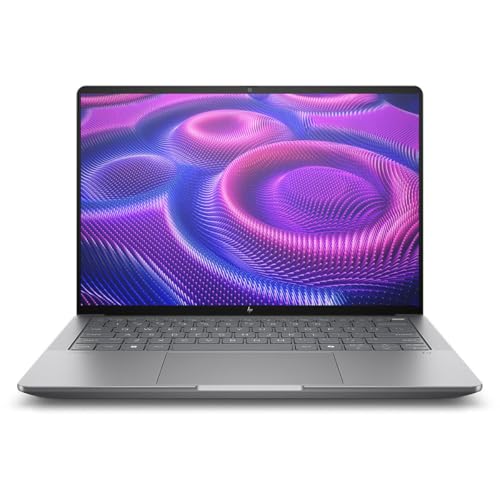 HP ZBook Ultra G1a 14" Touchscreen Mobile | AI-powered: Yes Processor Manufacturer: AMD Processor Type: Ryzen AI Max+ PRO | Check price |
| NIMO 2026 New AI PC Laptop | Private AI Lab on Your Desk: With 128GB… Discrete-Level Graphics Power: Featuring Radeon 8060S with 40… Flight-Ready Endurance: The 99Wh battery hits the maximum… | Check price |
As an Amazon Associate we earn from qualifying purchases at no extra cost to you.
🎮 Get More From Your Setup — Free
Prime Gaming gives you free PC games every month, in-game loot, and a free Twitch channel sub — plus fast free shipping on all the gear above. New members get a 30-day free trial.
Watch: Amd Ai Max 395 Laptop: Review & Buyer’s Guide — Video Review
Design & Build
The Ryzen AI Max+ 395 shows up in strikingly different form factors. The ASUS ROG Flow Z13 packages it into a 13.4-inch convertible 2-in-1 with a ROG Nebula touchscreen, an impressive feat of engineering that puts workstation power into a tablet-style chassis. On the other end, NIMO’s AI PC builds pair the chip with up to 128GB of LPDDR5x memory and multi-terabyte SSDs in mini-desktop enclosures with beefy 230W power delivery for sustained loads. The HP ZBook Ultra G1a brings it to a premium 14-inch mobile workstation with a sharp 2.8K touchscreen. Build quality across these machines is top-tier, matching their professional ambitions.
Performance
This is a genuine leap for integrated graphics. The Radeon 8060S with 40 compute units delivers discrete-class gaming performance at 1080p and 1440p, while the 16-core CPU chews through rendering, compilation, and heavy multitasking. The standout, though, is AI: with 126 TOPS on tap and up to 128GB of unified memory, these machines can run large local AI models and accelerate 8K video editing workflows that would choke lesser hardware. The NIMO configurations with 128GB of RAM are especially compelling for creators who need enormous memory pools, while the ROG Flow Z13 proves the platform can stay portable without gutting performance.
Pros & Cons
- Pro: Discrete-class integrated Radeon 8060S graphics with 40 CUs.
- Pro: Up to 128GB unified LPDDR5x memory for AI and 8K editing.
- Pro: Exceptional 126 TOPS NPU for on-device AI workloads.
- Pro: Available in everything from a 13-inch convertible to mini workstations.
- Con: Premium pricing places it well above mainstream laptops.
- Con: High-wattage configs prioritize performance over battery endurance.
- Con: Soldered unified memory means no post-purchase RAM upgrades.
Alternatives to Consider
If your priority is portability with power, the ASUS ROG Flow Z13 convertible is the most flexible way to own this chip. Creators who want maximum memory and storage should look at the NIMO AI PC builds with 128GB of LPDDR5x and 1TB to 4TB of SSD space. Professionals needing enterprise support and a refined mobile workstation will find the HP ZBook Ultra G1a with its Ryzen AI Max+ PRO variant and 64GB of memory a polished, business-ready alternative.
The Decision That Matters Most: Memory Size
Every laptop built on this platform shares the same basic silicon, so the choice that shapes your ownership experience is not the badge on the lid. It is the memory configuration you pick on the day you order, because the unified memory is soldered down and can never be upgraded later. That single decision sets your permanent ceiling for graphics memory, local AI model size, and heavy multitasking. Use the table below to match a configuration tier to the work you actually plan to do, and treat anything above your tier as headroom you are paying for but may never touch.
| Memory tier | Best suited to | Where it runs out |
|---|---|---|
| 32GB class | 1080p and 1440p gaming, photo editing, coding, everyday creative work | Large local AI models and very large video timelines squeeze both system and graphics memory at once |
| 64GB class | Serious local AI experimentation, 4K video editing, 3D scenes, gaming plus streaming side by side | The very largest language models and 8K raw workflows still want more room |
| 128GB class | Big local models with long context windows, 8K editing, large simulations, several heavy apps open together | Pure gaming gains little over the 64GB tier, so game-only buyers overspend here |
The key idea is that memory on this platform is a shared pool. The graphics hardware draws its frame buffer from the same chips your applications use, so a model or timeline that looks fine on paper can still stumble if the operating system and your other apps are competing for the same capacity.
Pre-Purchase Checklist
Listings for this platform are unusually easy to misread, because several chips and memory sizes hide under one model name. Before ordering any machine in this family, confirm each of these points on the exact listing in front of you:
- The full processor name, spelled out completely. Sellers often shorten it, and the Max+ 395, the Max 390 and the Max 385 are different chips with different core counts and graphics tiers.
- The exact memory capacity of the configuration being sold, not the maximum the model line supports.
- The graphics tier named in the specifications, since the smaller chips pair with a reduced graphics configuration.
- The storage size and whether the drive can be replaced later, which varies by chassis.
- The included power adapter and the performance mode the maker rates for battery versus plugged-in use.
- The warranty terms and who provides support in your region, especially for smaller brands selling through marketplaces.
- The return window, in case the configuration that arrives does not match the listing.
Setup and Care in the First Week
A few early steps pay off for the whole life of the machine. First, update the chipset and graphics drivers from the chip maker and the laptop maker before installing your main applications, since this platform’s drivers have been revised frequently. Second, look for the graphics memory allocation setting in the firmware or the maker’s control software and set it deliberately rather than leaving it on automatic; local AI tools and some games behave far more predictably with a fixed allocation sized to your workload. Third, learn the performance modes. These laptops run at very different power levels on battery and on the adapter, so do your demanding work plugged in and reserve battery mode for lighter tasks. Finally, keep the vents unobstructed and the firmware current, and back up your work before major driver changes, just as you would on any workstation-class machine.
Who Should Skip This Platform
Plenty of buyers are better served elsewhere. If your main goal is the highest possible frame rate per unit of money in games, a conventional laptop with a mid-range discrete graphics card is usually the more efficient purchase. If you need all-day battery life in a bag-friendly ultraportable, this platform’s power envelope works against you. If your software depends on a specific vendor’s graphics ecosystem or certified workstation drivers for a named professional application, check that application’s requirements first. And if you only run small AI models or cloud AI tools, the large memory configurations are wasted on you; a far simpler machine will feel just as fast.
Common Mistakes Buyers Make
The most frequent error is ordering the smallest memory configuration for local AI work and discovering the limit after the return window closes. The second is assuming a listing’s headline model name guarantees the flagship chip, when the same chassis ships with several processors. The third is comparing headline AI performance numbers across chip families as if they were measured the same way; they are not directly comparable. The fourth is expecting native 4K gaming at high settings, when this platform’s shared memory bandwidth is happiest at 1080p and 1440p. The fifth is forgetting that memory cannot be added later, which turns a small saving today into a full replacement tomorrow.
Buyer Questions the Main Guide Did Not Cover
Can I connect an external graphics dock later? Some machines in this family offer high-speed ports or a dedicated expansion connector that can support one, but support is model-specific. Check the exact chassis specifications before assuming a dock will work, and note that the integrated graphics are strong enough that many owners never bother.
Is anything upgradeable after purchase? Memory is not, on any model in this family. Storage depends on the chassis; some designs accept a replacement drive and a few add a second slot, while others seal everything in. Confirm before buying if storage growth matters to you.
Does it run Linux? The platform is generally workable under current Linux distributions, and local AI tools are a common reason owners install it, but driver maturity varies by component. If Linux is your main environment, check the specific model’s community reports before ordering.
What does the NPU actually do for me day to day? It accelerates supported features in video calls, photo tools, and AI-enabled applications, and it can offload smaller inference tasks efficiently. The heavy local AI lifting, however, is usually done by the graphics hardware and the large memory pool, so buy for memory first and treat the NPU as a bonus.
Frequently Asked Questions
Does the Ryzen AI Max+ 395 need a separate GPU?
No, that’s the point. Its integrated Radeon 8060S offers discrete-tier performance for gaming and creative work, letting these machines stay thinner and simpler than laptops with dedicated graphics cards.
How much memory can it use?
Configurations reach up to 128GB of unified LPDDR5x memory, shared between the CPU, GPU, and NPU. That massive pool is a key advantage for local AI models and high-resolution video editing.
Is it good for gaming?
Yes. The Radeon 8060S handles modern titles smoothly at 1080p and often 1440p, making machines like the ROG Flow Z13 capable gaming devices as well as productivity tools.
Can it run local AI models?
It excels at it. With 126 TOPS of NPU performance and up to 128GB of unified memory, this platform is among the best for running sizable AI models directly on-device.
Verdict
The Ryzen AI Max+ 395 is a landmark mobile platform that blurs the line between ultraportable and workstation. For most buyers, the ASUS ROG Flow Z13 offers the best mix of power and portability, while the 128GB NIMO AI PC builds are the choice for creators chasing raw memory and 8K editing headroom. It’s a premium purchase, but one that delivers genuinely category-leading capability.
FAQ
Does the Ryzen AI Max+ 395 need a separate GPU?
How much memory can it use?
Is it good for gaming?
Can it run local AI models?
More from Amazon
Programs that pair well with the guide above. Offers and eligibility are set by Amazon and may change.
Free shipping on eligible items, Prime Video and more. Eligible new members can start with a free trial.
Start a Prime free trialAd-free music streaming. Eligible new subscribers can start with a free trial.
Try Music Unlimited freeA Prime membership for ages 18-24 with a trial period. Eligibility is set by Amazon.
See Prime for Young AdultsAudiobooks and podcasts to listen to on the go. Eligible new members can start with a free trial.
Try Audible freeAs an Amazon Associate we earn from qualifying purchases.