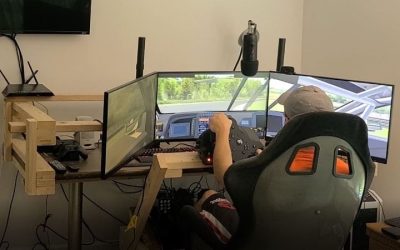
The best racing cockpits for apartments provide a stable seat, wheel mount, and pedal position without claiming a permanent corner of your home. Our leading readily listed GT-style choice is the Next Level Racing GTLite for a driver who wants a folding seat with a shifter mount at an accessible price; US listings showed a purchase path during research. The stronger GTLite Pro is the conditional upgrade for entry-level direct-drive buyers, but its US manufacturer store displayed a sold-out state. The lighter Playseat Challenge ActiFit suits buyers who value low weight above maximum force-feedback strength. Unlike a wheel stand that uses your office chair, every option here includes a seat. We compare how much living space the rigs actually occupy, not simply whether the product box says ‘compact.’
Quick verdict for apartment sim racers
Best overall for most modest apartment setups: Next Level Racing GTLite. Its foldable GT seat, included shifter mount, and $199 US manufacturer price suit buyers who need a complete rig without a permanent footprint. Best entry-direct-drive upgrade, if stock is confirmed: GTLite Pro. Its padded seat, roll-away design and 13 Nm manufacturer guidance are worthwhile, but major US listings showed sold-out or special-order status during research.
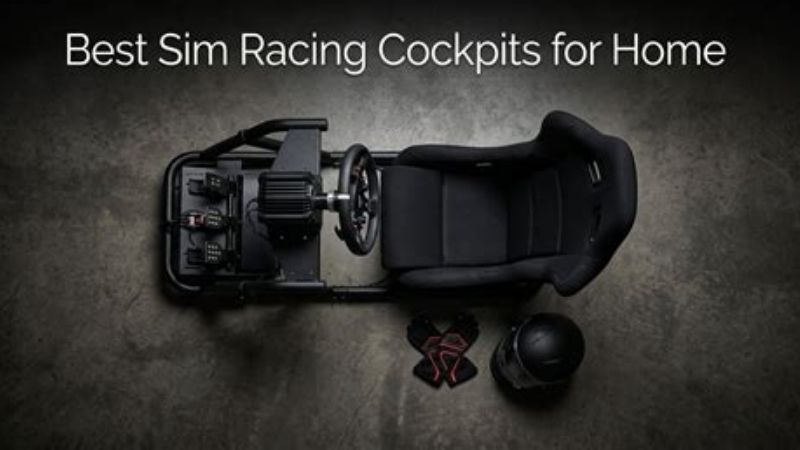
Best lightweight budget fold: Playseat Challenge ActiFit. At 9 kg and a published 136 × 54 × 96 cm deployed size, it suits households that have to clear the living room after every session. Playseat does not recommend conventional direct-drive setups on its standard Challenge family; do not buy this one simply because the wheel bolts appear to fit.
Best for easy seating adjustments: Playseat Challenge X Logitech G Edition. Its X-Adapt adjustments, included gearshift support, and 11.6 kg published weight make it attractive for shared spaces. Best mixed Formula and GT seating: Next Level Racing F-GT Lite. Best compact Formula-oriented direct-drive design: Playseat Challenge DD – F1 Edition, but it costs more and its seating angle is more specialized.
Comparison: footprint, folding, and wheel support
| Cockpit and included seat | Key verified feature | Apartment-use trade-off | US displayed or manufacturer price checked Oct. 29, 2026 | Availability note |
|---|---|---|---|---|
| Next Level Racing GTLite Pro | Folds/rolls; 13 Nm maker guidance; shifter and handbrake bracket | Wider and bulkier than a basic deck chair | NLR: $299 | US seller showed sold-out on one page; verify elsewhere |
| Playseat Challenge ActiFit | 9 kg; 136 × 54 × 96 cm deployed; folds | Standard Challenge not recommended for DD | Playseat US: $229 | Verify retailer checkout |
| Playseat Challenge X Logitech G Edition | 11.6 kg; 140 × 60 × 105 cm deployed; foldable | Wheel plate can be less ideal for strong bases | Playseat US: $299 | Verify retailer checkout |
| Next Level Racing GTLite | GT position; folds with electronics; included shifter mount | Less bracing for high-force DD driving | NLR: $199 | US store showed add-to-cart during research |
| Next Level Racing F-GT Lite | Foldable; changes between GT and Formula seating | More complicated adjustment and larger in-use reach | NLR: $299 | US store displayed add-to-cart; confirm checkout |
| Playseat Challenge DD – F1 Edition | Foldable high-carbon-steel design; 119 × 65.5 × 93.5 cm deployed | Formula seating and larger investment | Playseat US: $399 | Product page directed shoppers to partners; check partner stock |
Displayed US dollar amounts come from brand or US store listings, not guaranteed delivery totals. Wheels, pedals, monitors and consoles are not included. Dimensions describe the manufacturer-specified deployed configuration, not the space required for the complete folded bundle.
Next Level Racing GTLite Pro — best entry-direct-drive upgrade if available
The right compromise for a growing system
The GTLite Pro builds on the company’s folding cockpit approach with a more padded GT-oriented seat, integrated roll-away wheels, and an included bracket for a shifter and handbrake. Crucially, Next Level Racing explicitly lists entry-level direct-drive wheel bases up to 13 Nm. That is a manufacturer limit, not a guarantee that every 13 Nm wheel will feel as rigid as an aluminum-profile cockpit. A moderate force-feedback setting and a sensible pedal load remain wise for a folding structure with hinges and a fabric seat.
A folding cockpit solves a different problem from a stand. Your hips, wheel, and pedals stay connected within one structure, so a rolling office chair cannot migrate backward under braking. This consistency matters in rally stages with rapid steering transitions and in road racing with repeatable threshold braking. Its padded contact areas across the back, thighs, and shoulders may be appealing during longer sessions, although comfort is body-specific and we have not performed an in-person seating trial.
Everyday storage and limits
The roll-away design is valuable when the cockpit is moved rather than carried, but do not assume its transport wheels are safe for every floor finish. Check floor mats, rug edges, and door thresholds. The folded shape still includes your steering rim, pedals, shifter, and cables, so measure the whole assembled object before allocating a closet. The US store page showed a sold-out state during research even though the brand’s main product page continued to advertise the model. Do not confuse being listed with confirmed inventory; check the exact seller and expected ship date.
Pros: Included seat, explicit entry-DD guidance, shifter/handbrake mount, roll-away folding. Cons: Some frame movement is inherent in a portable design, more expensive than a basic GTLite, and stock needs verification. Who should buy: The apartment racer growing beyond a G29-class wheel who cannot dedicate the square footage to a fixed chassis. If you rarely use a handbrake and prefer lower weight over higher wheel force, the Challenge ActiFit is easier to store.
Playseat Challenge ActiFit — best lightweight budget option
Why it works for truly temporary rooms
Playseat’s Challenge ActiFit is the lightest model on our main list by published weight: 9 kg. The manufacturer gives a deployed footprint of 136 cm long by 54 cm wide and a 96 cm height, with a breathable fabric seat and folding frame. It accommodates drivers across a broad published size range, but the useful question is whether your shoulders, wheel reach, and knees are comfortable with the bracket positions. Its simple chair-like geometry has an advantage over larger cockpits when the whole unit must move into a bedroom closet each evening.
This is ideal with an entry-level, relatively modest wheel and pedal set. The manufacturer’s foldable cockpit guidance explicitly discourages direct-drive steering on the standard Challenge products and points DD buyers toward sturdier designs. Do not interpret a ‘compatible with Logitech, Thrustmaster, Moza, Fanatec’ mounting statement as proof of stability under a strong DD base. Physical bolt compatibility and structural suitability are different questions.
What you sacrifice for low weight
The simple frame cannot offer the broad, independently locked wheel and pedal adjustments of a heavier cockpit. Strong brake pressure, especially from a stiff load-cell pedal, can make some light foldable rigs less consistent. Long sessions may also make you prefer a more supportive seat with a firmer back and better adjustability. The ActiFit fabric helps ventilation, but it cannot substitute for testing seat width and lumbar fit. Use a floor mat to reduce sliding and protect flooring; avoid placing the open seat directly in a walkway where someone may trip.
Pros: Low published weight, small deployed width, straightforward folding, lower official price. Cons: Not the intended choice for powerful direct drive, limited rigidity and adjustment range, and a separate shifter/handbrake arrangement may be less straightforward. Who should buy: Casual-to-regular apartment racers on a modest wheel who value fast room reset above expansion. A future high-torque upgrade is a reason to step up now rather than forcing this lightweight seat to act like a fixed frame.
Playseat Challenge X Logitech G Edition — best for shared household adjustments
More ways to get the seating position right
The Challenge X adds the manufacturer’s X-Adapt adjustment system and an included gearshift support. Playseat publishes dimensions of 140 × 60 × 105 cm in use and an 11.6 kg frame weight. Its seating and adjustment scheme help when different household members race at different heights. More important than the product’s Logitech co-branding is that the frame can keep the pedal-wheel-seat relationship together between sessions; however, exact bolt compatibility still needs confirmation for each wheel, shifter, and pedal kit.
The manufacturer lists broad physical compatibility for the major racing brands, but Playseat’s separate folding-cockpit guidance does not recommend ordinary Challenge variants for direct-drive steering. Treat that caveat as stronger evidence than a retailer title listing every possible wheel. A high-torque base may attach mechanically while still making the wheel deck flex enough to undermine control. If your current system is gear or belt driven and you value a repeatable fit, the X’s more capable adjustments can justify its higher price than the ActiFit.
Why it may not be the right upgrade
If you race alone and keep a fixed seating position, some of the X-Adapt advantage will be wasted. At its current list level it overlaps more rigid or more DD-focused options. Check whether the wheel mount opens comfortably for entry and exit when the room has a desk or sofa close to one side; a narrow measured width does not mean you can squeeze into it through a wall. Ensure the shifter support fits the device and hand orientation you use. A handbrake lever with a tall throw can require an additional mounting solution.
Pros: Relatively light, foldable, published dimensions and adjustment information, included gearshift support. Cons: Not a blanket DD recommendation, costs more than ActiFit, and wheel-deck geometry can constrain some users. Who should buy: A couple or family sharing an entry-to-midrange wheel and needing the cockpit to disappear after racing. The GTLite Pro is more persuasive if stronger direct-drive plans dominate the buying decision.
Next Level Racing GTLite — best affordable GT-style cockpit
A useful middle ground between chair and fixed rig
The GTLite is a foldable GT-position cockpit with an included shifter mount and manufacturer-confirmed wheel/pedal hard-mount locations. Next Level Racing lists a $199 US manufacturer price. The GT driving position is more upright than a dedicated Formula frame, which suits rally, road cars, and most beginner racing games. Its main appeal is the same connected seating triangle that heavier cockpits provide, with none of the permanent room commitment.
The stand’s hinges allow folding with electronics still installed, an important difference from simply removing a wheel and moving a fixed frame. Nonetheless, a loaded cockpit takes more space than the unmounted frame, and your shifter can stick out from the side when you are trying to fit it through a closet door. Think of the GTLite as a seat you can temporarily store, not an object that disappears without a storage plan.
Rigidity, force, and access trade-offs
The GTLite is best matched with moderate wheels and an adjustable pedal set. While the manufacturer discusses compatibility with major wheel brands, it does not offer the GTLite Pro’s 13 Nm claim for this standard model. We therefore do not treat the standard GTLite as equivalent in high-force capacity. Secure the pedal hardware carefully: movement in the frame will be more noticeable if a stiff brake requires your body to push hard against a flexible seat and wheel column. Compared with the ActiFit, the included shifter arm is a practical bonus for rally drivers; compared with the Pro, this is the simpler structure.
Pros: Low listed price for a seat-inclusive cockpit, folding storage, shifter mount, familiar GT geometry. Cons: Less suitable for aggressive direct drive than the Pro, not ideal for users who want strong load-cell resistance, and entering/exiting a low seat can be cumbersome in a tight corner. Who should buy: A beginner who wants a complete racing position rather than an office-chair-based stand, but does not expect a powerful base in the immediate future.
Next Level Racing F-GT Lite — best dual-position choice
Two driving postures, one foldable frame
The F-GT Lite is unusual because it is designed to change between a relatively upright GT position and a lower Formula-style position. That feature has real value if you race both GT cars and open-wheel machines and care about driving posture. The product uses Next Level Racing adjustment hubs and includes a shifter mount. It is also explicitly described as folding for storage with electronics mounted, provided the owner follows the setup instructions.
For an apartment user, this flexibility is not free. Switching seat position may mean rechecking the pedal angle, wheel distance, and monitor sight line. The lower Formula posture often extends your legs farther forward, so the cockpit’s occupied length while racing may matter more than what the folded width looks like. Measure the distance from your wall to the nearest furniture when fully reclined; adding a foot of reach in the wrong direction can block a doorway or desk chair.
Who benefits from its adjustability
Buy this if changing positions is part of the experience rather than a novelty you try once. The GTLite is a less complicated and cheaper GT-only alternative, and a fixed profile cockpit is better if maximum steering and braking rigidity matters above storage. The F-GT Lite’s original manufacturer materials focus on its foldable hubs, not a universal high-torque ceiling; independently confirm any wheel-base pairing instead of repeating unsupported ‘works with every DD wheel’ claims.
Pros: Two distinct seating geometries, seat and shifter support included, folds with installed equipment, useful for mixed racing disciplines. Cons: Takes thought to adjust, may occupy more in-use floor length in Formula mode, and does not eliminate flex compared with fixed rigs. Who should buy: The racing fan sharing one apartment corner between Formula and GT titles and willing to spend time tuning posture.
Playseat Challenge DD – F1 Edition — best compact Formula-specific pick
Distinct from the ordinary Challenge line
The Challenge DD – F1 Edition must not be confused with the standard Challenge ActiFit or Challenge X. Playseat describes a more substantial high-carbon-steel frame tailored to an F1-style reclined position and explicitly markets this version for direct-drive-oriented use. It is still foldable. Its official deployed dimensions are approximately 119 × 65.5 × 93.5 cm and its stated weight is 16.5 kg. Compared with a casual folding chair, that mass and more specialized posture make the product feel like a deliberate Formula setup rather than a general-purpose lightweight seat.
A dimension can be misleading when looked at in isolation: the shorter published overall length does not guarantee clearance around your feet, arms, or screen. Check the cockpit’s true seating angle and your monitor position. If a television is mounted high on a wall, a deeply reclined posture can become an ergonomic mismatch, requiring you to crane your neck. If you mainly drive GT3, rally, or trucks, the more upright GTLite Pro will likely make better daily sense.
Buying considerations
The US Playseat product page displayed a $399 price and directed shoppers toward partner availability; it should not be described as a guaranteed warehouse dispatch. Although the DD designation distinguishes it from the rest of the Challenge range, the page did not provide a single torque figure that we can use as a universal limit for every direct-drive setup. Review the mounting diagrams and ask the manufacturer or authorized seller about your exact wheel-base/pedal combination. A stiff pedal set adds substantial structural load independently of wheel torque.
Pros: Formula-specific ergonomics, folds for storage, published compact dimensions, expressly differentiated DD-focused construction. Cons: Higher price, less versatile posture, greater weight than ordinary Challenge chairs, and seller stock must be checked. Who should buy: A Formula-first racer who has enough closet space for the folded hardware and does not want to invest in a permanently assembled cockpit.
How we chose apartment-friendly cockpits
We compared manufacturer dimensions, published frame weight, whether the cockpit truly folds, seat inclusion, position adjustment, hardware mounting, console claims, and US purchasing pages. We also reviewed external coverage of foldable cockpits and their stiffness trade-offs. We did not personally assemble or test these six models, and we do not claim a measured flex ranking. The most important editorial distinction is between a statement such as ‘compatible with Fanatec’ (a mounting claim) and manufacturer-recommended force-feedback support (a stability claim). We have not converted broad brand compatibility into a guessed Nm figure.
We deliberately avoided turning this into a wheel-stand roundup: every recommendation includes a seat. We also did not insert the Playseat Trophy as a top folding choice because its official FAQ identifies it as not foldable. A fixed cockpit can be appropriate for an apartment with a dedicated nook, but it solves a different space problem. By the same reasoning, we do not recommend wall-mounted monitor arms or homemade floor anchors without assessing the rental and safety constraints involved.
Apartment buying guide: dimensions beat marketing
Measure your racing space in two modes
Record the open footprint with your wheel, pedals, and shifter installed, plus clearance for entry and exit. Then measure the intended storage space with the same accessories attached. The official dimensions in product tables usually describe the basic deployed frame, not a precise packed size with a steering rim, cable loops, and a tall handbrake. Mark the perimeter with masking tape before purchase. If you cross a doorway to reach the storage spot, measure that opening and the turning space around it as well.
Decide whether your wheel will stay modest or grow
A gear-driven Logitech and a high-torque direct-drive system impose very different loads. Playseat’s standard Challenge guidance discourages DD use, while the GTLite Pro advertises entry-DD capacity up to 13 Nm. Do not retrofit a high-power wheel into a lightweight frame on the theory that bolts alone guarantee compatibility. Likewise, load-cell pedals push hard into the pedal tray and seat frame. Choose for the expected combined loads, leaving some margin, rather than the single most impressive number on a product page.
Choose a seating posture that matches your screen
A Formula cockpit puts legs and back at lower angles than a GT-style seat. That can be immersive in open-wheel titles but uncomfortable if your display sits on a high desk or your television is positioned above eye level. In a small room, having to move a monitor before every session makes the setup less practical. Check eye-to-screen distance, screen height, wheel clearance to your knees, and whether the shifter blocks an armrest or walkway. People sharing one cockpit should prioritize easy, repeatable adjustments.
Be realistic about floors, noise, and neighbors
Direct-drive vibrations, gear shifts, and stomping on stiff pedals transfer force through the frame into the floor. On hard flooring, a dense protective mat can help prevent scratches and reduce some contact noise, but cannot guarantee sound isolation for downstairs neighbors. Avoid claims that any accessory makes a rig ‘silent.’ Keep power cords away from rolling wheels and folding hinges; route cables so a visitor does not trip when the setup is open. Do not block an exit or leave the folded unit balanced where it could fall.
Understand platform compatibility and total cost
A cockpit is mechanical: it does not unlock PlayStation or Xbox support. Console compatibility belongs to the wheel-base and accessory ecosystem. Check the exact mounting pattern for your wheel, brake set, and shifter; verify needed brackets rather than assuming all items pictured on a product page are included. Your true cost includes the cockpit, wheel and pedals, any extra mount, floor protection, taxes, and shipping. A lower advertised seat price may be poor value if an expensive handbrake bracket or replacement is necessary later.
What you need and how to verify the setup
Have the full cockpit manual, fastener kit, your exact wheel/pedal mounting diagrams, a tape measure, a protective mat if needed, and a safe cable path ready before assembly. Begin with the frame on a flat surface and follow the manufacturer sequence for locking hubs and fold joints. Mount the wheel and pedals, set the seat angle, and verify that you can fully brake without the chair or pedal assembly shifting unexpectedly. Check full steering rotation and hand clearance, then fold and unfold once without applying force to trapped cables. After the first few sessions, recheck accessible fasteners as directed by the manufacturer; never adjust mechanisms while someone is seated and loading the frame.
FAQ
Are foldable cockpits stable enough for direct-drive wheels?
Some are designed for entry-level direct drive, but not all. Next Level Racing states a 13 Nm class for the GTLite Pro. Playseat’s standard Challenge family is not its recommended direct-drive platform, while the Challenge DD – F1 is a separate DD-focused design. Actual behavior varies with force settings, mounting height, and brake resistance. Rely on a manufacturer-specific recommendation rather than a blanket statement.
Can I store the cockpit with the wheel and pedals attached?
Several of these models are advertised to fold with equipment installed, including the GTLite and F-GT Lite. That does not mean the complete assembly fits every closet. Check cable movement and the extra width added by a wheel or side-mounted shifter. If you carry the folded rig, plan for its total weight with hardware rather than just the bare chassis weight.
What is better in an apartment: a wheel stand or a cockpit?
A wheel stand generally stores more easily and lets you reuse an office chair. A cockpit adds a connected seat, reducing the separation between your body, wheel and pedals, which can improve braking consistency. If you already have a good chair that stays anchored, a stand may be enough; if the chair keeps rolling, the seat-inclusive option may justify its extra volume.
Is the Playseat Trophy foldable?
No. Playseat specifies that the Trophy is not foldable. It can work in a dedicated apartment corner where you can leave it in place, but it is not an alternative for someone who must pack a rig into a closet after each use.
What if the cockpit rocks under hard braking?
First verify that the frame is fully opened and every prescribed lock is engaged. Check the pedal fasteners and adjust the brake force to a comfortable level. Test on a level floor and ensure the frame has suitable protective contact points. If the structure exceeds its intended load or continues to move after correct setup, stop using aggressive force and consider a sturdier model rather than improvising unsafe braces.
Final thoughts
Choose the Next Level Racing GTLite as the all-around starter GT cockpit when a seller confirms stock, then consider the GTLite Pro for an entry-direct-drive upgrade only after checking its limited US availability. Choose the Playseat Challenge ActiFit when low weight and easy storage outweigh force-feedback ambitions, or the Challenge X if several people share a modest wheel. The GTLite is a straightforward low-cost GT seat; the F-GT Lite rewards buyers who alternate Formula and GT; the Challenge DD – F1 Edition is a specialized choice for a reclined Formula experience. Measure the complete rig and its exit clearance first: an impressive cockpit that blocks your room is not the right apartment cockpit.