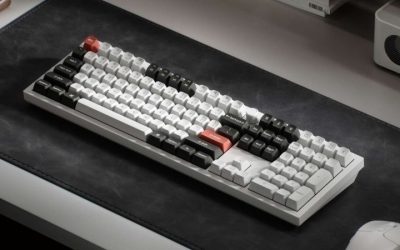
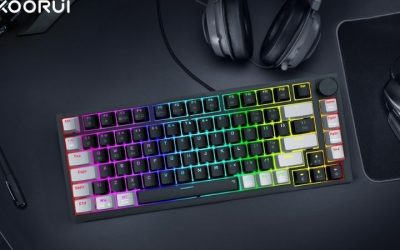
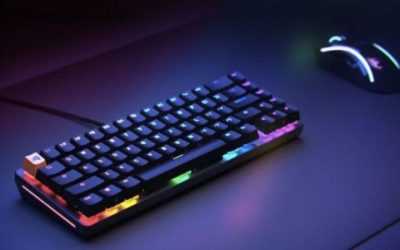
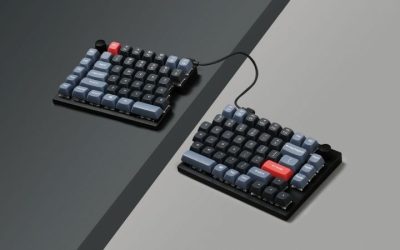
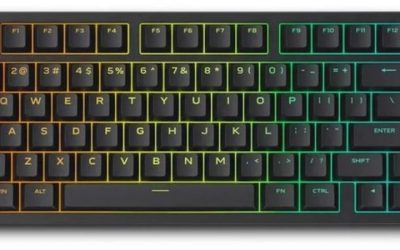
The best gasket mounted gaming keyboards combine case isolation with controls that suit gaming. Gasket construction affects feel and sound; it should not be used as a substitute for verified switch type, wireless behavior or independent latency evidence. For gaming, judge the board’s switch behavior, connectivity and firmware alongside its mounting style. A gasket-mounted plate can soften the typing feel, yet it does not promise silence, rapid response or hot-swap compatibility. Some models prioritize typing acoustics, while others use magnetic switches for adjustable actuation and faster resets. Compare the exact switch options, key layout, software and desk use before paying extra for an enthusiast-style build. The best choice depends on whether you value typing feel, competitive controls or a balance of both.
Quick verdict: gasket feel does not equal speed
Gasket mounting changes how force and vibration pass through the keyboard assembly, but it cannot tell you whether the board suits fast games. Switch behavior, layout, latency-sensitive connection modes and software support still need separate consideration. The picks below balance typing feel with practical gaming functions, keeping construction style distinct from measured responsiveness.
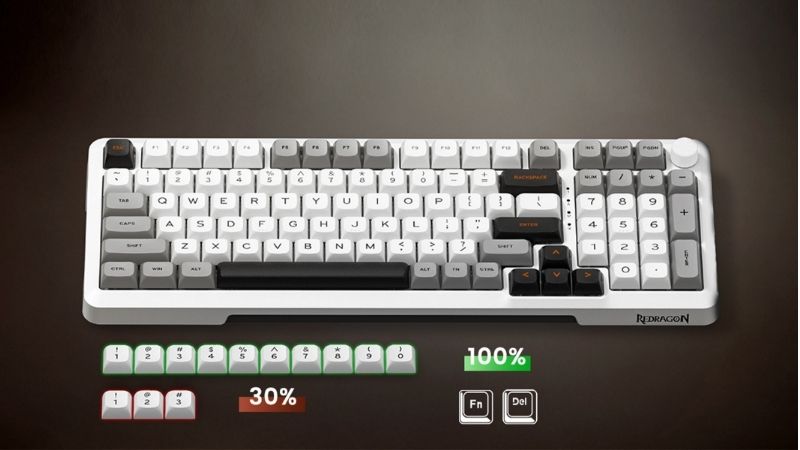
Gasket-mount refers to how the keyboard’s inner plate/assembly rests in the case—not a promise of quietness, low latency or switch compatibility. Choose the mount together with the actual switch and connection mode.
For the primary use case: Keychron V1 Max. The shortlist describes it as a less specialized compact mechanical option with web-based remapping. Its distinguishing evidence is 75% knob mechanical keyboard, gasket mount, 2.4GHz 1000Hz and Bluetooth. The limiting check is conventional mechanical switches do not support magnetic Rapid Trigger. These are model-specific factors, not a promise of independent testing or verified U.S. checkout.
A contrasting option: Keychron Q1 HE. The shortlist describes it as balances compact editing and gaming functions. Its distinguishing evidence is 75% ANSI keyboard with knob, magnetic Rapid Trigger and 0.2–3.8mm adjustable actuation. The limiting check is switch hot-swap supports specified Gateron magnetic family only; not ordinary MX switches. These are model-specific factors, not a promise of independent testing or verified U.S. checkout.
Comparison table: keyboards, features, and trade-offs
| Product / exact family | Verified feature or evidence boundary | Best fit | Major caveat | US price — exact variant, checked Oct 31, 2026 | Stock status — exact variant, checked Oct 31, 2026 |
|---|---|---|---|---|---|
| Keychron V1 Max | 75% knob mechanical keyboard, gasket mount, 2.4GHz 1000Hz and Bluetooth | A less specialized compact mechanical option with web-based remapping | Conventional mechanical switches do not support magnetic Rapid Trigger | $114.99 list (Keychron, selected switch) | Out of stock (backordered) |
| Keychron Q1 HE | 75% ANSI keyboard with knob, magnetic Rapid Trigger and 0.2–3.8mm adjustable actuation | Balances compact editing and gaming functions | Switch hot-swap supports specified Gateron magnetic family only; not ordinary MX switches | $239.99 (Keychron, selected switch) | Out of stock (backordered) |
| Lemokey L3 | 80% TKL QMK board, knob and macro column, double-gasket mount, 1000Hz 2.4GHz/wired | A heavier customizable keyboard for combined games and productivity | Not 75%, heavy, and 1000Hz rather than wireless 8k | $194.99 (Keychron/Lemokey selected barebone variant) | Backordered (selected Navy Blue barebone) |
| Keychron K2 HE | 75% wireless magnetic keyboard, Rapid Trigger, 0.2–3.8mm actuation, 1kHz 2.4GHz/wired | A compact magnetic option for gaming and commuting | Version 1 and Version 2 magnetic switch compatibility differ | $139.99 (Keychron selected K2H-Q1G) | Backordered (selected white/switch v2) |
| EPOMAKER TH80 V2 Pro | 75% tri-mode, knob and five-layer gasket construction | Separate non-Keychron brand acoustic/mechanical alternative | Vendor latency/acoustic claims are not independent lab results | $77.99 (EPOMAKER, black/Creamy Jade) | Add to Cart (EPOMAKER; checkout unconfirmed) |
| Ducky OK-M 75 | Gasket-mounted 75% mechanical, knob, tri-mode, independently researched 2026 | Soft everyday typing and acceptable casual gaming | Less consistent latency than gaming-first models; manufacturer specs inconsistent | $79.99 (Lenovo US reseller listing) | Add to Cart; stock not directly checked |
| MonsGeek M1 V5 TMR | 75% aluminum gasket, wireless magnetic/TMR, adjustable actuation | Gasket feel plus competitive input customization | Validate exact TMR SKU, firmware and switch family; polling not measured end-to-end latency | $149.99–$199.99 (MonsGeek US/brand, options) | Variant-dependent In stock / Out of Stock / Backorder |
| Keychron Q6 HE 8K (tested member of Q HE 8K family) | Double gasket, wired magnetic, up to 8kHz; RTINGS tested Q6, not separate Q1 HE 8K | Competitive magnetic controls plus visibly softer mechanical suspension | Loud typing and non-shine-through legends; size-specific observations must not be transferred | $239.99 (Keychron Q6HW-M1) | Backordered (selected fully assembled/black) |
| Wooting 80HE | Wired-only magnetic 8kHz keyboard; independently researched and relatively stiff gasket mount | Low-latency input and extensive web-based software | No wireless; not a plush gasket keyboard | No verified current US price for original 80HE | Many 80HE variants out of stock; brand introduced 80HE+ successor |
US price and inventory observations are tied to the named seller, selected SKU, color or memory configuration where specified. “Buy Now” and “Add to Cart” describe purchase buttons, not a completed checkout or guaranteed warehouse stock. Family-level pricing, obsolete variants, and conflicting source badges are explicitly qualified. Unresolved rows are not assumed purchasable.
Additional comparisons and purchase considerations
| Situation | Recommended evaluation or next action |
|---|---|
| Acoustic typing comfort | Evaluate construction, foam and stabilizers |
| Competitive rapid-trigger needs | Verify magnetic features separately |
| Frequent hardware mods | Check documented modular design and warranty |
Shortlisted keyboards and the differences that matter
Keychron V1 Max — fit and limitations
Keychron V1 Max is on this shortlist for a specific reason: 75% knob mechanical keyboard, gasket mount, 2.4GHz 1000Hz and Bluetooth. That makes it relevant when a less specialized compact mechanical option with web-based remapping. Gasket mounting is a case construction method, not a guarantee of low input latency. Plate material, foam, switches, stabilization, and desk surface also change how the board sounds and feels.
The main qualification is conventional mechanical switches do not support magnetic Rapid Trigger. Confirm the exact mount design and switch behavior, then separate acoustic preference from measured game-input performance. This is a specification-led comparison, not a claim that we measured this model in a controlled hands-on test.
Lemokey L3 — fit and limitations
Lemokey L3 is on this shortlist for a specific reason: 80% TKL QMK board, knob and macro column, double-gasket mount, 1000Hz 2.4GHz/wired. That makes it relevant when a heavier customizable keyboard for combined games and productivity. Gasket mounting is a case construction method, not a guarantee of low input latency. Plate material, foam, switches, stabilization, and desk surface also change how the board sounds and feels.
The main qualification is not 75%, heavy, and 1000Hz rather than wireless 8k. Confirm the exact mount design and switch behavior, then separate acoustic preference from measured game-input performance. This is a specification-led comparison, not a claim that we measured this model in a controlled hands-on test.
Keychron K2 HE — fit and limitations
Keychron K2 HE is on this shortlist for a specific reason: 75% wireless magnetic keyboard, Rapid Trigger, 0.2–3.8mm actuation, 1kHz 2.4GHz/wired. That makes it relevant when a compact magnetic option for gaming and commuting. Gasket mounting is a case construction method, not a guarantee of low input latency. Plate material, foam, switches, stabilization, and desk surface also change how the board sounds and feels.
The main qualification is version 1 and Version 2 magnetic switch compatibility differ. Confirm the exact mount design and switch behavior, then separate acoustic preference from measured game-input performance. This is a specification-led comparison, not a claim that we measured this model in a controlled hands-on test.
Buying guide: fit, switches, and software checks
Model eligibility and buying decisions
The mechanical stack changes the feel: A gasket-mounted board uses compressible supports between plate assembly and case. Plate material, foam, mounting tolerance and keycap profile all influence flex and tone, so two gasket boards can still feel dissimilar. A little travel is not a sign that the whole keyboard is floating freely.
What matters during gaming: Keychron V1 Max can provide a cushioned mechanical typing experience with 2.4GHz connectivity. Lemokey L3 uses a larger TKL-style footprint. Q1 HE and K2 HE add magnetic actuation behavior, a distinct purchase reason beyond their internal mount.
Do not buy for sound alone: Case damping may soften sharp resonance but cannot guarantee silent switches, especially on stabilizers and bottom-out. If noise matters, compare recordings made with the same microphone placement and switch class, or try a returnable board with your intended desk mat.
Maintenance and warranty when changing the stack: Before removing a plate or gasket, find the official service or customization instructions. Some modular boards permit gasket and plate changes without soldering; others do not authorize full disassembly under warranty. Note the locations of foam, fasteners and cable connectors and photograph each stage. Verify hot-swap support and switch type before pulling switches; mechanical and magnetic versions may use incompatible sockets. If your goal is mainly a quieter sound, better stabilizer tuning, desk mat choice or a less resonant case may offer better value than replacing a functioning keyboard. Do not recommend opening a sealed board simply because a reviewer modified a different revision.
Fit and design trade-offs
Independently researched gasket shortlist: soft suspension, switch flexibility and response are separate decisions
A new independent benchmark from RTINGS’ June 2026 Keychron Q HE 8K family review changes the buying comparison. The laboratory purchased and measured the full-size Q6 HE 8K , not the Q1 HE 8K; while both sit in a wired magnetic double-gasket family, exact Q6 results are not individual Q1 measurements. RTINGS describes a noticeably cushioned, springy mount and strong gaming response, but also louder typing and unlit keycap legends. That is a real trade-off for a shared desk: a soft-feeling gasket keyboard need not be a quiet keyboard.
A second RTINGS head-to-head independently researched the Wooting 80HE against the MonsGeek M1 V5 TMR . Both have very capable magnetic input and relatively stiff gasket implementations; the wired 80HE offers a more polished configuration experience and longer warranty, while the wireless 75% MonsGeek allows mechanical as well as magnetic switches with its TMR PCB. Buying for a plush typing feel based on either model’s gasket label alone would be a mistake. Do not count Bluetooth as an 8kHz gaming mode on the MonsGeek.
| Use case / non-negotiable | Model to audition | Pass/fail decision supported by evidence |
|---|---|---|
| Springier magnetic typing feel, wired desk | Keychron Q6 HE 8K (tested) or Q1 HE 8K family candidate | Choose exact size first; reject if audible typing, tall front edge, or unreadable dark legends matter more than the double gasket. No Q1-specific lab claim from Q6 data. |
| Competitive games, simple profile software and a wired-only station | Wooting 80HE | Compare the software workflow and cable routing; reject if a soft gasket feel or wireless is mandatory. The independently reported gasket is relatively stiff. |
| 75% wireless gaming plus experimentation with switch families | MonsGeek M1 V5 TMR | Confirm TMR PCB/switch sockets on seller SKU and receiver mode; reject for quiet rooms, inaccessible selector under Caps Lock or Bluetooth-only competitive play. |
| Conventional mechanical switches, simple office typing and modest budget | Keychron V1 Max or Ducky OK-M 75 | Do not infer magnetic Rapid Trigger from either gasket case; verify exact key legends and selected switch variant before checkout. |
Two-setting return-window protocol: keep the same desk mat and microphone distance while comparing normal typing and repeated WASD/multikey presses. Save three audio clips (spacebar, center letter row, stabilizer key) and log missed inputs separately. On the magnetic models, repeat with the same chosen actuation depth and wired or 2.4GHz connection (where available); do not compare a wired 8kHz mode with Bluetooth and call that a keyboard-speed difference. When testing the wired Wooting, document whether software presets and profiles persist after closing the configuration page. This is an actionable shopping trial, not a test already performed by this publication . U.S. price, local tax, stock and exact colorway require independent checkout verification.
Gasket trade-off: the fast magnetic board may be the worse shared-office board: “Gasket-mounted” describes the plate-and-case suspension; it does not promise soft acoustics or game-speed superiority. RTINGS’ independent MonsGeek M1 V5 TMR assessment finds exceptionally consistent competitive input, but also a relatively stiff, loud typing profile despite the gasket design. By comparison, the separately tested Ducky OK-M feels cushioned and quiet for routine typing, without matching the most consistent competitive response.
There is also a non-obvious daily-use penalty: on the tested MonsGeek, the physical Mac/Windows/wireless mode switch is located under the Caps Lock keycap . The manufacturer’s M1 V5 TMR model page independently documents that location and displays old/new battery-capacity variants (8,000mAh versus 10,000mAh). Do not assign the newer capacity or the same acoustic material stack to an unverified U.S. SKU. The listed 8kHz wired and 2.4GHz report modes do not mean Bluetooth has 8kHz reporting.
| Your actual priority | Better demonstration | Purchase rejection test |
|---|---|---|
| Rapid Trigger and competitive timing consistency | MonsGeek M1 V5 TMR; measure separately in supported wired/dongle modes | Software setup, loudness or keycap-removal switch access conflicts with daily use |
| Quiet mixed typing and casual gaming | Ducky OK-M gasket mechanical model | Competitive latency variance is unacceptable or the exact key legends are difficult to read |
| Magnetic and ordinary mechanical switch experiments | Verify actual TMR PCB, pinout and compatible switch list before buying | Seller is shipping the related HE/other M1 V5 version, not the reviewed TMR PCB |
Before the return period expires, compare 15 minutes of typing in a quiet room and fast repeated inputs in the actual game. Try switching devices at least five times, including the under-Caps-Lock selector. Record wrist fatigue, rebound noise and failed mode changes independently of a manufacturer’s 8kHz badge. No keyboard was tested by GeekGamingTricks; current U.S. stock and checkout were not independently confirmed.
Construction and performance separation: two new independently researched gasket choices: Most shopping pages overclaim what a gasket mount proves. RTINGS’ 2026 review of Ducky OK-M 75 reports a soft, springier mechanical typing feel and adequate latency for normal games, while noting less consistency than top competitive hardware. RTINGS’ October 2 retest of MonsGeek M1 V5 TMR covers a very different 75% aluminum board: magnetic TMR sensors, adjustable input and gasket mounting. They are independently researched examples of different ownership priorities even though both use gaskets.
| Buyer profile | Model and independent fact | Gate before paying |
|---|---|---|
| Casual gaming and low-cost, softer typing | Ducky OK-M 75, gasket mechanical, VIA and knob | USB/2.4GHz input consistency; no magnetic Rapid Trigger |
| Competitive rapid reset plus gasket chassis | MonsGeek M1 V5 TMR, independently reviewed magnetic/TMR 75% | Correct SKU/firmware/switch type; do not translate 8k polling directly into measured total latency |
| MX tuning in a heavier aluminum body | Keychron Q1 Max gasket conventional mechanical variant | Weight, shipping, hot-swap plate and USB/Bluetooth behavior |
| Magnetic actuation in another ecosystem | Keychron Q1 HE or Lemokey P1 HE per exact variant | Switch ecosystem is restricted and firmware compatibility varies |
The MonsGeek manufacturer specification documents gasket mounting, aluminum construction and mixed magnetic/mechanical switch support for its TMR platform. That does not mean that any earlier M1 V5 or M1W board automatically shares those features. Likewise, Ducky’s OK-M landing page contains contradictory magnetic/wired/8k lines alongside mechanical tri-mode copy. Use the independently reviewed OK-M series as the baseline and ask a U.S. seller for the actual box/SKU before assigning an exact poll rate or switch family.
Practical rejection test: compare the same desk mat, keyboard angle, switch setting and game for 15 minutes wired and then receiver-connected. Record bottom-out sound, spacebar rattle and input errors; then disable unnecessary background software and retest. Mechanical sound can be affected by foam, keycaps and desk acoustics; gaskets do not automatically lower noise. Test key actuation and reset settings separately on the magnetic MonsGeek, but never infer real-world end-to-end latency from the advertised 8000Hz USB polling figure alone. The comparison is a reader verification plan, not a publisher-run benchmark.
Gasket feel is not evidence of low input lag: Polling rate, firmware and wireless implementation are separate. A 1000Hz dongle specification alone does not prove better real-world key-to-screen latency than an alternative. For competitive games, test repetition reliability, rollover and debounce/actuation features rather than choosing by foam count.
What the gasket is actually supporting: Gasket mounting typically isolates the plate or internal assembly from the case with compliant material rather than fastening it rigidly. The resulting acoustics and motion also depend on plate material, case cavities, switches, stabilizers and foam. Some designs deliberately feel stiff despite carrying a gasket label. ASUS identifies silicone gaskets and acoustic foam in its TUF Gaming K3 Gen II, while Glorious markets a modular gasket structure on the GMMK 3 HE. Neither example means the product uses the same internal stack as a custom mechanical keyboard. Ask for a disassembly diagram or manufacturer construction description before giving it credit for a particular feel.
Four-model construction matrix: gasket is a mount, not a performance number: The article’s largest unresolved choice is not whether gasket mounting exists but what else the buyer receives for the price and which switch system is serviceable . As a distinct-brand comparison, EPOMAKER TH80 V2 Pro advertises a five-layer gasket-damped 75% case with PORON, IXPE, EPDM, silicone and PET layers, along with a physical knob, 1.06-inch display and tri-mode connection. These are manufacturer-described structural components; ‘deep thock’, ‘soft’ and ‘2ms latency’ are qualitative/vendor claims until tested with a matched microphone and input-lag setup.
The Keychron Q1 Max is a different engineering proposition: a 1,724g ±10g assembled 75% aluminum model with a double-gasket structure, PC plate, conventional hot-swappable Gateron Jupiter MX-style switches and 1,000Hz via wired or 2.4GHz, but just 90Hz over Bluetooth per specification. That makes Bluetooth a convenience mode, not the best comparison mode for esports. The V1 Max also confirms gasket construction in a lighter ABS-plastic case, demonstrating that ‘gasket’ does not imply expensive metal housing.
Meanwhile, Q1 HE combines a gasket-mounted aluminum case with magnetic adjustable actuation and Rapid Trigger; the manufacturer explicitly limits replacement switches to the supported Gateron Double-Rail magnetic family, excluding ordinary MX switches and named other magnetic switch families. Do not tell readers they can drop normal hot-swap MX switches into the Q1 HE because both products say ‘hot swap’.
| Keyboard | Verified mount/build | Switch architecture | Main caveat |
|---|---|---|---|
| EPOMAKER TH80 V2 Pro | Five-layer gasket stack; 75% | 3/5-pin MX-style hot-swap per maker | Vendor acoustic/2ms claims not independently benchmarked |
| Keychron Q1 Max | Double gasket, aluminum and PC plate | Conventional Gateron Jupiter mechanical | Bluetooth polling lower than wired/receiver |
| Keychron V1 Max | Gasket, ABS plastic case | Mechanical MX-compatible 3/5-pin | Confirm exact assembled/available SKU |
| Keychron Q1 HE | Gasket, aluminum, magnetic Hall-effect | Specified Gateron Double-Rail magnetic family only | Wrong replacement switch is a real incompatibility |
How to compare without a fake sound benchmark: Use the same tabletop, desk mat, recording distance and key sequence to compare acoustic character, and test spring return and stabilizer rattle separately. For games, record cable/2.4GHz/Bluetooth mode, firmware and actual hotkey profile. Gasket feel can improve subjective typing comfort; it does not manufacture low ping, low click-to-action latency or guaranteed Rapid Trigger. Before ordering for U.S. delivery, check the selected switches, caps, exact color SKU, seller return policy and checkout shipping availability. A published Add to Cart button does not prove a completed order.
Gasket construction is not a speed benchmark: Product-family construction check: Keychron specifies a gasket mount and polycarbonate plate in the ABS-plastic V1 Max; the Q1 HE instead has a gasket-mounted aluminum case and Gateron Double-Rail magnetic switches. They are different typing stacks, not interchangeable examples of one feel. A softer or quieter bottom-out could result from the case, plate, foams, desk surface and switches; the label “gasket” alone does not predict any one sound or acoustic level. V1 Max construction ; Q1 HE construction .
Do not convert switch technology into latency claims. Keychron lists 1,000Hz on V1 Max wired and 2.4GHz, versus 90Hz over Bluetooth. On the Q1 HE, adjustable actuation from 0.2 to 3.8mm and Rapid Trigger are magnetic-switch capabilities, not properties created by its gaskets. Switch compatibility is limited to the supported magnetic family; do not promise that ordinary MX-style switches can be installed. These are published device specs, not independently measured end-to-end key latency.
| What the buyer values | Check in the exact variant | Do not assume |
|---|---|---|
| Soft or quiet typing | Switch type, plate, keycaps, foam stack and stabilizers; compare in the same room | All gasket mounts sound identical |
| Esports responsiveness | Device connection mode, firmware, actuation behavior and measured latency from comparable tests | Gaskets reduce input lag |
| Switch experiments | Mechanical versus magnetic compatibility, including version-specific sockets | Every hot-swap switch family is cross-compatible |
| Value in the US | Assembled versus barebone costs and real seller availability at the correct SKU | A backordered V1 Max Brown knob variant is shipping today |
Recommended decision: for casual gaming plus typing, prioritize comfort and a complete, in-stock mechanical variant. For analog actuation or Rapid Trigger, evaluate the magnetic implementation independently of case mounting. The current page evidence does not establish a ranked acoustic winner or a completed U.S. checkout.
What gasket mounting actually changes
Q1 Max metal versus V1 Max plastic builds: Keychron documents gasket-mount construction for both Q1 Max aluminum and V1 Max plastic. Q1 Max supports 2.4GHz and up to 1,000Hz; the chosen assembled knob/Red option currently shows backordered despite a generic Add to Cart button elsewhere on the same page.
US buying evidence at this checkpoint: Q1 Max $229.99 and V1 Max $114.99 displayed; selected configurations backordered. This is a page observation, not completed checkout, and must not be presented as universal stock or delivery availability.
Compare flex, sound and latency as separate questions: Gasket mounting is a mechanical suspension design; it is not the same as a software gaming feature, low latency certificate or guaranteed “thock” sound. Plate, foam, keycap and switch choices change the result.
check: a magnetic keyboard is not automatically gasket mounted: The word gasket describes how a keyboard’s plate or assembly is suspended or damped inside the case. It does not assert a measurable gaming-latency advantage, and it cannot be inferred from ‘hot swap’, Hall-effect switches, aluminum construction or a padded wrist rest. Razer’s BlackWidow V4 75% specifications explicitly identify a gasket-mounted FR4 plate and up to 8,000Hz polling for applicable wired versions. Those features can coexist, but the polling claim refers to the input path and the gasket claim refers to mechanical construction.
The Keychron V1 Max explicitly uses a gasket mount, plastic body and PC plate. Its manufacturer’s polling chart differentiates 1000Hz via 2.4GHz or USB from approximately 90Hz over Bluetooth. There is no logical basis for describing its Bluetooth latency as equal to wired gaming performance or its plastic enclosure as a metal premium case. Keychron’s Q1 HE vs Q1 Max comparison also explains how a similar aluminum 75% gasket-mounted chassis can house either restricted-compatible magnetic switches (Q1 HE) or conventional MX-style mechanical switches (Q1 Max).
One dangerous substitution: the Keychron K2 HE spec calls its mount ‘tray mount’ . It may offer Rapid Trigger and adjustable actuation, but does not qualify for a gasket-mounted roundup on the strength of magnetic switches alone. Review listings should be checked against the manufacturer at the precise model and revision level.
| Exact model | Mount evidence | Game input characteristic | Buyer gate |
|---|---|---|---|
| Razer BlackWidow V4 75% | FR4 gasket-mounted plate | Up to 8K wired USB depending on variant | Confirm assembled/barebones edition, and do not count a roller as a knob |
| Keychron V1 Max | Gasket, PC plate, ABS case | 1000Hz 2.4GHz/USB; 90Hz Bluetooth | Confirm fully assembled SKU in stock; avoid Bluetooth for latency-sensitive games |
| Keychron Q1 HE / Q1 Max | Double gasket and aluminum chassis | Magnetic adjustable actuation versus mechanical fixed-actuation | Never assume magnetic switches can swap with ordinary MX switches |
| Keychron K2 HE | Tray mount — does not qualify | Rapid Trigger supported | Do not misclassify as a gasket product |
How to check a gasket keyboard without claiming a decibel measurement: For two candidate boards, use the same desk mat, microphone distance and switch/keycap type if possible. Record the spacebar and center letter row; note resonance, stabilizer rattle and ping rather than announcing a fabricated acoustic decibel gain. Test both wired and 2.4GHz modes and verify macros/profile persistence. Evaluate replacement parts and warranty terms before opening the case. If the listing substitutes a tray-mounted Hall-effect board or the exact assembled variant is backordered, remove it from a ‘ready to buy’ ranking.
Evidence boundary: cited claims come from makers, not independent side-by-side acoustic or end-to-end latency tests completed for this article. No U.S. ZIP checkout was made. Therefore the construction proof can improve technical accuracy without establishing a single universal fastest or quietest recommendation.
Performance limits and real-world implications
Gaming performance is largely a separate decision: Input scanning, firmware, polling implementation, switch actuation and debounce behavior control many performance claims; a gasket does not directly make a keyboard faster. Magnetic or optical switches may offer adjustable actuation on some gasket boards, but the features must be independently verified for the exact SKU. A player with heavy typing sessions may value reduced case vibration; a competitive player may prefer a more stable, less flexible plate. Watch for claims that “flex” necessarily improves comfort or performance. A board that sounds pleasant in a short video can still resonate differently on a hollow desk.
How we selected these options and checked evidence
We separated gasket mounting and switch acoustics from input responsiveness, then compared documented layouts, firmware and board-specific trade-offs. We do not assign performance scores without matched testing.
The comparison is based on the exact configuration and technical limitations recorded in this draft, with model identities, connection requirements, and purchase conditions treated separately. Published manufacturer specifications are not substitutes for independent long-duration measurements. Prices and stock are seller-, date-, and region-specific; where no current U.S. checkout was verified, that uncertainty remains visible instead of being presented as a live offer. The recommendations are therefore shortlists for further verification, not accounts of our own hands-on lab tests.
Frequently asked questions
Does a gasket mount reduce keyboard input lag?
There is no reason to expect that from the mounting method alone. Compare actual firmware and switch-response evidence.
Are gasket-mounted keyboards always quieter?
No. Plate, foam, switch and keycap choices dominate much of the sound signature. Look for controlled acoustic comparisons when quiet operation matters.
Final thoughts
Q1 Max suits a buyer willing to pay for all-metal mass and more muted chassis resonance. V1 Max is a more economical construction reference, but neither should be called immediately available without verifying the exact switch/kit selection.
Compare typing sound with desk mat and identical switches; test 2.4GHz game mode latency rather than Bluetooth latency; inspect chassis flex and stabilizers; confirm keycaps/switches included before price comparison.
Do not claim gasket keyboards are inherently faster, and do not turn a backordered switch variant into a ready-to-ship pick.