The best budget direct drive wheel bases are not necessarily the ones with the biggest advertised torque number. A new PC racer needs a reliable quick release, enough force-feedback headroom to avoid constant clipping, a mount that will not flex, and a realistic total price after adding a wheel rim, pedals, and possibly a desk clamp. Our value pick is the MOZA R9 V3 for a Windows PC with a sturdy stand; Fanatec’s CSL DD remains relevant for Xbox-capable setups with the correct licensed wheel. This roundup focuses on six genuine standalone wheel bases, with a separate note on complete bundles for shoppers starting from zero.
Quick verdict: match platform and mounting first
Best value standalone base: MOZA R9 V3. At the checked US-store price of $299, its documented 9 Nm peak torque makes it an unusually capable step beyond entry-level 5 Nm gear, provided you are building a PC-only setup and can purchase a compatible rim and mounting hardware. Best headroom under a higher base budget: MOZA R12 V2, a 12 Nm PC base for a fixed cockpit. Best alternative ecosystem: SIMAGIC Alpha EVO Sport 9 Nm, especially when you already prefer SIMAGIC wheels and SimPro software. Best Xbox-ready base: Fanatec CSL DD 8 Nm, but the actual Xbox functionality depends on the attached Xbox-licensed Fanatec steering wheel. PlayStation owners should not buy the ordinary CSL DD or MOZA R9 assuming they can be unlocked for PS5.
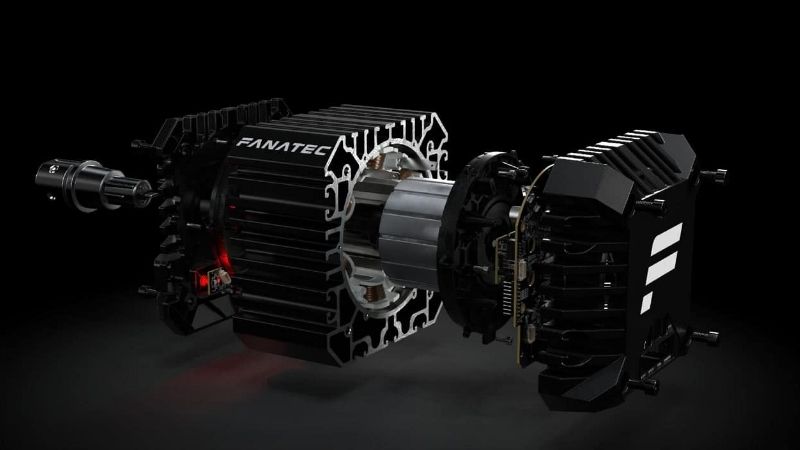
Comparison table: budget direct drive wheel bases
| Wheel base | Documented maximum torque | Platforms and mounting | US price checked Oct. 29, 2026 | Stock status checked Oct. 29, 2026 | Main drawback |
|---|---|---|---|---|---|
| MOZA R9 V3 | 9 Nm peak; 21-bit encoder | Windows PC; four-hole bottom mount, optional clamp | $299 sale / $349 regular, MOZA US | In stock on US product listing; fulfillment estimate varies | Rim, pedals, clamp cost extra |
| MOZA R12 V2 | 12 Nm peak; 21-bit encoder | Windows PC; four-hole bottom mount, optional clamp | $399 sale / $469 regular, MOZA US | In stock on US product listing | Demands a rigid mount and thoughtful torque limits |
| SIMAGIC Alpha EVO Sport | 9 Nm; 21-bit encoder | Windows PC; SIMAGIC ecosystem; check bracket pattern | $399, SIMAGIC official | Unclear; cart enabled | Wheel and mounting extras; integration choices need research |
| Fanatec CSL DD QR2 8 Nm | 8 Nm with Boost Kit 180 | PC; Xbox with licensed Fanatec wheel; not PS5 | $479.99, Fanatec US | Available on current US wheel-base catalog | Rim, pedals and optional desk clamp cost extra |
| Fanatec CSL DD QR2 5 Nm | 5 Nm with standard supply | PC; Xbox with licensed Fanatec wheel; not PS5 | $399.99, Fanatec US | Conflicting: product detail unavailable; catalog available | Poorer value while inventory is inconsistent |
| Fanatec Gran Turismo DD Pro QR2 8 Nm | 8 Nm with supplied compatible configuration | PC and PlayStation; verify wheel/pedal kit separately | $599.99, Fanatec US | Conflicting catalog/backorder signals; verify checkout | High base-only cost; over typical entry budget |
The prices above are US-store observations for the exact named variants, not prices for a race-ready bundle. Fanatec’s US catalog and some individual product pages have displayed inconsistent availability; treat the contradictory entries as unconfirmed rather than an invitation to claim stock. Torque is a maker-provided figure, not a standardized measure of steering detail or actual on-track lap times.
Best value for PC: MOZA R9 V3
The R9 V3 is where a budget-conscious PC racer should begin a standalone-base comparison. MOZA specifies 9 Nm peak torque and a 21-bit magnetic encoder for the V3 generation, with four-hole underside mounting and optional side or table-clamp hardware. That matters because it gives substantial adjustment room for a GT3 car without requiring the base to run at maximum output continually. The separate rim can be selected for rally, formula, or road-car driving rather than accepting a bundled wheel shape you dislike.
The engineering upgrade from earlier R9 revisions is not a reason to claim that the wheel will make you faster. Encoder resolution, motor design, and filtering influence what the hardware can produce, but tire model, game settings, wheel mass, cockpit rigidity, and your own force-feedback tuning determine what you feel. MOZA’s own support material identifies the V3 as the 21-bit variant with an updated slip-ring system; a used R9 V1 or V2 listing must not be treated as the same SKU. Use the model designation and support page when checking secondhand hardware.
The R9 V3’s actual budget problem is what is absent from the box: wheel rim, pedals, and the desk clamp or rig may all need to be added. Its lowest displayed base price is therefore not a complete ownership price. A flexing desk or lightweight folding stand can erase the benefit of extra torque through vibration and wobble. Pros: Strong torque-to-base-price proposition; compact physical footprint; broad MOZA-compatible rims. Cons: Windows PC only; mounting kit and peripherals raise the bill; active cooling and software tuning add setup considerations. Best for: PC racers upgrading from belt or gear drives who already have, or plan to buy, a rigid stand.
Best torque headroom: MOZA R12 V2
If the R9 V3 is the sensible starting point, the R12 V2 is the step-up for a driver who wants more headroom without jumping into premium 15–25 Nm equipment. MOZA’s US product page specifies a 12 Nm peak, 21-bit encoder, USB connection, four-hole bottom mounting, and an optional clamp. Its 12 Nm ceiling is not a recommendation to run full force in every game. Rather, it provides room to preserve larger steering peaks while the average wheel resistance stays manageable, reducing the temptation to boost in-game gain until sustained corners clip.
The cockpit requirement becomes more important here. Twelve newton-meters on a flimsy desk can produce rattling, a shifting monitor, and unpleasant oscillations. A secure stand with a stable pedal deck is usually a better first upgrade than moving from a respectable 9 Nm base to 12 Nm on a shaky mount. MOZA also describes hand-off protection and temperature management, but these are not substitutes for keeping fingers clear of an active wheel during calibration or making sure the base is solidly bolted down.
Pros: More torque margin for demanding road cars; clear PC-oriented hardware specifications; familiar MOZA ecosystem. Cons: Marginal improvement depends heavily on mounting and calibration; costs more than the R9 V3; wheel, pedals, and mount still sold separately. Best for: Dedicated PC cockpits where the user wants a base to keep through future rim and pedal upgrades.
Best alternative ecosystem: SIMAGIC Alpha EVO Sport 9 Nm
SIMAGIC’s Alpha EVO Sport competes directly with the R9 V3 on nominal 9 Nm output, but it is better understood as a different product ecosystem rather than an objectively smoother base based on a single spec. SIMAGIC specifies a 21-bit encoder, active cooling, a new servo-motor architecture, and software tuning in SimPro Manager. Its current official listing offers a 9 Nm model and separates wheel or accessory combinations from the standalone base. That distinction protects buyers from comparing a base-only price with a steering wheel package at a different checkout total.
This is a compelling choice when the preferred SIMAGIC GT or formula rim is already on your shopping list. Drivers who want third-party rims should be especially careful: SIMAGIC has discussed QR adapters and broader accessory connections, but adapter availability and electronic functions are separate from a mechanical 70 mm bolt pattern. A wheel can physically mount without all of its buttons, LEDs, or paddle electronics working. Verify the exact quick-release and wiring path for your chosen rim before ordering.
Pros: Distinct SIMAGIC rim and pedal ecosystem; 9 Nm class without premium-base pricing; modern configuration software. Cons: Less attractive if you already own MOZA hardware; adapter availability may constrain third-party wheels; PC-first, not a native console answer. Best for: PC racers building a coordinated SIMAGIC setup from the beginning.
Best Xbox-ready upgrade: Fanatec CSL DD QR2 8 Nm
Fanatec’s CSL DD in its 8 Nm configuration is the most relevant choice here for a racer who uses Windows today but may also play on Xbox. Fanatec’s own support documentation is explicit: the CSL DD becomes Xbox-compatible when paired with an Xbox-licensed Fanatec steering wheel; the base itself does not automatically authorize every rim. It is not compatible with PlayStation, regardless of which firmware is installed. The QR2 wheel-side connection must also match the wheel being purchased, so checking the exact rim and quick-release combination is essential.
Its 8 Nm output requires the appropriate Boost Kit 180 power supply. Fanatec warns against third-party power supplies; a cheap unverified substitute is a safety and warranty risk, not a clever budget upgrade. The current US catalog lists this 8 Nm configuration separately from the 5 Nm base. Before comparing totals, confirm whether the cart contains the 8 Nm version, a licensed Xbox wheel, compatible pedals, and a table clamp or rig mount. An appealing base price can quickly become a less appealing complete system.
Pros: A legitimate route to Xbox through licensed wheels; established accessory lineup; adjustable torque and QR2 system. Cons: Higher initial base cost than MOZA R9 V3; licensed-wheel requirement; no PS5 support. Best for: Xbox racers who want a coherent Fanatec setup rather than mixing third-party peripherals through unsupported adapters.
Entry option with a stock warning: Fanatec CSL DD QR2 5 Nm
The 5 Nm CSL DD is still a meaningful direct-drive base, especially for lighter steering force and users with a sturdy desk clamp. Its compact housing and Fanatec’s large wheel catalog are real advantages. The base uses the standard supply for 5 Nm, with a maker-approved path to 8 Nm using the Boost Kit 180 later. That gradual upgrade may make sense when you already own the corresponding Fanatec pedals or wheel, but it is less persuasive as an entirely new build if the extra parts bring the total close to a stronger complete system.
There is also a specific buying caution for this snapshot: the US listing for the named CSL DD 5 Nm SKU has shown ‘Currently Unavailable’ while the broader Fanatec catalog describes it as available. Those signals cannot both be treated as confirmed stock. Do not make it your immediate-purchase winner until a live cart can complete with the right region, configuration, and ship date. If the 8 Nm bundle or another base is actually available and the total cost is similar, choose based on the wheel ecosystem and mounting, not on the promise of a future upgrade.
Pros: Genuine direct drive at moderate output; QR2 ecosystem; official 8 Nm upgrade route. Cons: Inconsistent availability signal; weaker value when new; requires the correct proprietary power supply for higher torque. Best for: Existing Fanatec users or patient buyers who can confirm an available configured unit.
PlayStation path: Fanatec Gran Turismo DD Pro QR2 8 Nm
The Gran Turismo DD Pro is not a bargain by the standards of a bare PC wheel base, but it deserves explicit mention because a PS5 owner can otherwise make an expensive compatibility mistake. Fanatec identifies the GT DD Pro line as PlayStation-compatible, unlike CSL DD. The 8 Nm standalone listing sits near the top of what many buyers would call ‘budget,’ and it still requires verification of the wheel, pedals, and mounts in the final cart. For a first PlayStation setup, a complete officially supported bundle may be simpler to budget than assembling every component individually.
Its main advantage is native platform support rather than superior torque. Spending less on a MOZA R9 or CSL DD 8 for a PS5 is not economical if the hardware does not work natively on that console. Manufacturer listings have differed about immediate stock versus backorder status for this particular model, so inventory must be reconfirmed rather than inferred from a directory page. Pros: Supported PlayStation ecosystem; 8 Nm class; also usable for suitable PC configurations. Cons: High base-only price; accessory total rises quickly; availability signals should be checked. Best for: PS5 sim racers unwilling to rely on unverified compatibility converters.
Buying guide: the costs behind the torque figure
Separate bare wheel bases from ready-to-race bundles
A standalone base is the motor housing and electronics that generate force feedback. A wheel rim, pedals, power supply, quick-release parts, desk clamp, and mounting bolts may be included or sold separately depending on the exact SKU. This roundup’s base prices must not be compared directly with a MOZA R3 Xbox Racing Bundle, MOZA R5 Racing Bundle, or newer R5 Pro Bundle that already includes wheel and pedals. For a brand-new PC racer with no parts, the R5 Pro’s documented 6 Nm base plus wheel, two Hall-sensor pedals, and clamp may be a better total-cost purchase than an R9 V3 with accessories. Its bundled pedals do not include a load-cell brake, so future braking upgrades remain a separate decision.
Think of Nm as headroom, not a performance score
Three, five, eight, nine, and twelve newton-meters measure torque, not input latency, steering accuracy, or lap consistency. Real-world force feedback also depends on peak versus sustained output, filtering, thermal behavior, the mass of the chosen rim, and how the simulation outputs forces. A well-configured 5–8 Nm base with a rigid mount often communicates more usable information than a stronger base whose output is clipped or whose stand flexes. If the wheel is fighting you rather than informing you, reduce force rather than gripping harder.
Check console support at the whole-system level
On a Windows PC, compatible USB wheel bases and standalone USB load-cell pedals can often coexist even when made by different brands. On Xbox and PlayStation, compatibility is more constrained: the console, wheel base, licensed rim, pedal connection path, and game must all support the configuration. Fanatec CSL DD is Xbox-ready only with a supported Xbox steering wheel and is not a PlayStation wheel base. MOZA R9 V3 and R12 V2 are PC-focused in their manufacturer listings. A third-party adapter does not turn an unsupported setup into a manufacturer-verified solution.
Budget for the mount before using full force
A lightweight folding wheel stand may be convenient for apartment storage but can flex at high torque. A desk clamp must match the desk’s actual thickness, lip shape, and finish; a sim racing cockpit needs a bolt pattern that matches the wheel-base mounting plate. Check the model’s drilling template and bolt length, particularly when attaching to metal plates or narrow desktops. Put the pedals on a non-sliding platform before increasing wheel force, since a moving brake platform will undermine consistency more than the difference between two 9 Nm bases.
Choose the software ecosystem you want to maintain
MOZA Pit House, Fanatec’s software, and SIMAGIC SimPro Manager offer tuning but have different firmware processes, supported devices, and user interfaces. Read the official supported-game and compatibility material for your particular game and wheel model. Firmware should come from the manufacturer, be applied to the correct revision, and be updated only with stable power and the official instructions. Save a known-good force-feedback profile before experimenting; the fastest way to create an unpleasant steering feel is to change several filtering and gain settings at once.
A practical setup and safety checklist
Start with a stable base mount and the steering wheel attached using the correct quick release. Place your monitor far enough away that a rapidly moving wheel cannot hit it. Install official drivers and software on Windows, connect the base directly through the supported USB path, then confirm that the wheel is recognized before launching a game. Set the force limit conservatively, calibrate center and rotation in the manufacturer’s tool, and start with a supported game preset. Avoid holding the rim tightly while firmware, calibration, or centering motions are in progress.
Once in the sim, use the in-game force-feedback meter if available and look for prolonged clipping in heavy corners. Reduce game gain or base torque if the wheel oscillates aggressively, the stand moves, or steering forces become uncomfortable. Retest after each change. If a new rim has dead buttons, confirm quick-release electronic support and compatible wheel firmware before blaming the base. Do not substitute an unapproved higher-wattage power adapter to chase torque.
FAQ
Is 5 Nm enough for beginner sim racing?
Yes. Five newton-meters is enough to experience direct-drive response, learn smooth steering, and develop consistent habits when the base and pedals are mounted securely. Higher torque mostly adds headroom and different feel; it does not automatically produce faster lap times.
Does a direct drive wheel base include the steering wheel?
Usually not when a listing is explicitly labeled ‘wheel base.’ Check the exact box-contents section. The MOZA R3 and R5 Pro products discussed as complete-system alternatives are bundles with a rim and pedals, while the R9 V3 and R12 V2 listings describe bases sold separately.
Can I use MOZA R9 V3 with PS5 or Xbox?
Not as a manufacturer-supported native console configuration. MOZA lists the R9 V3 for Windows PC. If Xbox is mandatory, investigate the licensed MOZA R3 Xbox bundle or Fanatec’s Xbox-qualified combination; for PlayStation, investigate an officially licensed compatible base.
What is the difference between Fanatec 5 Nm and 8 Nm CSL DD?
The CSL DD family supports 5 Nm with the standard supply and 8 Nm with Fanatec’s approved Boost Kit 180. The stronger configuration is about additional torque headroom, not a different set of console rights or permission to use third-party power supplies.
Should I buy pedals before upgrading from 9 Nm to 12 Nm?
If you already have a stable 9 Nm base but use a basic travel-based brake, a properly mounted load-cell pedal set may improve repeatable braking more than the torque step. Prioritize the part that currently limits your control, and avoid a heavy brake on an unsecured rolling chair.
Final thoughts
For a PC owner building a standalone rig, buy the MOZA R9 V3 only after pricing the rim, pedals, and mount you will actually use. Choose the MOZA R12 V2 when your cockpit is rigid and you want greater headroom; choose SIMAGIC Alpha EVO Sport when its wheel ecosystem is the better fit. Fanatec CSL DD 8 Nm makes sense for a verified Xbox-licensed configuration, while PlayStation owners should start with a compatible GT DD Pro option rather than assuming all direct-drive bases work on PS5. Confirm the exact SKU, checkout availability, mount pattern, and complete system total before paying.