Our Top Picks
A whole-home energy monitor answers the question your electricity bill refuses to: where the power actually goes, circuit by circuit and hour by hour. The hardware is simple in outline — clamp sensors that sit around the cables inside your electrical panel and a monitor that reports what they measure — but the listings differ in the details that decide whether the system fits your home: how many sensors are in the box, which panel types are supported, and whether solar generation can be tracked alongside consumption.
This guide is for homeowners chasing a high bill, households with solar panels who want consumption and generation in one place, and anyone preparing for a heat pump, an EV charger or a gaming room full of hardware. Every product below is a panel-installed whole-home monitor, and the sensor counts, service ratings and certifications quoted come from its Amazon listing rather than from accuracy claims the listings do not make.
Quick Picks
As an Amazon Associate we earn from qualifying purchases.
| Product | Best for | Key spec from title |
|---|---|---|
| Emporia Vue 3 with 16 Circuit Sensors | Seeing individual circuits, not just the whole house | 2x 200A main clamps, 16x 50A branch sensors, solar and net metering |
| Sense Energy Monitor | Automatic device detection in a standard split-phase panel | Split-phase 120/240V panels up to 200A service, ETL listed |
| Emporia Vue 3 (Monitor Only) | Starting with whole-home totals and expanding later | 2x 200A main clamps, solar and net metering, UL certified |
How to Choose
Decide between circuit-level and whole-home measurement
This is the fork that defines the category. A monitor with branch sensors — the Emporia bundle with sixteen 50A sensors — reports individual circuits, so the water heater, the dryer and the gaming room each get their own line in the app. A monitor with only main clamps reports the house as a whole, and systems like Sense instead use software device detection to identify appliances from their electrical signatures. Circuit sensors give direct measurement at the cost of a fuller panel; detection gives a cleaner install at the cost of patience while the system learns. Choose the method before comparing brands.
Check your panel against the listing’s stated service
Panel monitors are not universal. The listings here state their territory plainly: split-phase 120/240V residential service, with the Sense specified for panels up to 200A and the Emporia clamps rated at 200A for the mains. Before ordering, open your panel door and confirm your service size and layout match what the listing describes, and check whether your panel has the physical room for clamps around the main cables plus, for the bundle, sixteen branch sensors on individual breakers. A crowded panel is the most common reason these installs stall.
Plan for solar and net metering if you have or want panels
Homes with solar need a monitor that tracks generation as well as consumption, because the useful number is the balance between the two. Both Emporia versions in this guide list solar and net metering support, which means the same system can show what the house draws, what the array produces and what crosses the meter in each direction. If solar is even a future possibility, buy the monitor that supports it now; retrofitting a different system later means opening the panel twice.
Be honest about installation and connectivity
Every monitor here installs inside a live electrical panel, which means fitting clamps around service cables and, for branch sensors, working around individual breakers. Manufacturers design this for confident homeowners, but if opening the panel is beyond your comfort, an electrician’s short visit is the right line item to plan for. Connectivity also differs: the Emporia Vue 3 offers 2.4GHz WiFi or an Ethernet connection, and a wired option is worth having when the panel sits in a basement or garage corner with weak wireless signal.
The 3 Best Options
Emporia Vue 3 with 16 Circuit Sensors

This bundle is the complete version of Emporia’s system: the Vue 3 monitor, two 200A clamps for the main service cables, and sixteen 50A sensors for individual branch circuits, all in one box. The listing states support for solar generation and net metering, UL certification, and connection by 2.4GHz WiFi or Ethernet. With branch sensors fitted, the app reports circuit-level consumption directly, so heavy loads are measured rather than guessed. For a homeowner who wants the full picture in one installation, this is the version that avoids a second trip into the panel.
Specs
- Monitor: Emporia Vue 3
- Main sensors: 2x 200A clamp sensors
- Branch sensors: 16x 50A circuit sensors
- Connectivity: 2.4GHz WiFi or Ethernet
- Solar generation and net metering support
- Certification: UL certified
- Model number: EMV3A-2P-16
Best for: homeowners who want measured, circuit-by-circuit consumption including solar in a single install.
Watch out for: sixteen branch sensors need physical room and a breaker layout that matches your priorities, so photograph your panel and plan which circuits get sensors before ordering.
ASIN: B0C79PNK84
Sense Energy Monitor
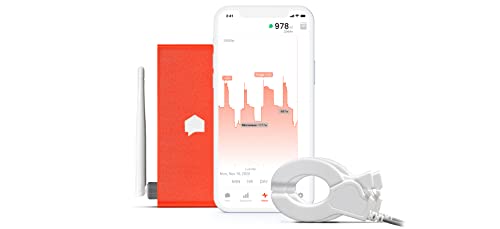
Sense takes the opposite approach to the same problem: two clamps on the main service cables, and software that learns the electrical signatures of individual devices over time, naming them in the app as it identifies them. The listing specifies compatibility with split-phase 120/240V panels at up to 200A service, and notes the monitor is ETL listed to safety standards. The install is the simplest here because nothing attaches to individual breakers. For households that want appliance-level insight without filling the panel with sensors, Sense is the established name in detection-based monitoring.
Specs
- Monitor: Sense Energy Monitor
- Sensors: clamp sensors for main service cables
- Panel compatibility: split-phase 120/240V, up to 200A service
- Device detection through the Sense app
- Certification: ETL listed (Intertek)
- Model number: 12000
Best for: homeowners who prefer a minimal panel install and are happy to let device detection build up over time.
Watch out for: detection is learned gradually and works at the whole-home level, so it will not give the immediate, per-circuit readings that branch sensors provide from day one.
ASIN: B075K6PHJ9
Emporia Vue 3 (Monitor Only)

The monitor-only version of the Vue 3 includes the same monitor and two 200A main clamps as the bundle, with solar and net metering support and UL certification, but leaves the branch sensors out of the box. That makes it the staged route into circuit monitoring: install the mains now, read whole-home consumption and generation straight away, and add branch sensors to the circuits that turn out to matter. The listing’s lower commitment suits renters of larger homes, new solar owners, and anyone who wants evidence about their usage before deciding how deep the monitoring needs to go.
Specs
- Monitor: Emporia Vue 3
- Main sensors: 2x 200A clamp sensors
- Branch sensors: not included in this version
- Connectivity: 2.4GHz WiFi or Ethernet
- Solar generation and net metering support
- Certification: UL certified
Best for: starting with whole-home and solar totals now, with a clear path to circuit-level detail later.
Watch out for: this is the same monitor as the bundle above in a different box configuration, so compare the two listings carefully and do not pay bundle expectations for the monitor-only package.
ASIN: B0C7B1LKDW
Which One Fits Your Situation
Your bill is high and you need to find the culprit
Choose the Emporia Vue 3 with 16 Circuit Sensors. Measured branch data answers the question directly: fit sensors to the circuits you suspect — heating, water heating, laundry, the gaming room — and the app shows each one’s consumption instead of leaving you to guess from a whole-home total. One month of circuit data usually settles arguments that a year of bills could not.
You want insight without a complicated install
Choose the Sense Energy Monitor. Two clamps, no branch wiring, and detection that improves as it learns your home’s devices. It is the least invasive route to appliance-level information and the easiest panel job of the three, which matters if the panel is crowded, awkwardly placed, or simply not somewhere you want to spend an afternoon working.
You have solar, or solar is coming
Choose either Emporia version, since both list solar and net metering support. Pick the bundle if you also want circuit detail, or the monitor-only version if generation and consumption totals are the numbers you actually need. Sense focuses on consumption detection, so solar households are better served by the Emporia listings here.
You are monitoring a gaming and streaming room
Choose the Emporia bundle and give the room’s circuit one of the branch sensors. A dedicated circuit reading shows exactly what the PCs, monitors and lighting draw across a session, which is the figure you need when planning a UPS, a new circuit or a second machine. It also ends the guesswork when a breaker trips mid-game and nobody knows what else shares the line.
Common Mistakes
- Ordering before checking your panel’s service size, layout and free space against the listing.
- Expecting device detection to name every appliance immediately rather than learning over time.
- Buying the monitor-only box while expecting the sixteen branch sensors to be inside.
- Ignoring solar support on the first purchase and replacing the whole system when panels arrive.
- Treating a monitor as a way to cut the bill by itself, when the savings come from what you change after reading it.
Frequently Asked Questions
Do these monitors need an electrician to install?
They are designed to be installed by homeowners who are comfortable working inside an electrical panel, since the clamps fit around service cables and branch wiring. If that is not you, hire an electrician for the fitting and do the app setup yourself; the installation is short, and it is the one step that should not be improvised.
Can a home energy monitor track solar production?
Yes, if the listing says so. Both Emporia Vue 3 versions in this guide list solar generation and net metering support, which lets the system report consumption, production and the balance between them. Check the listing for the exact model you are buying, because support is a per-product feature, not a category standard.
What is the difference between clamp sensors and device detection?
Clamp sensors measure a circuit directly, so the reading for that breaker is a measurement. Device detection, used by Sense, measures the whole home and identifies appliances by their electrical signatures, building a device list over time. Direct measurement is immediate and exact per circuit; detection needs no branch wiring but learns gradually.
Will a monitor work with any electrical panel?
No. The monitors here are specified for split-phase 120/240V residential panels, with service ratings up to 200A stated on the listings. Homes with different service arrangements need a model whose listing covers them. Confirm your panel type and service size before ordering, and check there is physical room for the clamps.
FAQ
Do these monitors need an electrician to install?
Can a home energy monitor track solar production?
What is the difference between clamp sensors and device detection?
Will a monitor work with any electrical panel?
More from Amazon
Programs that pair well with the guide above. Offers and eligibility are set by Amazon and may change.
Free shipping on eligible items, Prime Video and more. Eligible new members can start with a free trial.
Start a Prime free trialAd-free music streaming. Eligible new subscribers can start with a free trial.
Try Music Unlimited freeA Prime membership for ages 18-24 with a trial period. Eligibility is set by Amazon.
See Prime for Young AdultsAudiobooks and podcasts to listen to on the go. Eligible new members can start with a free trial.
Try Audible freeAs an Amazon Associate we earn from qualifying purchases.