Key takeaways
- Pro: Instantly multiplies your laptop workspace for better multitasking.
- Pro: Lid-mounted designs fold up and travel as one unit.
- Pro: FHD IPS panels deliver sharp, wide-angle image quality.
- Pro: Single USB-C cable operation on compatible laptops.
What's inside
A laptop screen extender is the productivity hack that once you try, you can’t give up. By attaching one or two extra displays directly to your laptop’s lid, these portable monitors turn a cramped single screen into a full multi-monitor workspace you can fold up and carry anywhere. For anyone who works on the road, they deliver desktop-style multitasking without the desk.
This review compares the best monitors for laptop extension, covering the two main styles: attach-to-lid dual and triple screen extenders and standalone portable monitors that prop beside your laptop. We’ll weigh image quality, connectivity, and stability so you can pick the right setup for coding, spreadsheets, or gaming on the go.
As an Amazon Associate we earn from qualifying purchases at no extra cost to you. Product prices and availability are accurate as of the date shown and are subject to change.




🎮 Get More From Your Setup — Free
Prime Gaming gives you free PC games every month, in-game loot, and a free Twitch channel sub — plus fast free shipping on all the gear above. New members get a 30-day free trial.
Watch: Monitors For Laptop Extension: Review & Buyer’s Guide — Video Review
Design & Build
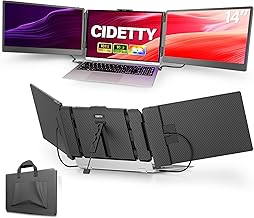
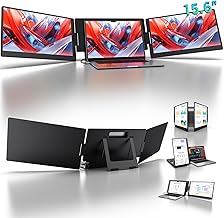
Laptop extension monitors come in two distinct forms. Attach-to-lid models like the KEFEYA, CIDETTY, KYY, and the 235-degree rotating extender clip onto the back of your laptop screen, unfolding into dual or triple displays that share the laptop’s own stability. These prioritize portability and an all-in-one feel but add weight to the lid. Standalone portable monitors like the MNN and ForHelp instead sit independently on a kickstand or cover beside your laptop, offering more flexible positioning and larger single screens. Build quality across the lid-mounted units is generally good, though the best ones use sturdy hinges and secure clamps that hold firm during travel.
Performance
Display quality is strong across this class, with 14- and 15.6-inch FHD IPS panels delivering sharp text and good viewing angles, ideal for productivity. The KEFEYA and CIDETTY extenders offer bright 1080p screens with USB-C and HDMI inputs, and several include built-in speakers for convenience. Connectivity is the key consideration: most lid-mounted extenders use a single USB-C cable per screen when your laptop supports video output, though triple-screen setups can demand more from your ports and may require the included drivers or adapters. The standalone MNN and ForHelp monitors keep things simple with one-cable USB-C operation and broad device support, including phones and consoles. For pure screen real estate, the triple-monitor extenders are unmatched, while standalone panels win on flexibility.
Pros & Cons
- Pro: Instantly multiplies your laptop workspace for better multitasking.
- Pro: Lid-mounted designs fold up and travel as one unit.
- Pro: FHD IPS panels deliver sharp, wide-angle image quality.
- Pro: Single USB-C cable operation on compatible laptops.
- Con: Lid-mounted extenders add weight and can strain laptop hinges.
- Con: Triple-screen setups may need extra power or drivers.
- Con: Requires a laptop with USB-C video output for one-cable use.
Alternatives to Consider
If you mostly work at a fixed desk, a standard external monitor offers more screen for less money than a portable extender. Travelers who want maximum simplicity should choose a single standalone portable monitor over a triple-screen rig. And if your laptop lacks USB-C video output, prioritize a model that clearly supports HDMI-plus-power operation to avoid compatibility headaches.
Frequently Asked Questions
How do laptop screen extenders connect?
Most use a single USB-C cable per screen when your laptop supports video output, with HDMI as an alternative. Triple-screen models may need extra ports or drivers.
Will an extender work with any laptop?
For one-cable use, your laptop needs USB-C with video output. Otherwise, choose a model supporting HDMI plus separate power.
Do they add much weight?
Lid-mounted extenders add noticeable weight to the screen, so look for sturdy hinges. Standalone monitors avoid straining your laptop entirely.
Are they good for gaming?
They work for casual gaming and console play via HDMI, though most are 60Hz productivity panels rather than high-refresh gaming displays.
Verdict
For maximum on-the-go workspace, a triple-screen extender like the KEFEYA or CIDETTY is the standout choice, while the KYY offers flexible dual-screen productivity. If you prefer simplicity and flexible positioning, a standalone portable monitor like the MNN is the smarter, lighter pick.