Key takeaways
- Wi-Fi standard: Wi-Fi 7 and 6E offer more bandwidth and less congestion, but a strong Wi-Fi 6 router is still plenty for most 1080p and 1440p play at a lower price.
- Quality of Service: Look for gaming QoS or a dedicated game-acceleration mode that prioritizes your traffic so a busy network never spikes your ping.
- Wired ports: Multi-gig 2.5G or 10G ports future-proof your setup and give your main rig a rock-steady wired path to the modem.
- Coverage and mesh: Match the router’s range to your home size, and choose a mesh-capable model if you need to blanket multiple floors without dead zones.
- Bands and streams: Tri-band and high stream counts let more devices share the network smoothly, which keeps your latency stable during peak evening hours.
What's inside
A gaming router is the unsung hero of a lag-free session. While everyone obsesses over GPUs and monitors, it is the router quietly deciding whether your packets sail smoothly to the server or pile up behind a Netflix stream. In 2026, with Wi-Fi 7 going mainstream and multi-gig internet becoming common, the gap between a generic ISP box and a proper gaming router has never been wider.
We looked at what actually matters for play: low, stable latency under load, strong quality-of-service controls, fast wired ports, and reliable coverage across a busy home. From tri-band Wi-Fi 7 flagships to dependable Wi-Fi 6 workhorses, these are the routers that keep your ping tight when the whole household is online.
As an Amazon Associate we earn from qualifying purchases at no extra cost to you. Product prices and availability are accurate as of the date shown and are subject to change.


⚡ Save on Your Next PC — Amazon Prime
Prime members get fast free shipping on the systems above, plus early access to Prime Day & Black Friday PC deals. New members get a 30-day free trial.
Watch: Best Gaming Router 2026 — Video Review
How to Choose a Gaming Router
- Wi-Fi standard: Wi-Fi 7 and 6E offer more bandwidth and less congestion, but a strong Wi-Fi 6 router is still plenty for most 1080p and 1440p play at a lower price.
- Quality of Service: Look for gaming QoS or a dedicated game-acceleration mode that prioritizes your traffic so a busy network never spikes your ping.
- Wired ports: Multi-gig 2.5G or 10G ports future-proof your setup and give your main rig a rock-steady wired path to the modem.
- Coverage and mesh: Match the router’s range to your home size, and choose a mesh-capable model if you need to blanket multiple floors without dead zones.
- Bands and streams: Tri-band and high stream counts let more devices share the network smoothly, which keeps your latency stable during peak evening hours.
The Best Gaming Routers Reviewed
ASUS ROG Rapture GT-BE98 Pro
The ASUS ROG Rapture GT-BE98 Pro is the no-compromise flagship, a quad-band Wi-Fi 7 router pushing up to 30Gbps with full mesh support. For enthusiasts with multi-gig internet and a house full of devices, its raw throughput and advanced gaming features are as good as it gets in 2026.
GL.iNet Flint 2 (GL-MT6000)
The GL.iNet Flint 2 has become a community favorite by pairing 8-stream Wi-Fi 6 at 6Gbps with dual 2.5G ports and open, powerful firmware. It delivers flagship-level control and wired speed at a mid-range price, making it the value enthusiast’s dream router.
TP-Link Archer GE650
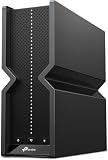
The TP-Link Archer GE650 brings tri-band BE11000 Wi-Fi 7 and a 6-stream, 11Gbps design with gaming-focused tuning. It is a strong step into Wi-Fi 7 for players who want next-gen bandwidth and QoS without reaching for the absolute top-tier flagship price.
ASUS RT-BE88U
The ASUS RT-BE88U focuses on wired muscle with dual 10G ports and up to 7.2Gbps of Wi-Fi 7 throughput, plus mesh compatibility. It suits players with fast fiber who want to hard-wire a gaming PC and still enjoy blazing wireless across the home.
TP-Link Archer AXE75
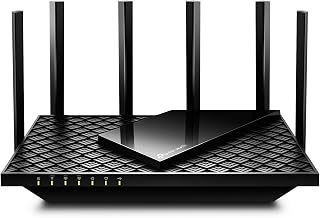
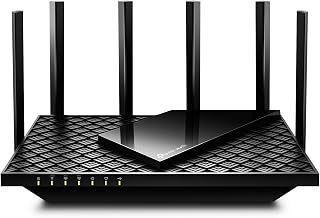
The TP-Link Archer AXE75 is the sensible Wi-Fi 6E pick, a PCMag Editors’ Choice with a 2.5Gbps port and the extra 6GHz band that keeps your gaming traffic away from crowded channels. It hits a smart balance of speed, features, and price for most homes.
Frequently Asked Questions
Do I need Wi-Fi 7 for gaming in 2026?
Not strictly. Wi-Fi 7 shines with multi-gig internet and dozens of connected devices, but a good Wi-Fi 6 or 6E router still delivers low, stable latency for the vast majority of players at a friendlier price.
Is a wired connection still better than Wi-Fi?
For competitive play, yes. A wired Ethernet link offers the most consistent latency and no interference. That is why multi-gig ports matter; hard-wire your main rig and let Wi-Fi handle everything else.
What does gaming QoS actually do?
QoS prioritizes your game’s traffic over background downloads and streams. When someone else in the house starts a large update, QoS keeps your packets moving first, preventing the sudden ping spikes that ruin a match.
Will a better router lower my ping to the server?
It reduces latency added inside your home, especially under load, but the distance to the game server still sets your baseline ping. A good router mainly keeps that baseline stable instead of letting it balloon when the network is busy.
Final Thoughts
Upgrading your router is one of the most impactful and overlooked ways to improve online play in 2026. Whether you splurge on a Wi-Fi 7 flagship like the ROG Rapture or grab the value-packed Flint 2, prioritize strong QoS and a wired path for your main rig, and your connection will stay smooth long after the match heats up.