Key takeaways
- Pro: Native PIP/PBP on several models lets you run two sources cleanly on one screen.
- Pro: Ultrawide and super-ultrawide widths replace a two-monitor setup with no center bezel.
- Pro: High refresh rates up to 200Hz keep gaming smooth alongside productivity.
- Pro: USB-C options like the Dell simplify laptop docking and charging.
What's inside
A curved monitor with genuine split-screen capability changes how you work and play. Instead of juggling overlapping windows, you can dock two full applications side by side, or pull video from a console into a picture-by-picture panel while your PC fills the rest of the screen. The immersive wrap of a curved panel makes that extra width feel natural rather than sprawling.
This review examines a range of curved displays that excel at splitting the screen, from ultrawide 34-inch panels to a massive 49-inch super-ultrawide and even a dual-monitor kit. Whether you want productivity, gaming, or both, the right curve and resolution make a big difference.
As an Amazon Associate we earn from qualifying purchases at no extra cost to you. Product prices and availability are accurate as of the date shown and are subject to change.


🎮 Get More From Your Setup — Free
Prime Gaming gives you free PC games every month, in-game loot, and a free Twitch channel sub — plus fast free shipping on all the gear above. New members get a 30-day free trial.
Watch: Curved Split Screen Monitor: Review & Buyer’s Guide — Video Review
Design & Build
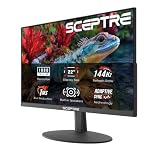
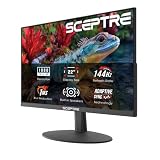
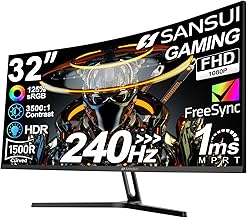
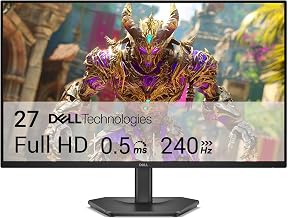
Curvature and size define the experience here. The INNOCN 49-inch 32:9 panel with an 1800R curve is the standout for true side-by-side work, effectively giving you two 27-inch QHD screens in one seamless surface. The Sceptre 34-inch and SANSUI 34-inch ultrawides use a tighter 1500R curve that wraps comfortably around a single viewer. Build quality is solid across the board, with the Dell S3425DW adding a refined stand and 65W USB-C power delivery that keeps a laptop charged over one cable. The Kado dual 27-inch kit takes a different path, offering two separate curved panels for people who prefer a physical bezel gap between tasks.
Performance
For split-screen productivity, resolution and picture-by-picture support matter most. The SANSUI 34-inch offers PIP/PBP with a 200Hz refresh rate, so you can game on one input and monitor a second source without lag. The INNOCN 49-inch pushes 3840×1080 across its width, ideal for spreadsheets, timelines, and multi-window layouts. Color performance is strong on the Dell S3425DW and SANSUI panels, both covering wide DCI-P3 gamuts suited to creative work. Gamers will appreciate the LG 32MR50C at 100Hz with FreeSync for smoother motion on a tighter budget, while the high-refresh ultrawides deliver the fluid feel competitive players want.
Pros & Cons
- Pro: Native PIP/PBP on several models lets you run two sources cleanly on one screen.
- Pro: Ultrawide and super-ultrawide widths replace a two-monitor setup with no center bezel.
- Pro: High refresh rates up to 200Hz keep gaming smooth alongside productivity.
- Pro: USB-C options like the Dell simplify laptop docking and charging.
- Con: The 49-inch panel demands a deep desk and a capable GPU to drive it.
- Con: Budget curved models settle for lower refresh rates and basic stands.
- Con: Split-screen menus vary in polish and can be fiddly to configure.
Alternatives to Consider
If a single wide panel feels like too much commitment, the Kado dual 27-inch curved kit gives you two independent screens you can angle separately, which some multitaskers prefer. Budget-focused buyers who mainly want casual immersion should look at the LG 32MR50C, which delivers a pleasant curve and FreeSync at a friendly price. For a do-it-all centerpiece, the Dell S3425DW balances color accuracy, USB-C convenience, and a 120Hz refresh.
Frequently Asked Questions
What does split screen mean on a monitor?
It usually refers to picture-by-picture (PBP) or picture-in-picture (PIP), where the display shows two separate video inputs at once, such as a PC and a console, in divided sections of the screen.
Is a 49-inch ultrawide too big?
It depends on your desk depth and viewing distance. A 32:9 panel needs roughly 30 inches of depth to sit back comfortably, but it replaces two monitors and offers unmatched horizontal workspace.
Do I need a powerful GPU for these?
For high-resolution, high-refresh gaming on ultrawides, yes. General productivity and video work fine on modest hardware, but pushing 3440×1440 or 3840×1080 at high frame rates demands a capable graphics card.
Which curve radius is best?
A tighter 1500R curve wraps more aggressively and suits single-user immersion, while a gentler 1800R feels flatter and works better when two people view side-by-side content.
Verdict
For serious split-screen work, the INNOCN 49-inch super-ultrawide is the most transformative pick, while the SANSUI 34-inch offers the best blend of high refresh gaming and PBP flexibility. Buyers wanting color accuracy and easy laptop docking should choose the Dell S3425DW.