Key takeaways
- Cushion construction: Pocket-spring seats hold their shape far longer than moulded foam and distribute weight more evenly. If a chair at this price offers springs, that’s usually where the budget went — and it’s the right place for it.
- Lumbar support type: A detachable strap-on pillow is the cheapest solution and the least effective long-term. Built-in adjustable lumbar, or a shaped backrest that follows your spine, is worth paying for if you sit more than four hours a day.
- Weight capacity and frame: Treat the stated capacity as a proxy for frame quality, not just a limit. A 400 lb rating means a heavier-gauge steel frame and a Class 4 gas lift, which translates to less wobble for everyone regardless of your size.
- Mesh vs. leatherette: Leatherette looks the part and wipes clean, but traps heat in warm rooms. Mesh backs breathe far better and suit long sessions or hot climates, at the cost of that classic racing-seat look.
- Armrest adjustability: 2D armrests move up and down only; 3D and 4D add width and pivot. If your desk height is fixed, adjustable armrests are the single cheapest fix for shoulder and wrist strain.
What's inside
Shopping for a gaming chair under $300 is deceptively difficult. The category is flooded with near-identical designs sold under dozens of unfamiliar brand names, most of them advertising the same buzzwords — “ergonomic,” “lumbar support,” “racing style” — without much to back them up. The result is that two chairs at the same price can feel completely different after six hours at a desk, and the specs on the listing rarely tell you which is which.
This guide cuts through that. We’ve focused on chairs that genuinely earn their price at this tier: real pocket-spring or high-density foam cushions rather than thin padding, adjustable lumbar and arm support, weight capacities you can trust, and build quality that holds up past the first few months. Below you’ll find our top picks, a short buying checklist, and answers to the questions we hear most from readers upgrading from a basic desk chair.
As an Amazon Associate we earn from qualifying purchases at no extra cost to you. Product prices and availability are accurate as of the date shown and are subject to change.


⚡ Save on Your Next PC — Amazon Prime
Prime members get fast free shipping on the systems above, plus early access to Prime Day & Black Friday PC deals. New members get a 30-day free trial.
Watch: Best Gaming Chair Under $300 — Video Review
How to Choose Gaming Chair Under $300
- Cushion construction: Pocket-spring seats hold their shape far longer than moulded foam and distribute weight more evenly. If a chair at this price offers springs, that’s usually where the budget went — and it’s the right place for it.
- Lumbar support type: A detachable strap-on pillow is the cheapest solution and the least effective long-term. Built-in adjustable lumbar, or a shaped backrest that follows your spine, is worth paying for if you sit more than four hours a day.
- Weight capacity and frame: Treat the stated capacity as a proxy for frame quality, not just a limit. A 400 lb rating means a heavier-gauge steel frame and a Class 4 gas lift, which translates to less wobble for everyone regardless of your size.
- Mesh vs. leatherette: Leatherette looks the part and wipes clean, but traps heat in warm rooms. Mesh backs breathe far better and suit long sessions or hot climates, at the cost of that classic racing-seat look.
- Armrest adjustability: 2D armrests move up and down only; 3D and 4D add width and pivot. If your desk height is fixed, adjustable armrests are the single cheapest fix for shoulder and wrist strain.
The Best Picks Reviewed
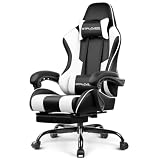
GTPLAYER Gaming Chair with Footrest (Pearl White)
A genuinely well-rounded pick that covers the basics without cutting corners: 360° swivel, adjustable height, a retractable footrest, and both a headrest and lumbar cushion included. The Pearl White finish is a rare tasteful option in a category dominated by black-and-red, and it’s comfortably the best all-round value here for most desks.
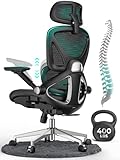
Marsail Ergonomic Office Chair
The pick for anyone who runs hot or works as much as they game — the high-back mesh breathes properly, and the adjustable lumbar and 3D armrests give you far more fine-tuning than most racing-style chairs at this price. It looks at home in an office, which matters if your setup doubles as a workspace.
GTPLAYER Big and Tall Gaming Chair (400 lb)
Built on a heavier frame with a 400 lb capacity and a 3D saddle-shaped cushion that takes pressure off the tailbone, this is the one to buy if you’re taller, heavier, or simply want a chair that doesn’t creak in year two. The pocket-spring lumbar support is a meaningful step up from the foam pads most rivals use.
Kslysuty High-Back Gaming Chair (White Leather)
Pocket-spring seat cushioning at this price is unusual, and it’s the main reason this chair stays comfortable deep into a long session where cheaper foam has already flattened. The white leatherette finish is sharp, though it needs occasional wiping to stay that way.
Gaming Chair for Adults with Footrest (330 lb)
A no-nonsense option that delivers the core package — ergonomic backrest, footrest, 330 lb capacity — without the price creep that comes from branding. Choose it if you want the essentials done properly and would rather spend the difference on a monitor arm or a better desk.
Frequently Asked Questions
Is a $300 gaming chair actually worth it over a $120 one?
Yes, and the difference shows up in the parts you can’t see: a Class 4 gas lift instead of Class 3, thicker steel in the frame, and denser or spring-based cushioning that doesn’t compress within a few months. Budget chairs are fine for occasional use, but they degrade quickly under daily eight-hour sessions.
Do I need a footrest?
It’s a genuine benefit if you recline to watch or read between sessions, and most people who have one use it more than they expected. That said, don’t prioritise it over lumbar adjustment or cushion quality — those affect your posture every minute you’re seated.
Are gaming chairs bad for your back?
The chair isn’t the problem; a poorly adjusted chair is. Set the seat height so your feet rest flat and your knees sit at roughly 90 degrees, position the lumbar support in the small of your back rather than higher up, and bring the armrests to elbow height — a well-adjusted $250 chair beats a badly adjusted $600 one.
Mesh or leatherette — which should I pick?
Pick mesh if you sit for long stretches, live somewhere warm, or have no air conditioning in your setup. Pick leatherette if you want the classic racing aesthetic, easier cleaning, and a bit more padding under you.
Final Thoughts
For most buyers, the GTPLAYER Gaming Chair with Footrest is the easiest recommendation under $300 — it covers every fundamental well and doesn’t feel like a compromise. If you run hot or split your time between gaming and work, the Marsail Ergonomic Office Chair is the smarter buy for its breathable mesh and 3D armrests, while taller and heavier users should go straight to the GTPLAYER Big and Tall for its reinforced 400 lb frame and pocket-spring support. Any of the three will outlast the sub-$150 chair you’re probably replacing.