Key takeaways
- Class-leading gaming performance, frequently the fastest gaming CPU available.
- Redesigned 3D V-Cache runs cooler and clocks higher than the prior generation.
- Overclocking support that earlier X3D chips lacked.
- Drops into existing AM5 boards, easing upgrades.
What's inside
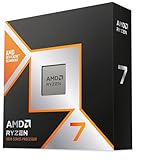
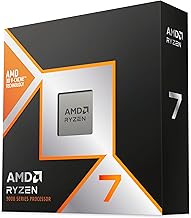
The AMD Ryzen 7 9800X3D is an eight-core, sixteen-thread desktop processor built on AMD’s newest Zen 5 architecture with a second-generation 3D V-Cache design. The headline change from the previous generation is that the stacked cache now sits beneath the compute die rather than on top, which lets the chip clock higher and run cooler than its popular predecessor. For a large slice of the market, this is the processor that defines what a gaming CPU should be in 2026.
This chip is squarely for gamers and enthusiasts who want the best frame rates a mainstream socket can deliver, especially at high refresh rates and CPU-bound settings. If your priority is gaming performance, with capable-but-not-primary productivity on the side, it is the obvious target. Users whose workloads are dominated by heavy multi-threaded rendering or simulation may get more value from a higher-core-count part, but for pure gaming the 9800X3D is the reference point everything else is measured against.
As an Amazon Associate we earn from qualifying purchases at no extra cost to you. Product prices and availability are accurate as of the date shown and are subject to change.



⚡ Save on Your Next PC — Amazon Prime
Prime members get fast free shipping on the systems above, plus early access to Prime Day & Black Friday PC deals. New members get a 30-day free trial.
Watch: Ryzen 7 9800X3D Review — Video Review
Design & Build
The 9800X3D uses the AM5 platform, so it drops into existing 600-series boards with a BIOS update and supports DDR5 and PCIe 5.0. The relocated 3D V-Cache is the real engineering story: by placing the stacked cache under the cores, AMD improved thermal transfer, unlocked overclocking that earlier X3D chips lacked, and raised clock speeds. It ships without a bundled cooler, which is fair given its performance class, and it pairs best with a strong air tower or a 240mm-plus liquid cooler to let it stretch its legs.
Performance
In games, the 9800X3D is exceptional. The enormous L3 cache keeps frequently used data close to the cores, which pays off dramatically in the CPU-limited scenarios that matter for high-refresh and competitive play. Across a broad spread of titles it consistently sits at or near the top of gaming charts, and crucially it does so while running cooler and clocking higher than the last-generation X3D thanks to the redesigned cache stack.
Productivity is where perspective helps. Eight cores handle everyday creation, streaming while gaming, and light-to-moderate content work comfortably, and the Zen 5 cores are genuinely quick. But for sustained all-core rendering or large compiles, chips with twelve or sixteen cores will finish faster. The 9800X3D is a gaming specialist that happens to be a very good all-rounder, not the other way around.
Pros & Cons
- Class-leading gaming performance, frequently the fastest gaming CPU available.
- Redesigned 3D V-Cache runs cooler and clocks higher than the prior generation.
- Overclocking support that earlier X3D chips lacked.
- Drops into existing AM5 boards, easing upgrades.
- Eight cores trail higher-core parts in heavy multi-threaded workloads.
- No included cooler, adding to the total build cost.
- Premium pricing for a chip whose main strength is gaming.
Alternatives to Consider
If you also do serious multi-threaded work, the AMD Ryzen 9 9950X3D brings sixteen cores alongside 3D V-Cache for a blend of top gaming and heavy productivity, and the Ryzen 9 9900X3D offers a twelve-core middle ground. Bargain hunters can still consider the last-generation AMD Ryzen 7 7800X3D, which remains a strong gaming value, while the non-cache Ryzen 7 9700X suits those who want Zen 5 without paying the X3D premium.
Frequently Asked Questions
Is the 9800X3D the best CPU for gaming?
For most gamers, yes. Its large 3D V-Cache repeatedly places it at or near the top of gaming benchmarks, particularly in CPU-limited, high-refresh scenarios.
Do I need a new motherboard?
No. It uses the AM5 socket, so existing 600-series boards work after a BIOS update, supporting DDR5 and PCIe 5.0.
Does it come with a cooler?
No cooler is included. Plan for a capable air or liquid cooler to keep it running at its best under sustained load.
Can I overclock it?
Yes. Unlike earlier X3D processors, the redesigned cache layout allows overclocking, though the chip already performs superbly at stock settings.
Verdict
The AMD Ryzen 7 9800X3D is the gaming CPU to beat in 2026. The relocated 3D V-Cache fixes the thermal and clock-speed compromises of past X3D chips, delivering chart-topping frame rates alongside newfound overclocking freedom. It is not the pick for core-hungry rendering, and it carries a premium price with no bundled cooler, but for gamers who want the best, it is a near-perfect choice.