Key takeaways
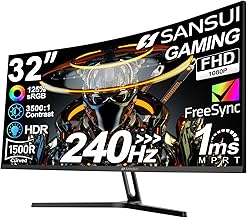
- Smoothness: 240Hz displays a new frame every ~4ms versus ~7ms at 144Hz, making fast motion look even more fluid — a real but diminishing improvement over the already-smooth 144Hz.
- GPU demand: Sustaining 240fps requires far more graphics horsepower than 144fps, so 240Hz only pays off if your GPU and game can consistently hit those frame rates.
- Motion clarity: Higher refresh reduces perceived motion blur, letting competitive players track fast-moving targets a touch more clearly — the main tangible benefit of 240Hz.
- Price: 144Hz panels are cheaper and span every tier, while 240Hz commands a premium, so the value calculation depends heavily on whether you’ll actually use the frames.
- Game type: 240Hz shines in fast esports titles that run at high frame rates, whereas 144Hz is plenty for story-driven, graphically heavy, or single-player games.
- Input feel: 240Hz slightly lowers the time between rendered frames, shaving a few milliseconds off perceived latency that dedicated competitive players may notice.
What's inside
Refresh rate is where smoothness lives, and in 2026 the practical decision for most gamers has narrowed to 144Hz versus 240Hz. The jump from 60Hz to 144Hz was a revelation that nobody disputes; the step from 144Hz to 240Hz is subtler, more situational, and genuinely worth debating before you spend the extra money.
The choice matters because higher refresh only helps if your GPU can feed it and your games can benefit from it — a 240Hz panel starved of frames is wasted potential, while 144Hz left on the table can hold back a competitive player. Getting this right means matching the refresh rate to the games you play and the hardware pushing them. Here’s how 144Hz and 240Hz actually compare where fluidity meets frame rate.
As an Amazon Associate we earn from qualifying purchases at no extra cost to you. Product prices and availability are accurate as of the date shown and are subject to change.


⚡ Save on Your Next PC — Amazon Prime
Prime members get fast free shipping on the systems above, plus early access to Prime Day & Black Friday PC deals. New members get a 30-day free trial.
Watch: 144Hz vs 240Hz Monitor: Worth It in 2026? — Video Review
Quick Verdict
144Hz is the ideal, affordable sweet spot for the vast majority of gamers — buttery smooth, easy to drive, and available on great panels across every budget. Choose 240Hz, like a Dell SE2726HG or an ASUS TUF VG279QM5A, if you play fast competitive shooters, already have a strong GPU to sustain high frame rates, and want every last edge in motion clarity and input feel.
Key Differences
- Smoothness: 240Hz displays a new frame every ~4ms versus ~7ms at 144Hz, making fast motion look even more fluid — a real but diminishing improvement over the already-smooth 144Hz.
- GPU demand: Sustaining 240fps requires far more graphics horsepower than 144fps, so 240Hz only pays off if your GPU and game can consistently hit those frame rates.
- Motion clarity: Higher refresh reduces perceived motion blur, letting competitive players track fast-moving targets a touch more clearly — the main tangible benefit of 240Hz.
- Price: 144Hz panels are cheaper and span every tier, while 240Hz commands a premium, so the value calculation depends heavily on whether you’ll actually use the frames.
- Game type: 240Hz shines in fast esports titles that run at high frame rates, whereas 144Hz is plenty for story-driven, graphically heavy, or single-player games.
- Input feel: 240Hz slightly lowers the time between rendered frames, shaving a few milliseconds off perceived latency that dedicated competitive players may notice.
144Hz Monitors: The Smooth, Affordable Standard
144Hz is where high-refresh gaming became mainstream, and it remains the sweet spot for good reason. The leap from 60Hz is night-and-day, delivering fluid motion, sharper tracking, and a responsive feel that flatters everything from shooters to open-world epics. Panels at this refresh rate are plentiful, affordable, and available with great IPS, VA, and even OLED options across every price bracket.
Crucially, 144fps is achievable on a wide range of graphics cards, so you don’t need flagship hardware to enjoy the full benefit — the monitor and the GPU that feeds it both stay reasonable. For the overwhelming majority of gamers, including plenty of competitive players, 144Hz hits the perfect balance of smoothness, visual quality, and cost. It’s the refresh rate most people should buy in 2026 unless they have a specific reason to go higher.
240Hz Monitors: The Competitive Edge
240Hz is built for players who live in fast, twitchy games and want every possible advantage. Displays like the Dell SE2726HG and the ASUS TUF VG279QM5A push a fresh frame roughly every four milliseconds, tightening motion clarity and shaving perceived latency in a way that dedicated esports competitors genuinely feel when tracking flick shots and fast targets.
The catch is that the benefit only materializes if your system can actually sustain high frame rates in the games you play — a 240Hz panel running at 120fps is no better than a 144Hz one. It also costs more, both for the monitor and the GPU needed to keep it fed. For competitive shooters at high frame rates with strong hardware behind them, 240Hz is a worthwhile edge; for everyone else, the returns diminish quickly against the price.
Which Should You Buy?
- For For most gamers and mixed libraries: pick 144Hz because it’s smooth, affordable, and easy to drive across shooters, RPGs, and everything in between.
- For For serious competitive shooters: pick 240Hz if you have the GPU to sustain high frame rates and want the sharpest motion and lowest perceived latency.
- For For a mid-range graphics card: pick 144Hz to match what your GPU can realistically deliver, since 240Hz frames it can’t reach are wasted.
- For For the best value: pick 144Hz because it captures most of the high-refresh benefit at a fraction of the cost of a full 240Hz setup.
- For For graphically demanding single-player games: pick 144Hz since these titles rarely hit 240fps anyway and benefit more from resolution and image quality.
Frequently Asked Questions
Can you really notice 144Hz vs 240Hz?
Side by side, many players can perceive the extra smoothness in fast motion, but it’s a far subtler jump than 60Hz to 144Hz. Competitive gamers notice it most; in slower or graphically heavy games the difference is minimal.
Do I need a powerful GPU for 240Hz?
To benefit fully, yes — you need hardware that can sustain frame rates near 240fps in your games. Pairing a 240Hz panel with a GPU that only reaches 120–150fps wastes most of the monitor’s potential.
Is 144Hz enough for competitive gaming?
For the vast majority of players, absolutely. Plenty of skilled competitors game happily at 144Hz, and it delivers smooth, responsive motion. 240Hz offers a marginal edge that only dedicated esports players tend to exploit.
Does higher refresh rate reduce input lag?
Higher refresh slightly lowers the time between rendered frames, which trims a few milliseconds of perceived latency. The effect is real but small, and matters most to competitive players chasing every advantage.
Final Verdict
For nearly everyone in 2026, 144Hz is the refresh rate to buy — it delivers the transformative smoothness of high-refresh gaming at a price and GPU demand that make sense for real budgets. Reserve 240Hz for competitive shooter players who already have the horsepower to sustain sky-high frame rates and want the last few percent of motion clarity. Match the panel to your games and your GPU, and you’ll get every bit of value from whichever you choose.