Key takeaways
- Contrast: OLED lights each pixel individually for true blacks and effectively infinite contrast, while IPS relies on a backlight that leaves blacks looking grey, especially in dark scenes.
- Response time: OLED’s ~0.03ms pixel response is near-instant and virtually eliminates motion smear; fast IPS panels reach ~1ms, excellent but a clear step behind.
- Brightness: IPS panels sustain high full-screen brightness comfortably, whereas OLED excels at bright highlights but limits sustained full-white output, favoring darker rooms.
- Burn-in risk: OLED can retain static elements like HUDs and taskbars over time, a risk IPS simply doesn’t have, though modern OLEDs include strong mitigation features.
- Color: QD-OLED delivers exceptionally vivid, saturated color that pops, while good IPS panels are still very accurate and more than sufficient for most players and creators.
- Price: IPS covers every budget tier and is the value option, while OLED, despite falling prices, still commands a premium for its standout picture quality.
Panel technology decides how a game actually looks in front of you, and in 2026 the headline matchup is OLED versus IPS. OLED has crashed down in price and flooded the gaming market with dazzling contrast and near-instant response, while IPS has answered with brighter, faster, and cheaper panels than ever — making this the most interesting display decision a gamer can face right now.
The choice matters because it shapes every image on screen: the depth of blacks, the punch of highlights, the smearing (or lack of it) in fast motion, and how worried you need to be about a static HUD burning in. Pick the panel that fits your games, your room, and your budget and you’ll love it for years; pick wrong and you’ll notice the compromise daily. Here’s how OLED and IPS truly differ.
Our top picks


As an Amazon Associate we earn from qualifying purchases at no extra cost to you. Ratings are shown as listed on Amazon.
⚡ Save on Your Next PC — Amazon Prime
Prime members get fast free shipping on the systems above, plus early access to Prime Day & Black Friday PC deals. New members get a 30-day free trial.
Watch: OLED vs IPS Gaming Monitor: 2026 Comparison — Video Review
Quick Verdict
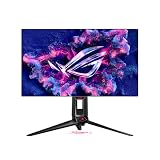
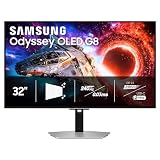
OLED is the choice for the best image quality money can buy — a Samsung Odyssey OLED G6 or LG UltraGear QD-OLED delivers perfect blacks and 0.03ms response that no IPS can match. IPS remains the safer, brighter, and cheaper pick for bright rooms, all-day desktop use, and anyone who wants excellent gaming visuals without spending flagship money or worrying about burn-in.
Key Differences
- Contrast: OLED lights each pixel individually for true blacks and effectively infinite contrast, while IPS relies on a backlight that leaves blacks looking grey, especially in dark scenes.
- Response time: OLED’s ~0.03ms pixel response is near-instant and virtually eliminates motion smear; fast IPS panels reach ~1ms, excellent but a clear step behind.
- Brightness: IPS panels sustain high full-screen brightness comfortably, whereas OLED excels at bright highlights but limits sustained full-white output, favoring darker rooms.
- Burn-in risk: OLED can retain static elements like HUDs and taskbars over time, a risk IPS simply doesn’t have, though modern OLEDs include strong mitigation features.
- Color: QD-OLED delivers exceptionally vivid, saturated color that pops, while good IPS panels are still very accurate and more than sufficient for most players and creators.
- Price: IPS covers every budget tier and is the value option, while OLED, despite falling prices, still commands a premium for its standout picture quality.
OLED Monitors: Reference-Grade Image Quality
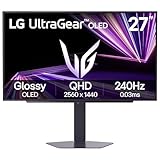
OLED is the enthusiast’s dream panel, and 2026 pricing finally makes it attainable. Displays like the Samsung Odyssey OLED G6 and the LG UltraGear 27GX704A produce perfect, self-lit blacks, explosive contrast, and a 0.03ms response time that renders fast motion crystal clear. In dark, atmospheric games the effect is transformative — shadows have real depth and highlights genuinely glow.
QD-OLED variants add stunningly vivid color on top of that contrast, making every scene look richer than any backlit panel can manage. The trade-offs are the premium price, lower sustained full-screen brightness, and a small but real burn-in risk from static HUDs over years of use. For gamers who prioritize picture quality above all — especially in immersive single-player titles played in a controlled-light room — OLED is simply the best experience available.
IPS Monitors: Bright, Fast, and Worry-Free
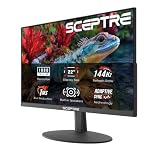
IPS is the dependable all-rounder that does almost everything well without drama. Modern fast-IPS panels hit high refresh rates with ~1ms response, sustain bright, punchy output in sunlit rooms, and carry zero burn-in risk, so you can leave a game HUD or a spreadsheet on screen indefinitely. For a monitor that pulls double duty as a work and gaming display, that peace of mind is worth a lot.
It can’t match OLED’s perfect blacks or instant pixel response — backlight-lit blacks look greyer and there’s a touch more motion smear — but the gap is smaller than ever and the value is enormous. IPS spans every price point, making great gaming visuals accessible on a normal budget. For bright environments, mixed daily use, and anyone who’d rather not manage burn-in, IPS is the sensible, low-stress choice.
Which Should You Buy?
- For For the best possible image quality: pick OLED because perfect blacks, infinite contrast, and 0.03ms response deliver a picture nothing else can match.
- For For immersive single-player games: pick OLED since dark, atmospheric worlds benefit most from true blacks and vivid QD-OLED color.
- For For a bright, sunny room: pick IPS because its higher sustained brightness stays punchy where OLED’s full-screen output is more restrained.
- For For mixed work and gaming all day: pick IPS to avoid any burn-in worry from static taskbars, HUDs, and documents left on screen for hours.
- For For a tighter budget: pick IPS because it delivers excellent high-refresh gaming at every price tier without the OLED premium.
Frequently Asked Questions
Is OLED burn-in still a problem in 2026?
The risk exists but is much smaller than it used to be, thanks to pixel-shifting, logo dimming, and panel-refresh routines built into modern gaming OLEDs. For varied gaming it’s rarely an issue, though displaying the same static HUD or taskbar for many hours daily raises the odds over years.
Is OLED or IPS better for competitive gaming?
OLED’s ~0.03ms response gives the cleanest motion clarity, which competitive players notice. That said, a high-refresh fast-IPS panel is still excellent and often cheaper, so either works well for esports.
Why does OLED look so much better in dark scenes?
Because each OLED pixel emits its own light and can switch off completely, blacks are truly black instead of the grey glow an IPS backlight produces. That perfect black creates the deep contrast that makes dark scenes look dramatically better.
Is IPS bright enough for a well-lit room?
Yes — IPS panels sustain high full-screen brightness better than OLED, so they hold up nicely in sunlit or brightly lit rooms. This is one of IPS’s clearest practical advantages over OLED.
Final Verdict
If picture quality is your priority and you game in a light-controlled room, OLED in 2026 is breathtaking and finally affordable enough to justify — nothing else delivers its blacks, contrast, and motion clarity. If you want a brighter, worry-free panel for a sunny room, all-day mixed use, or a smaller budget, IPS remains the smart, versatile choice. Match the panel to your environment and games, and either path leads to a display you’ll be thrilled with.