Key takeaways
- Panel type: IPS is the right default at this price. It delivers the colour accuracy and viewing angles you want for both gaming and desktop work, and modern fast-IPS panels have largely closed the response-time gap with TN. Avoid budget VA unless you specifically want a curved ultrawide-style experience and can live with slower dark-scene transitions.
- Refresh rate vs. your GPU: A 160Hz 4K panel is only worth the premium if your graphics card can push those frames. Be realistic — if you’re running mid-range hardware, a 120Hz 4K monitor will cost less and you’ll rarely notice the ceiling. Look for dual-mode or DFR features that let you drop to 1080p at a much higher refresh rate for competitive titles.
- Adaptive sync coverage: Confirm the monitor is both AMD FreeSync Premium certified and NVIDIA G-SYNC Compatible. At this price nearly all of them are, but certification matters — it means the variable refresh range has been validated rather than just claimed, and you’re less likely to hit flicker in low-framerate scenarios.
- Colour gamut and HDR honesty: Look for 95% DCI-P3 or better if colour work matters to you. Ignore HDR400 badges — at this budget, HDR is a tone-mapping feature, not a genuine high-dynamic-range experience. Treat any HDR support as a small bonus rather than a reason to pay more.
- Ports you’ll actually use: DisplayPort 1.4 is essential for 4K above 120Hz. HDMI 2.1 matters if you’re connecting a PS5 or Xbox Series X. USB-C with power delivery is genuinely valuable for laptop users and worth a modest premium — but only if you’ll use it.
What's inside
Shopping for a 4K gaming monitor used to mean choosing between resolution and refresh rate, and the sub-$500 tier was where compromise lived. That has changed. In 2026, panel supply has caught up with demand, and 27-inch 4K IPS displays running at 144Hz or higher now sit comfortably under the $500 mark — territory that only high-refresh 1440p panels occupied a few years ago. The problem now isn’t finding a 4K monitor you can afford; it’s separating genuinely fast, well-calibrated panels from the ones that hit 4K on the spec sheet and cut corners everywhere else.
This guide covers the 4K gaming monitors we consider the best value under $500 right now, along with one standout QHD option for buyers who’d rather put their money into refresh rate than pixels. We’ve focused on real-world panel quality, refresh rate you can actually drive with a mid-range GPU, connectivity that won’t leave you buying adapters, and adaptive sync support that works with both NVIDIA and AMD cards. Every pick below is chosen with value-for-money as the primary filter — not the best monitor in a vacuum, but the best monitor for the money.
As an Amazon Associate we earn from qualifying purchases at no extra cost to you. Product prices and availability are accurate as of the date shown and are subject to change.





⚡ Save on Your Next PC — Amazon Prime
Prime members get fast free shipping on the systems above, plus early access to Prime Day & Black Friday PC deals. New members get a 30-day free trial.
Watch: Best 4K Monitor Under $500 — Video Review
How to Choose 4K Monitor Under $500
- Panel type: IPS is the right default at this price. It delivers the colour accuracy and viewing angles you want for both gaming and desktop work, and modern fast-IPS panels have largely closed the response-time gap with TN. Avoid budget VA unless you specifically want a curved ultrawide-style experience and can live with slower dark-scene transitions.
- Refresh rate vs. your GPU: A 160Hz 4K panel is only worth the premium if your graphics card can push those frames. Be realistic — if you’re running mid-range hardware, a 120Hz 4K monitor will cost less and you’ll rarely notice the ceiling. Look for dual-mode or DFR features that let you drop to 1080p at a much higher refresh rate for competitive titles.
- Adaptive sync coverage: Confirm the monitor is both AMD FreeSync Premium certified and NVIDIA G-SYNC Compatible. At this price nearly all of them are, but certification matters — it means the variable refresh range has been validated rather than just claimed, and you’re less likely to hit flicker in low-framerate scenarios.
- Colour gamut and HDR honesty: Look for 95% DCI-P3 or better if colour work matters to you. Ignore HDR400 badges — at this budget, HDR is a tone-mapping feature, not a genuine high-dynamic-range experience. Treat any HDR support as a small bonus rather than a reason to pay more.
- Ports you’ll actually use: DisplayPort 1.4 is essential for 4K above 120Hz. HDMI 2.1 matters if you’re connecting a PS5 or Xbox Series X. USB-C with power delivery is genuinely valuable for laptop users and worth a modest premium — but only if you’ll use it.
The Best Picks Reviewed
Acer Nitro VG270K V4
This is the value benchmark for 4K gaming in 2026: a 27-inch IPS panel at 160Hz with dual-mode DFR that switches to 1080p at 320Hz for competitive shooters. Getting both a genuine high-refresh 4K experience and an esports-grade fallback mode in one sub-$500 monitor makes this the easiest recommendation on the list.
ASUS ROG XG27UCSR
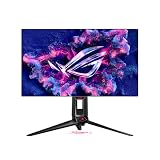
The premium pick if your budget stretches to the top of the range — 4K at 162Hz with USB-C connectivity and G-SYNC support, wrapped in ROG’s noticeably better build quality and stand. The USB-C input with power delivery makes this the standout choice for anyone who docks a laptop at the same desk they game on.
ASUS TUF Gaming VG27UQ1A
A well-rounded 4K performer at 160Hz with 1ms response, ELMB Sync for motion clarity, and 95% DCI-P3 coverage that punches above its price for colour work. The three-year warranty and DisplayWidget software support make it the sensible long-term buy for people who want gaming performance without giving up creative accuracy.
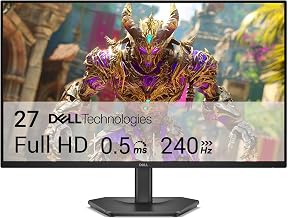
Dell S2725QS
The budget-conscious entry point to 4K: a clean 27-inch IPS panel at 120Hz with FreeSync Premium, aimed squarely at buyers whose GPUs won’t be pushing 160fps at 4K anyway. It’s the least flashy monitor here and the best value if you want maximum resolution per dollar without paying for refresh rate you can’t use.
Samsung Odyssey G7 G75F 37″
A 37-inch curved 4K panel is a genuinely different proposition — enormously immersive for single-player and sim racing, though the size demands a deep desk and a capable GPU. It’s the specialist pick here, best suited to buyers who want spectacle over competitive precision.
Frequently Asked Questions
Is 4K worth it for gaming under $500?
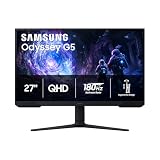
Yes, provided your GPU can drive it. 4K at 27 inches gives you exceptional pixel density and text clarity, and dual-mode monitors let you drop to 1080p at very high refresh rates when you need raw frames. If your card struggles at 1440p today, though, a high-refresh QHD panel like the Samsung Odyssey G5 G51F will serve you better.
Do I need 160Hz, or is 120Hz enough?
120Hz is a genuine step change from 60Hz and plenty for most single-player and general use. The jump from 120Hz to 160Hz is real but subtle, and only worth paying for if you play competitive titles and have the hardware to sustain those framerates at 4K.
What GPU do I need to game at 4K?
For 60fps in modern titles at high settings, you’ll want at least a current-generation upper-mid-range card. For anything approaching 120fps+ at 4K, you’re realistically looking at upscaling technology like DLSS or FSR doing significant work, which all these monitors handle without issue.
Is 27 inches too small for 4K?
Not at all — 27-inch 4K gives you roughly 163 pixels per inch, which produces exceptionally sharp text and fine detail. Some users prefer to run Windows scaling at 125-150% at this size, which is well supported and doesn’t reduce gaming sharpness.
Final Thoughts
For most buyers, the Acer Nitro VG270K V4 is the pick to beat — the combination of 4K at 160Hz and a 320Hz 1080p dual-mode makes it the most versatile monitor in this price bracket by a clear margin. If you can stretch to the top of the budget and want USB-C convenience with better build quality, the ASUS ROG XG27UCSR justifies the premium, while the Dell S2725QS remains the smartest buy for anyone who wants 4K sharpness without paying for refresh rate their GPU can’t deliver.