Key takeaways
- 60-100Hz suits casual and single-player gaming on a tight budget.
- 144-180Hz is the modern sweet spot for most players.
- 240Hz and up serves dedicated competitive shooter fans.
What's inside
The monitor is the single component you stare at for every second of play, yet it is often the last thing gamers upgrade. Choosing the right one means balancing refresh rate, resolution, panel type, and size against how you actually game, because the perfect display for a competitive shooter is very different from the ideal panel for sprawling single-player worlds.
This guide breaks down each specification in plain terms so you can decode the marketing and buy with confidence. Along the way we reference real 2026 monitors, from budget 100Hz panels to immersive ultrawides, to show how the numbers translate into actual buying decisions.
As an Amazon Associate we earn from qualifying purchases at no extra cost to you. Product prices and availability are accurate as of the date shown and are subject to change.


⚡ Save on Your Next PC — Amazon Prime
Prime members get fast free shipping on the systems above, plus early access to Prime Day & Black Friday PC deals. New members get a 30-day free trial.
Watch: How To Choose A Gaming Monitor — Video Review
Refresh Rate: Smoothness You Can Feel
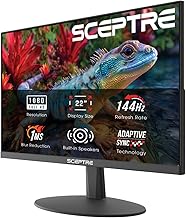
Refresh rate, measured in hertz, is how many times per second the screen updates, and it is the spec competitive players prize most. A 60Hz panel is fine for slower games, but 144Hz and beyond makes fast motion noticeably crisper. Options range from a value-focused 144Hz Sceptre up to a 240Hz SANSUI curved panel for esports diehards.
- 60-100Hz suits casual and single-player gaming on a tight budget.
- 144-180Hz is the modern sweet spot for most players.
- 240Hz and up serves dedicated competitive shooter fans.
Resolution and Screen Size
Resolution determines sharpness, while size shapes how immersive the picture feels. 1080p on a 22 to 27-inch panel keeps frame rates high and prices low, whereas 1440p (QHD) on a 27-inch display like a Samsung Odyssey G5 or ASUS TUF hits the modern balance of clarity and performance. For maximum immersion, a 34-inch ultrawide wraps the action around your field of view.
Panel Type and Color
Panel technology affects color, viewing angles, and response time. IPS panels, found in monitors like the Acer Nitro and ASUS TUF, deliver vibrant color and wide viewing angles that suit both gaming and creative work. VA panels offer deeper contrast on curved screens, while the fastest esports panels prioritize low response times above all.
Adaptive Sync and Response Time
Screen tearing ruins fast scenes, which is why adaptive sync matters. Look for AMD FreeSync or G-SYNC compatibility, both common even on affordable models, to keep the display in step with your GPU. Response time, ideally 1ms for gaming, reduces motion blur so moving objects stay sharp.
- FreeSync Premium smooths gameplay on AMD and many NVIDIA setups.
- A 1ms response time keeps fast motion clean and ghost-free.
- Features like a black equalizer help you spot enemies in dark scenes.
Frequently Asked Questions
Is 1440p worth it over 1080p for gaming?
If your graphics card can drive it, yes. 1440p on a 27-inch panel offers a clear jump in sharpness and desktop space while remaining far easier to run than 4K, making it the popular sweet spot in 2026.
How many hertz do I actually need?
For most gamers, a 144Hz or 180Hz monitor feels dramatically smoother than 60Hz and is plenty. Only dedicated competitive players chasing every advantage will benefit from 240Hz panels.
Are curved and ultrawide monitors good for gaming?
They excel at immersion in single-player and racing or simulation titles, wrapping the image around your vision. Competitive players sometimes prefer flat panels, so it comes down to the games you favor.
Do I need G-SYNC or is FreeSync fine?
FreeSync is excellent and now works with many NVIDIA cards through G-SYNC compatibility, so you rarely need to pay a premium for native G-SYNC. Either eliminates screen tearing effectively.
Conclusion
Choosing a gaming monitor comes down to matching specs to your habits: prioritize high refresh rate and fast response for competitive play, or lean into 1440p resolution, IPS color, and ultrawide immersion for cinematic single-player worlds. Confirm your GPU can drive your chosen resolution and refresh rate, insist on adaptive sync, and you will land a display that makes every session look and feel better.