Key takeaways
- Resolution and size: At 27 inches, 1440p is the clear winner. It’s roughly 78% more pixels than 1080p with noticeably sharper text and detail, and modern mid-range GPUs handle it comfortably at high frame rates. Save 4K for larger panels or bigger budgets.
- Panel type: Fast IPS is the default recommendation for most buyers — strong color accuracy, wide viewing angles, and response times that are now competitive with TN. VA panels offer deeper contrast (great for dark games) but can smear in fast motion. QD-OLED delivers the best image quality by a wide margin, though it demands a larger budget.
- Refresh rate over marketing HDR: A genuine 165–180Hz panel improves your experience far more than a “HDR400” badge. Entry-level HDR on LCD monitors rarely looks better than a well-calibrated SDR image. Prioritize refresh rate and response time first.
- Adaptive sync compatibility: Look for FreeSync Premium or official G-SYNC Compatible certification rather than generic “adaptive sync support.” Certification means the monitor has been validated for flicker-free variable refresh across its full range, which matters most when frame rates dip.
- Connectivity and extras: Check for DisplayPort 1.4 (required for 1440p at 180Hz), enough HDMI 2.0/2.1 ports for your consoles, and whether you need USB-C with power delivery for a laptop setup. Built-in speakers and a genuinely adjustable stand are worth more than most buyers expect.
What's inside
Shopping for a gaming monitor under $500 has never been more confusing. The spec sheets all look similar — 27 inches, 1440p, 180Hz, 1ms — yet real-world performance varies wildly between panels that share identical numbers on paper. Marketing terms like “HDR ready,” inflated response-time claims, and vague adaptive-sync labeling make it genuinely difficult to tell which monitors deliver and which cut corners where it counts.
This guide cuts through the noise. We’ve focused on 27-inch QHD displays in the $200–$500 range, because that’s the sweet spot where resolution, refresh rate, and panel quality intersect without forcing compromises. Below you’ll find our top picks — from budget-friendly IPS workhorses to a genuine QD-OLED that squeaks in under the cap — plus a practical buying framework and answers to the questions we get asked most.
As an Amazon Associate we earn from qualifying purchases at no extra cost to you. Product prices and availability are accurate as of the date shown and are subject to change.




⚡ Save on Your Next PC — Amazon Prime
Prime members get fast free shipping on the systems above, plus early access to Prime Day & Black Friday PC deals. New members get a 30-day free trial.
Watch: Best Gaming Monitor Under $500 — Video Review
How to Choose Gaming Monitor Under $500
- Resolution and size: At 27 inches, 1440p is the clear winner. It’s roughly 78% more pixels than 1080p with noticeably sharper text and detail, and modern mid-range GPUs handle it comfortably at high frame rates. Save 4K for larger panels or bigger budgets.
- Panel type: Fast IPS is the default recommendation for most buyers — strong color accuracy, wide viewing angles, and response times that are now competitive with TN. VA panels offer deeper contrast (great for dark games) but can smear in fast motion. QD-OLED delivers the best image quality by a wide margin, though it demands a larger budget.
- Refresh rate over marketing HDR: A genuine 165–180Hz panel improves your experience far more than a “HDR400” badge. Entry-level HDR on LCD monitors rarely looks better than a well-calibrated SDR image. Prioritize refresh rate and response time first.
- Adaptive sync compatibility: Look for FreeSync Premium or official G-SYNC Compatible certification rather than generic “adaptive sync support.” Certification means the monitor has been validated for flicker-free variable refresh across its full range, which matters most when frame rates dip.
- Connectivity and extras: Check for DisplayPort 1.4 (required for 1440p at 180Hz), enough HDMI 2.0/2.1 ports for your consoles, and whether you need USB-C with power delivery for a laptop setup. Built-in speakers and a genuinely adjustable stand are worth more than most buyers expect.
The Best Picks Reviewed
ASUS TUF Gaming VG27AQ3A
This is the most complete package under $400 and our overall recommendation for most gamers. The Fast IPS panel hits 180Hz with excellent motion clarity thanks to Extreme Low Motion Blur Sync, and 130% sRGB coverage means colors stay punchy without the oversaturation you get from cheaper wide-gamut panels. FreeSync Premium plus G-SYNC Compatible certification covers both GPU camps, and the fully adjustable stand is a genuine step above the competition.
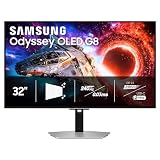
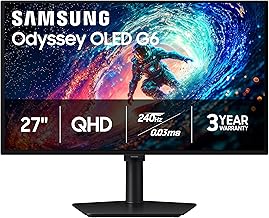
Samsung Odyssey OLED G6 (G61SH)
If your budget stretches to the top of this range, nothing else here competes on pure image quality — QD-OLED delivers perfect blacks, near-instant pixel response, and color volume that LCD simply can’t match. It’s the pick for single-player and atmospheric games where contrast defines the experience, though you should be mindful of burn-in best practices and note that it’s dimmer in bright rooms than a good IPS.
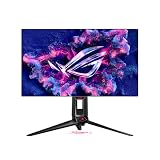
ASUS ROG XG27ACS
The XG27ACS is the versatility champion, pairing a 180Hz 1440p Fast IPS panel with USB-C power delivery that turns it into a genuine single-cable laptop dock. Native G-SYNC compatibility and ASUS’s excellent OSD tuning make it a strong competitive gaming display, and the build quality feels a tier above its price.
Acer Nitro KG271U N3bmiipx
Acer’s Nitro is the value play — you get the same core specification as monitors costing significantly more: 27-inch QHD IPS at 180Hz with adaptive sync. Compromises show up in the basic tilt-only stand and merely adequate stock color calibration, but for pure performance-per-dollar it’s hard to argue with.
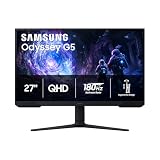
Samsung Odyssey G5 (G51F)
The G5 remains a solid entry point for anyone stepping up from 1080p on a tighter budget, offering QHD resolution and high refresh in a well-built chassis with Samsung’s reliable panel quality. It’s the sensible choice if you want a meaningful upgrade without spending near the $500 ceiling.
Frequently Asked Questions
Is 1440p worth it over 1080p for gaming?
At 27 inches, absolutely. 1080p stretched across a 27-inch panel produces visibly soft text and jagged edges, while 1440p delivers a noticeably sharper image without the GPU demands of 4K. Most mid-range cards from the last few generations can drive 1440p at 100+ FPS in modern titles with sensible settings.
Do I need more than 144Hz?
For competitive shooters, the jump from 144Hz to 180Hz is a real but modest improvement in motion clarity and input feel. For everyone else, 144Hz is already excellent — don’t pay a large premium for the extra frames if the rest of the panel is worse.
Is OLED worth the risk of burn-in?
Modern QD-OLED panels include pixel-shifting, logo dimming, and automatic refresh cycles that make burn-in unlikely under normal mixed use, and most carry burn-in coverage in their warranty. If you spend eight hours a day with static productivity UI on screen, a quality IPS is the safer choice.
Does FreeSync work with an NVIDIA GPU?
Usually yes. Most FreeSync monitors work with NVIDIA cards over DisplayPort, but monitors carrying official “G-SYNC Compatible” certification have been validated by NVIDIA for flicker-free performance across the full refresh range — which is why we favor them here.
Final Thoughts
For the majority of gamers, the ASUS TUF Gaming VG27AQ3A is the smartest buy under $500 — it nails the fundamentals of refresh rate, motion clarity, color, and ergonomics without asking you to compromise anywhere significant. If image quality is your priority and you can spend to the top of the budget, the Samsung Odyssey OLED G6 is a genuine generational leap that no LCD here can match. And for anyone who splits time between a gaming PC and a work laptop, the ASUS ROG XG27ACS and its single-cable USB-C setup makes it the most practical all-rounder of the group.