Key takeaways
- Gen3 NVMe — plenty fast for gaming and the best value; a drive like the Silicon Power 2TB Gen3 loads games quickly at a low price.
- Gen4 NVMe — the current mainstream, with headroom for DirectStorage-enabled titles; the Crucial P310 2TB sits here.
- Gen5 NVMe — cutting edge like the Samsung 9100 PRO, blisteringly fast but overkill for most gamers and pricier.
What's inside
- Watch: How Much Storage for a Gaming PC in 2026? — Video Review
- How Much Space Games Really Take
- SSD vs HDD: Speed Changes Everything
- Understanding NVMe Generations
- How Many Drives Should You Run
- Matching Storage to Your Habits
- Tips
- Related Guides
- Frequently Asked Questions
- Conclusion
- Related Articles
- Related Guides
Modern games are enormous. A single AAA title can swallow well over 100GB, and with day-one patches and high-resolution texture packs, storage fills up faster than ever in 2026. Underestimate how much you need and you will spend your evenings uninstalling favorites to make room; overspend and you have paid for terabytes you never touch.
- Watch: How Much Storage for a Gaming PC in 2026? — Video Review
- How Much Space Games Really Take
- SSD vs HDD: Speed Changes Everything
- Understanding NVMe Generations
- How Many Drives Should You Run
- Matching Storage to Your Habits
- Tips
- Related Guides
- Frequently Asked Questions
- Conclusion
- Related Articles
- Related Guides
This guide explains how much storage a gaming PC actually needs, why the type of drive matters as much as the capacity, and how to balance speed and space without wasting money. You will learn to size your storage for how you really play so load times stay short and your library stays installed.
As an Amazon Associate we earn from qualifying purchases at no extra cost to you. Product prices and availability are accurate as of the date shown and are subject to change.


⚡ Save on Your Next PC — Amazon Prime
Prime members get fast free shipping on the systems above, plus early access to Prime Day & Black Friday PC deals. New members get a 30-day free trial.
Watch: How Much Storage for a Gaming PC in 2026? — Video Review
How Much Space Games Really Take
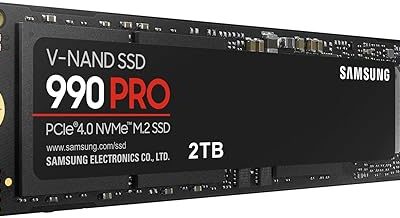
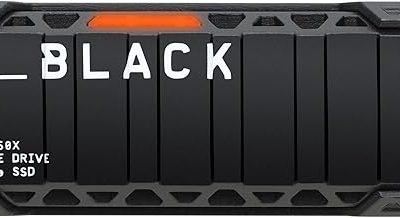
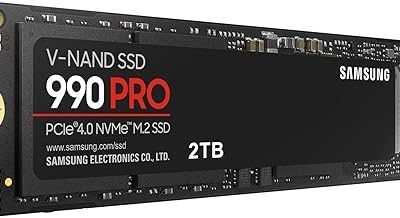
Plan around real numbers, not hopes. Windows and drivers alone claim 30 to 50GB, and big current titles routinely run 80 to 150GB each. If you like to keep a handful of large games installed at once plus room for updates, 1TB is the sensible floor in 2026 and 2TB is the comfortable sweet spot. Drives like the Samsung 990 PRO 2TB or WD_Black SN7100 2TB give you space for a substantial library without constant housekeeping.
SSD vs HDD: Speed Changes Everything
The days of installing games on a slow spinning hard drive are over for anyone who values load times. An NVMe SSD loads levels dramatically faster, reduces texture pop-in, and is essentially required to hit the performance many current games expect. A mechanical HDD still makes sense as cheap bulk storage for media or an archive of games you rarely touch, but your operating system and active games belong on an SSD without exception.
Understanding NVMe Generations
- Gen3 NVMe — plenty fast for gaming and the best value; a drive like the Silicon Power 2TB Gen3 loads games quickly at a low price.
- Gen4 NVMe — the current mainstream, with headroom for DirectStorage-enabled titles; the Crucial P310 2TB sits here.
- Gen5 NVMe — cutting edge like the Samsung 9100 PRO, blisteringly fast but overkill for most gamers and pricier.
How Many Drives Should You Run
A common and cost-effective approach is a fast primary SSD for Windows and your most-played games, paired with a larger secondary drive for everything else. A single 2TB NVMe keeps things simple and is enough for many players. If your library is huge, add a second SSD rather than mixing in a slow HDD, so every game benefits from quick loads. Check how many M.2 slots your motherboard has before planning a multi-drive setup.
Matching Storage to Your Habits
Your ideal capacity depends on how you play. If you keep only two or three games installed and delete them when finished, 1TB is fine. If you hoard a big Steam library, play many titles in rotation, or record gameplay, 2TB or more prevents constant shuffling. Content creators and anyone capturing high-bitrate footage should size up further, since video files devour space even faster than games do.
Tips
- Treat 2TB as the comfortable default in 2026; 1TB is the bare minimum for a modern gaming PC.
- Put Windows and your active games on an NVMe SSD; never install current games on a mechanical HDD.
- Gen4 NVMe is the value sweet spot — Gen5 is faster on paper but rarely worth the premium for gaming.
- Confirm your motherboard’s M.2 slot count and generation before buying a second or faster drive.
Frequently Asked Questions
Is 1TB enough for a gaming PC in 2026?
It is the minimum. With Windows, a few large games, and updates, 1TB fills quickly. It works if you keep a small rotation of titles, but 2TB gives far more breathing room and is only modestly more expensive.
Do I need a Gen5 SSD for gaming?
No. Gen4, and even Gen3, load games fast enough that you will not notice a real-world difference in most titles. Gen5 drives run hotter and cost more; save the money unless you have a specific professional workload.
Can I still use a hard drive for games?
An HDD is fine for storing media or games you rarely launch, but load times will be noticeably slow. Keep your operating system and anything you actively play on an SSD for a smooth experience.
Should I get one big drive or two smaller ones?
Either works. One large NVMe is simplest; two drives let you separate the OS from games or add capacity later. Just avoid pairing a fast SSD with a slow HDD for active games, since the HDD becomes the weak link.
Conclusion
For a 2026 gaming PC, aim for a 2TB NVMe SSD as your comfortable target, with 1TB as the absolute minimum and a Gen4 drive hitting the best balance of speed and price. Match the capacity to how many games you keep installed and whether you create content, keep your active library on solid-state storage, and you will enjoy fast loads and an end to the endless uninstall shuffle.